
Anyone who grinds one portion at a time
You grind a small, measured portion in your holiday cottage and want to know whether that amount is suitable for the grinder.


For a small portion and grinding without a power socket, a compact hand grinder is an obvious choice; go electric if you’d rather not turn the handle yourself. With either option, check that the grinder can handle your usual dose and that its grind settings suit the coffee maker in your holiday cottage.
You grind a small, measured portion in your holiday cottage and want to know whether that amount is suitable for the grinder.
You want a grinder that’s easy to take with you and lets you grind without relying on a power socket.
You want to know whether the settings suit the coffee-making method available in the cottage, such as filter coffee or espresso.
First decide how much coffee you grind at a time and which brewing method you use. Then weigh up the power supply and how much manual effort you’re happy with.
| What to consider | What should you check? | Who is this important for? |
|---|---|---|
| Small dose | Compare your usual amount in grams with the grinder’s collection capacity. For electric grinders, also look for information about grinding small single doses. | If I want to grind only a few beans at a time, I don’t want to be forced to grind a larger amount. Around 36% of consumers give the ability to grind a small dose top priority. |
| Grinding without power | Check the dimensions and whether there’s a suitable power socket where you’ll be using it. | If I’m taking the grinder with me and don’t want to rely on a power socket, being able to grind anywhere matters a lot to me. Around 29% of consumers prioritise being able to use a grinder without power. |
| Suitable grind settings | Find out which coffee maker is available in the cottage and check the settings for the exact grinder model. | If I want to match the grinder to my brewing method, I check the settings before choosing. Around 21% of consumers make this their main buying priority. |
| Less manual effort | Check how you grind, empty the collection container and clean the grinding mechanism according to the instructions. | If you’d rather not turn the handle yourself, consider an electric grinder, as long as there’s power and it’s suitable for the portion you want to grind. Around 14% of consumers prioritise less manual effort. |
A hopper’s capacity doesn’t automatically tell you whether a grinder handles a small amount well. Rommelsbacher says that 15 g is not ideal as a single dose for the EKM 200.
Compare your usual dose in grams with the information about the grinder, not just the maximum capacity of its bean hopper.
The recommended brewing methods and settings vary by model. 1Zpresso specifically positions the Q Air for pour-over, which doesn’t automatically confirm that it’s suitable for espresso.
Check the documentation for the exact variant and compare its stated settings with the brewing method available in your holiday cottage.
Care instructions vary. Hario says that the Mini-Slim +’s grinding mechanism can be dismantled for washing, while 1Zpresso warns against washing the Q series with water.
Follow the instructions for the exact model before cleaning its grinding mechanism.
The Q Air is a compact hand grinder that the manufacturer describes as suitable for pour-over and travel.
The Mini-Slim + is a hand grinder for taking on the go and making a small number of cups.
Assess the Chestnut C5 variants individually, especially if you’re looking for finer settings for espresso.
The TSM6A013B is a compact electric blade grinder for anyone who’d rather not grind by hand.
The EKM 200 is an electric burr grinder with adjustable grind settings and a bean hopper. It’s especially worth considering if you’re making several cups.
This selection includes manual and electric coffee grinders to compare for small portions in a holiday cottage.
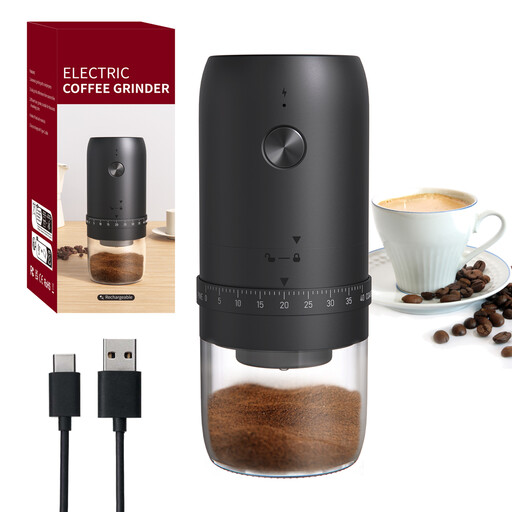 No image available
An option if you want to grind electrically and adjust the grind setting; check that the model can handle your small portion.
The grind setting is adjustable from coarse to fine.
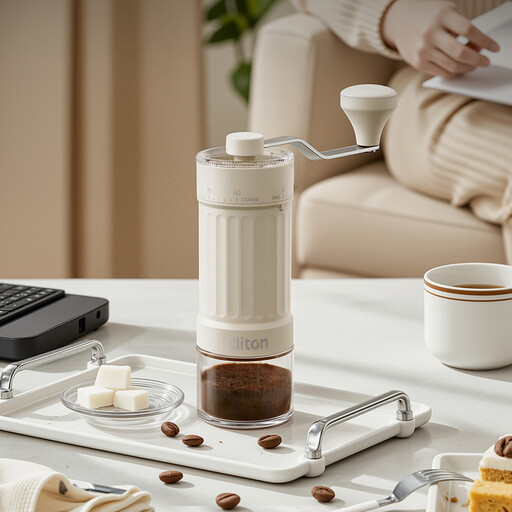 No image available
A manual option if you want to grind without a power socket; check that the settings suit the brewing method available in the cottage.
The grind setting is adjustable from coarse to fine.
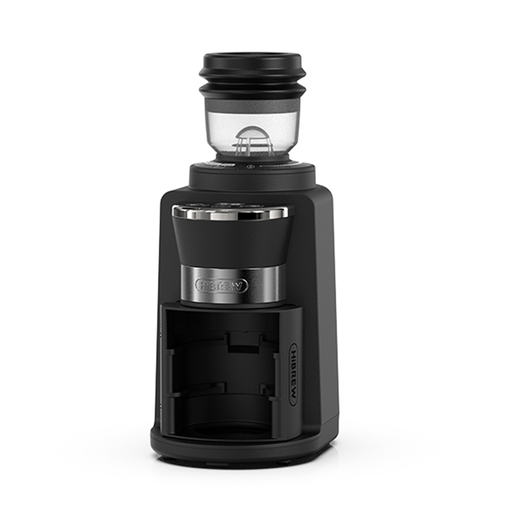 No image available
An electric grinder with several grind settings; check that the dose and setting you want are suitable for your brewing method.
The product name specifies a 40 mm conical burr, 31 grind settings and a blowing function.
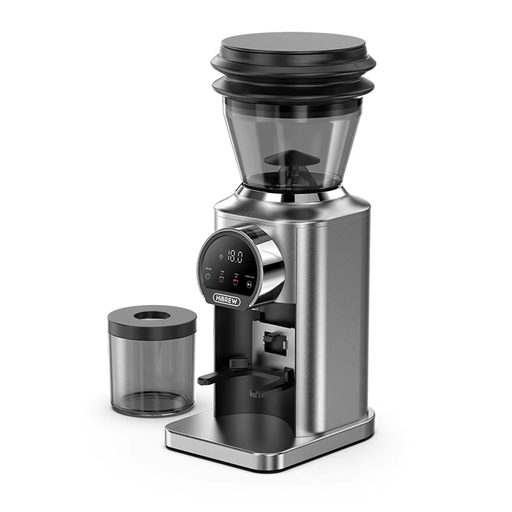 No image available
An electric option if you want to adjust the grind setting; check that the settings suit the coffee-making method in your holiday cottage.
The product name specifies a titanium-coated stainless steel burr and 31 grind settings.
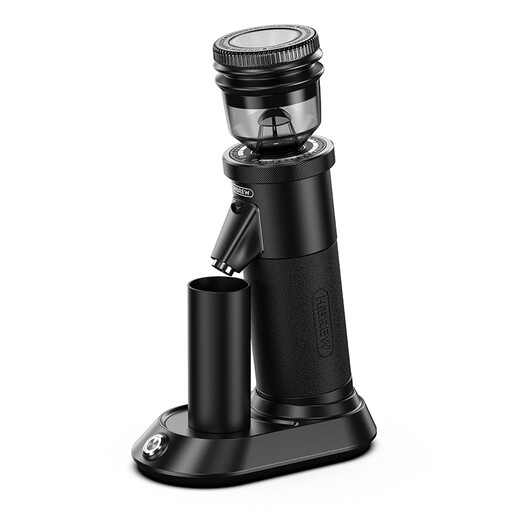 No image available
An electric option if you want to adjust the grind setting; check separately that the settings and its ability to handle small portions suit the way you use it.
The product name specifies 36 grind settings.
First, check which coffee maker is available in the holiday cottage. Then compare the settings listed for the exact grinder model with that brewing method. A model marketed for pour-over isn’t automatically suitable for espresso.
No. The maximum collection or hopper capacity doesn’t automatically tell you how the grinder handles one small dose. Compare your usual amount in grams with information about grinding a single dose; Rommelsbacher says that 15 g is not ideal as a single dose for the EKM 200.
A hand grinder is suited to grinding without a power socket and turning the handle yourself; an electric grinder is an option if you want to avoid the manual effort and have access to power. With either type, check that it can handle a small dose and that the settings suit your brewing method.
Not as a general rule: Hario says that the Mini-Slim +’s grinding mechanism can be dismantled for washing, while 1Zpresso warns against washing the Q series with water. Follow the instructions for your exact model.
For a standard online product purchase in the Netherlands, ACM ConsuWijzer says you generally have a statutory cooling-off period of up to 14 days after delivery. Check the applicable exceptions and the seller’s returns information.