
Filter coffee drinkers making one cup
You weigh out a small portion for a coffee break and want a grinder that suits your brewing method and dose.


For a single small portion of filter coffee, a compact hand grinder is a sensible choice if you don’t mind grinding by hand and its capacity suits your dose. If you want to fine-tune espresso or would rather not turn a crank, choose a grinder specified for that purpose. Also consider how it collects the grounds, how easy it is to clean and the features of an electric model.
You weigh out a small portion for a coffee break and want a grinder that suits your brewing method and dose.
You want to grind a small dose and adjust the grind size to suit your espresso machine.
You want to grind electrically and are considering how to collect a weighed portion and clean the grinder.
First, choose a grinding method that suits your brewing method. Then check that the capacity, controls and grounds collection work for your coffee break.
| What to consider | What should you check? | Who is this important for? |
|---|---|---|
| Small portion of filter coffee | Check the capacity of the exact variant and whether its grind range suits your brewing method. 1Zpresso lists a grounds capacity of 15–20 g for the Q Air; Timemore specifies 20 g for several C3 variants. | If I weigh out one portion of filter coffee, I want to know whether it will fit in one go, without choosing an unnecessarily large grinder. Around 33% of consumers prioritise a small filter-coffee portion and a compact size. |
| Espresso adjustment | Look for a specified espresso range and check the adjustment mechanism on the exact variant. Baratza gives settings 1–20 for espresso on the Encore ESP; Timemore distinguishes the ESP adjustment from the classic C3 setting. | If I’m grinding one shot, I want to be able to adjust the grind size to suit my espresso machine. For around 27% of consumers, espresso adjustment is the priority. |
| Electric grinding and grounds collection | Check the controls, whether a grounds cup is included and whether a single-dose hopper is sold separately. Baratza lists a dosing cup as included and offers the single-dose hopper as a separate accessory. | If I don’t want to turn a crank during a short break, I’ll consider how to collect a weighed portion. Around 20% of consumers prioritise electric operation. |
| Cleaning and retained grounds | Check the cleaning instructions and how the exact grinder comes apart. If you want minimal grounds retention, look for measurements specific to the model. Capacity alone doesn’t tell you how much ground coffee is left behind. | If I often grind small portions or switch between beans, I want to know how to clean the grinder and how much coffee may be left inside. For around 20% of consumers, maintenance and retained grounds are the main concerns. |
Wilfa specifies a 250 g bean container and a timer for the Svart Aroma. These features don’t tell you how much ground coffee is left behind after grinding one portion.
Weigh your dose separately. If you often grind small portions, check how the exact model collects grounds and how to clean it.
Timemore offers different adjustment mechanisms and capacities within the C3 series. The series name alone doesn’t tell you which variant you’re looking at.
Compare the full model name and check the espresso adjustment and capacity of that specific variant.
A product name containing TIMEMORE doesn’t, by itself, identify a manual Chestnut C3 ESP Pro; an electric grinder is a different type of product.
Before buying, check the full model name and make sure the pictured version matches the product description.
This information covers the product lines mentioned and can help you compare variants. A brand name alone doesn’t tell you whether a model is available.
1Zpresso classifies the compact Q Air hand grinder as a pour-over model.
The Chestnut C3 series includes hand grinders, including ESP variants with finer adjustment.
According to Baratza Netherlands, the Encore ESP is designed for espresso and filter coffee.
Wilfa lists filter coffee, AeroPress and moka pot as suitable brewing methods for the Svart Aroma.
In its own comparison, Fellow distinguishes the espresso- and filter-focused Opus 2 from the Ode Brew Grinder Gen 2, which is designed for brewed coffee.
This selection includes manual and electric coffee grinders. Compare the listed grind settings and features of each model with the way you make coffee.
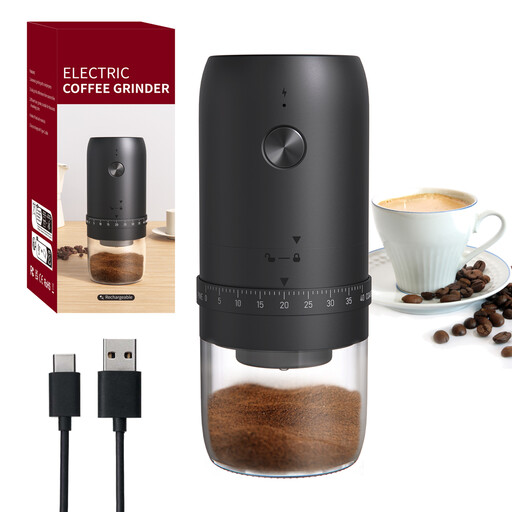 No image available
An electric coffee grinder for anyone who would rather not grind by hand during a coffee break.
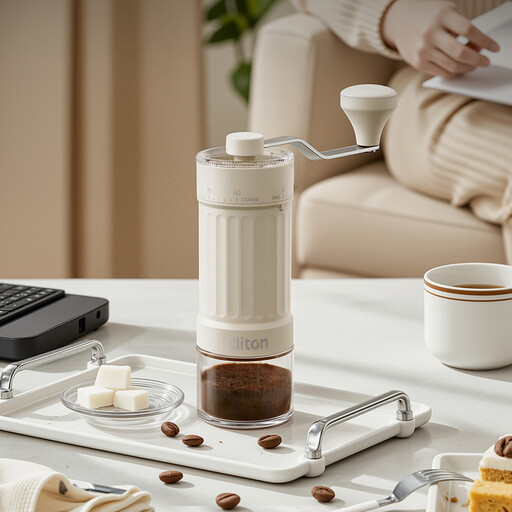 No image available
A manual coffee grinder for anyone who wants to grind a small portion by hand.
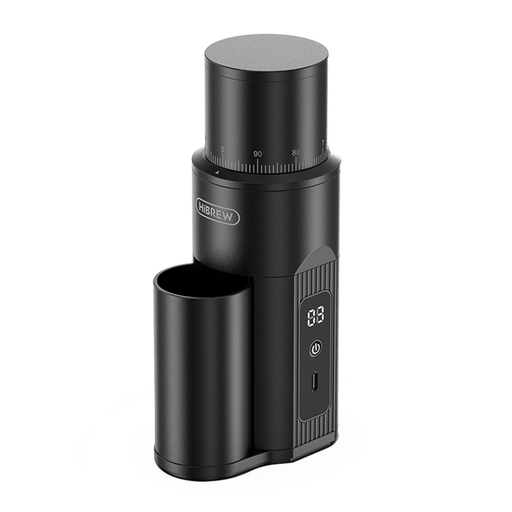 No image available
A grinder with plenty of adjustment settings to consider if you want precise control over the grind size.
The product title lists a 5200 mAh dual-battery system, a six-star conical burr and 100 continuous grind settings. It also lists an aluminium alloy body.
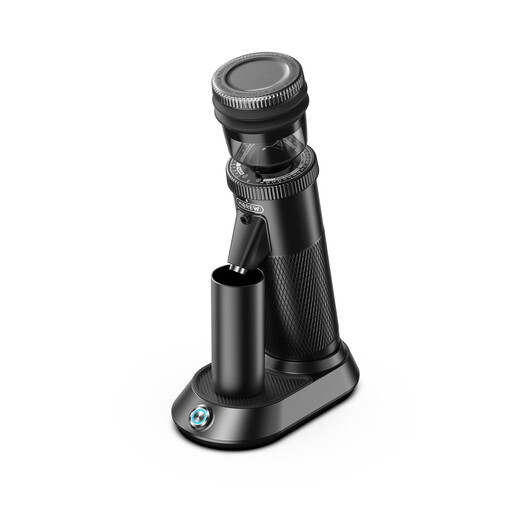 No image available
An automatic coffee grinder to compare if you want to grind electrically and are looking for a choice of grind settings.
The product title lists a 48 mm conical burr, 36 grind settings and a system for blowing out ground coffee. It also mentions slow and fast grinding speeds.
 No image available
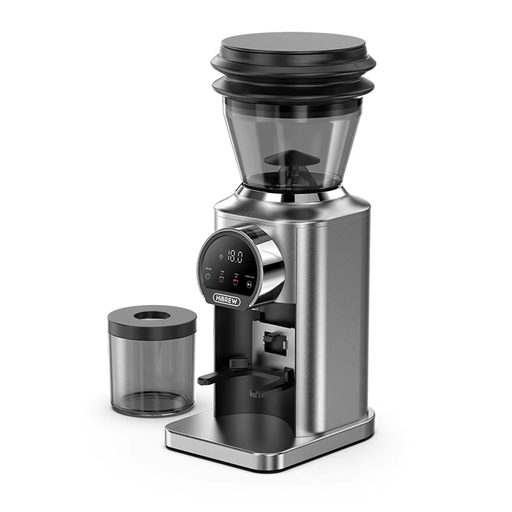
A grinder with a portafilter holder to consider if that way of collecting the grounds suits your espresso-making routine.
The product title lists 31 grind settings, a titanium-coated stainless steel burr, a plasma anti-static system and a portafilter holder.
No. A compact size alone doesn’t tell you whether a grinder can be adjusted for espresso. Timemore offers ESP variants in the C3 series with finer adjustment, while 1Zpresso classifies the Q Air as a pour-over grinder. Check the range of the exact variant to make sure it suits your espresso machine.
Follow the instructions for the exact model. For the Q series, 1Zpresso recommends taking the grinder apart for cleaning and warns against rinsing it with water or soaking it.
Check the features and electrical specifications of the exact model. The European Commission explains that the Low Voltage Directive applies to electrical equipment with an AC voltage range of 50–1000 V. According to the European Commission, a manufacturer applying a CE mark declares that the product meets the applicable requirements; this isn’t an independent performance test.
For a consumer purchase in the Netherlands, the seller must offer a solution if the product doesn’t conform to the agreement, according to the Dutch government. Any additional warranty doesn’t replace your statutory rights.
For a distance purchase from an online shop, a 14-day cooling-off period applies in many cases, according to the Dutch government, although there are exceptions. Check the seller’s information for your purchase.