
Making one or two cups
You grind a small, measured amount for breakfast and don’t necessarily want to fill a large bean hopper. Hario describes the Mini-Slim+ as suitable for up to two cups, with a capacity of 24 g of ground coffee.


For one or two cups, a compact hand grinder is a good choice if you don’t mind turning it by hand. If you’re making several batches in a row, an electric grinder is more convenient. Then choose one to suit your brewing method, and check how to measure out the small amount you need: a large bean hopper doesn’t mean the grinder has a set grind dose.
You grind a small, measured amount for breakfast and don’t necessarily want to fill a large bean hopper. Hario describes the Mini-Slim+ as suitable for up to two cups, with a capacity of 24 g of ground coffee.
You want to spend less time grinding by hand when making several batches. Wilfa and Sage describe electric models with a timer; check how you can adjust the amount for your portion.
Your choice depends in part on whether you make filter coffee, cafetière coffee or espresso. Sage lists settings from espresso to French press, while Wilfa mentions filter coffee and cafetière, among others.
Start with the amount you grind each time, then check that the grind size suits your brewing method. Finally, think about how much hands-on work fits into your morning routine.
| What to consider | What should you check? | Who is this important for? |
|---|---|---|
| Amount per grind | Compare your usual portion with the grinder’s capacity. Hario lists 24 g for the Mini-Slim+; Timemore lists 20 g for the standard version of the Chestnut C3 Jet Black. | If I usually make one or two cups, I want the grounds container to hold my portion. Around 33% of consumers prioritise a small amount per grind. |
| Grind size for your brewing method | Check whether the manufacturer lists your brewing method and which settings the model offers. Sage lists 60 grind settings; Wilfa mentions filter coffee and cafetière, among others. | If you make espresso, filter coffee or cafetière coffee, you’ll want to adjust the grind to suit your brew. Around 27% of consumers prioritise a suitable grind size. |
| Several batches in a row | Check how to start and stop grinding. The timers on Wilfa and Sage models control the grinding time, not the weight of the ground coffee directly. | If several family members make coffee one after another, I want to spend less time grinding by hand while still choosing my own portion. Around 27% of consumers prioritise speed when making several batches in a row. |
| Operation and care | Check the controls and follow the cleaning and safety instructions for the exact model. Hario says the grinding mechanism can be removed; Bosch lists a lid safety feature for the TSM6A013B. | If you use your grinder every day, you’ll want simple controls and care that fits into your morning routine. Around 13% of consumers prioritise ease of use. |
The hopper capacity doesn’t tell you how much coffee to grind for one breakfast serving. Wilfa lists a 250 g hopper and Sage a 340 g bean hopper; both models have a timer that controls the grinding time.
Measure out the amount of ground coffee you want to use, and check how to start and stop grinding for that portion.
The right grind depends on your brewing method. Settings vary by model: Wilfa lists filter coffee and cafetière, among others, while Sage lists settings from espresso to French press for the Dose Control Pro.
Compare the settings on the exact model with your brewing method. Don’t assume it’s suitable for espresso just because of its product category.
The Chestnut C3 Jet Black and the C3S Pro have different model names. According to Timemore, the standard C3 has a 20 g grounds container; don’t assume that capacity applies to another version without checking.
Check the full model name and version before comparing specifications or accessories.
Hario describes the Mini-Slim+ as a compact hand grinder for up to two cups.
The Chestnut C3 Jet Black is a hand grinder for measured portions.
Wilfa describes the Svart Aroma CGWS-130B as suitable for filter coffee and cafetière, among other methods.
The Dutch Dose Control Pro SCG600SIL2EEU1 is an electric burr grinder for a range of brewing methods.
Bosch offers the TSM6A013B, an electric blade grinder.
This Joybuy selection includes electric coffee grinders with adjustable grind settings and an electric blade grinder. Compare the controls and the amount you want to grind for each model.
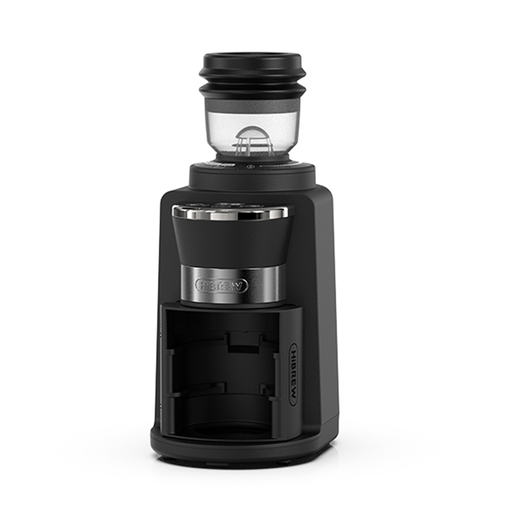 No image available
A good choice if you want to adjust the grind size and choose between manual and automatic operation.
The product name lists a 40 mm conical burr and 31 grind settings. It also mentions a blowing function, memory function and anti-static function.
The product name lists manual and automatic modes.
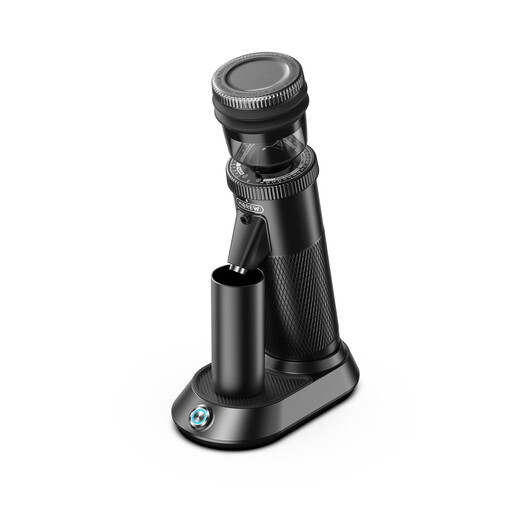 No image available
A good choice if you’re looking for an adjustable grind size for different brewing methods.
The product name lists a 48 mm conical burr and 36 grind settings.
Other features listed include slow and fast grinding, a powder-blowing system, anti-static and anti-scatter functions, and a 15°/90° mesh angle.
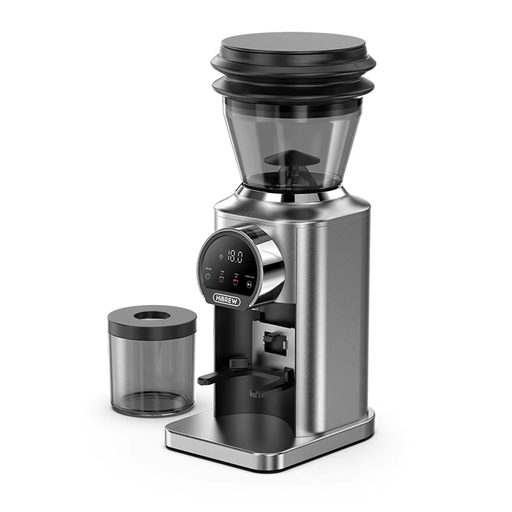 No image available
A good choice if you want to set the grind size and grinding time yourself.
The product name lists a touchscreen, adjustable grinding time and 31 grind settings.
Other features listed include a titanium-coated stainless steel burr, an anti-static plasma system and a portafilter holder.
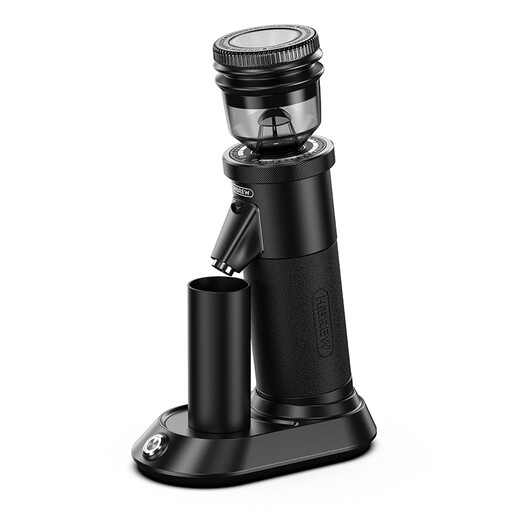 No image available
A good choice if you want to adjust the grind size and grinding speed.
The product name lists 36 grind settings, slow and fast grinding, and a powder-blowing system.
Other features listed include anti-static and anti-scatter functions, and a 15°/90° mesh angle.
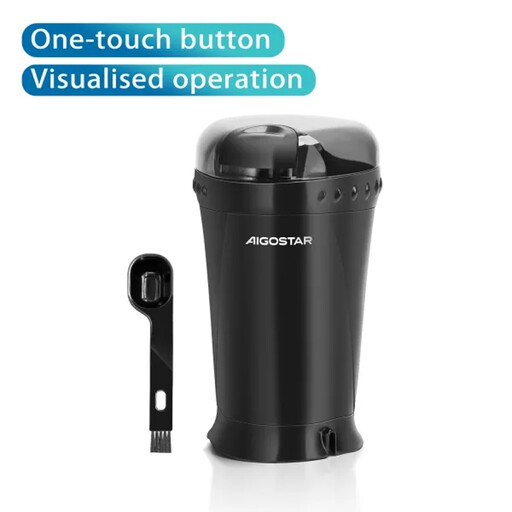 No image available
A good choice if you’re considering an electric blade grinder instead of a burr grinder.
The product name lists a power rating of 200 W, a stainless steel blade and a capacity of 60 g.
Start with your brewing method: the right grind size varies between methods such as espresso and filter coffee. Coffee & Health explains that you should adjust the grind to suit your intended brewing method. Then check which settings the manufacturer lists for the exact model.
No. The stated hopper capacity isn’t the same as a set portion. Wilfa lists 250 g for the Svart Aroma and Sage lists 340 g for the Dose Control Pro. Measure out what you want to grind and check how to set the grinding time.
Follow the instructions for the exact model. Hario says the Mini-Slim+’s grinding mechanism can be removed for washing; Bosch says the TSM6A013B only grinds when the lid is in place and the safety switch is pressed.
According to the Dutch government, online consumer purchases often come with a 14-day cooling-off period, although there are exceptions. You’re also entitled to a product that meets reasonable expectations: the Netherlands has no fixed statutory warranty period, and the seller is your point of contact if a product is faulty.