
Office team brewing a pot
You want colleagues to be able to grind the right amount of coffee beans time and again, without having to work out the dose from scratch each time.


For regular grinding to make a shared pot, an electric coffee grinder with filter settings and a grounds container suited to your portion sizes is a practical place to start. A hand grinder may be enough for small, occasional batches, but it requires manual grinding and may need to be refilled several times. Also consider how colleagues will set the dose and clean the grinder; don’t treat a description such as ‘quiet’ as proof of a measured noise level.
You want colleagues to be able to grind the right amount of coffee beans time and again, without having to work out the dose from scratch each time.
You switch between small and large filter batches and want to be able to weigh out a chosen amount of ground coffee each time.
You mostly grind individual portions and are weighing up whether manual grinding suits the extra steps involved and the space available for the grinder.
First work out how much coffee you need per grind and how the dose will be set. Then consider cleaning and where the grinder will be used.
| Factor to consider | What should you check? | Who is this important for? |
|---|---|---|
| Grinding for a shared pot | Compare the portion settings and grounds capacity with the amount you usually brew. | If I’m making a pot for several colleagues, I don’t want to have to refill the grinder or grind more halfway through. Around 36% of consumers say being able to grind a shared pot quickly is their main concern when buying. |
| Filter settings and dosing | Check the filter range of the exact model and whether you set the dose by portion, time or weight in grams. | I want colleagues to be able to find a suitable filter setting again and know how much coffee they’re using. Around 29% of consumers prioritise a familiar setting and a repeatable dose. |
| Cleaning after use | Check which parts the manual says can be removed and how they can be cleaned. | If several colleagues use the grinder, I want it to be clear how we’ll keep the grounds container and accessible parts clean. Around 21% of consumers say shared maintenance is their main concern. |
| Noise and individual portions | Work out whether you usually grind small portions. If the workspace is sensitive to noise, ask for measurements taken under stated, comparable conditions. | If the grinder is near desks, I want to consider both the noise and the work involved for each portion. Around 14% of consumers prioritise small portions and noise awareness. |
For the EKM 200, Rommelsbacher lists a 250 g bean hopper and a separate 170 g grounds container. The amount of beans the hopper holds therefore doesn’t tell you how much ground coffee the container can hold.
Compare both capacities with the amount you need for a pot.
For a larger batch, you may need to empty the container or grind more partway through.
A cup setting or timer isn’t the same as a weight-based programme. Melitta lists a cup setting for the Molino and a weight-based programme for the Calibra; Rommelsbacher describes portion dosing for the EKM 200.
Decide in advance whether a repeatable portion setting is enough or whether colleagues want to weigh the coffee in grams.
If you want to measure doses in grams without integrated scales, separate scales could mean an extra step.
Rommelsbacher describes the EKM 200 as ‘quiet’, but this isn’t a comparative noise measurement.
If the grinder will be near work areas, ask for noise levels and the conditions under which they were measured. Without this information, don’t assume one model is quieter than another.
ACM ConsuWijzer states that consumer protection doesn’t automatically apply when a contract is used mainly or exclusively for business purposes.
Before placing an order for the office, check which warranty and service terms apply to that business purchase.
Complaints or repairs may be handled differently from what you’d expect with a personal purchase.
According to Melitta, the Molino has a cup-based dose setting for filter coffee; the Calibra adds integrated scales and a weight-based programme.
According to Rommelsbacher, the EKM 200 is an electric disc grinder with a portion button and a separate grounds container.
According to Wilfa, the Svart Aroma has a filter setting, fine adjustment and a grinding timer.
The J is a hand grinder that 1Zpresso presents for pour-over and may be suitable for individual portions.
According to Graef, the CM702 is an electric conical burr grinder with a filter range and a grounds container.
This selection includes electric and manual coffee grinders for grinding beans for filter coffee. Check that the grind settings on each model suit your brewing method.
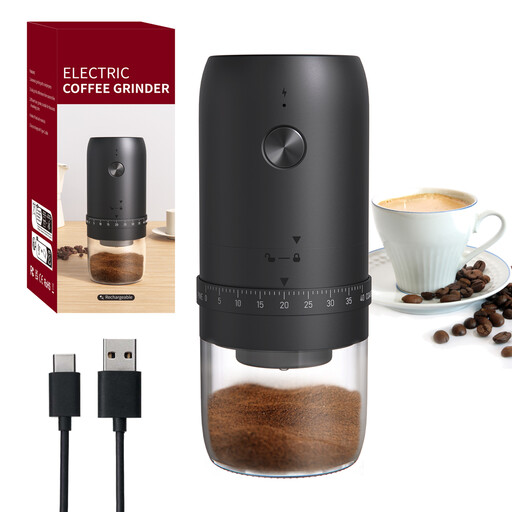 No image available
An electric grinder with adjustable grind settings may suit you if you want to adjust the grind for pour-over.
The description lists a stainless steel burr, USB-C charging, push-button controls and adjustable grind settings.
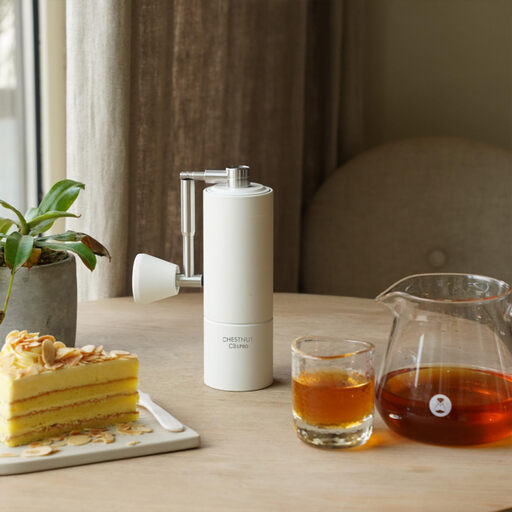 No image available
A hand grinder may suit you if you grind one portion at a time and don’t mind operating it manually.
The product name lists a folding handle, adjustable grind settings and stainless steel S2C conical burrs.
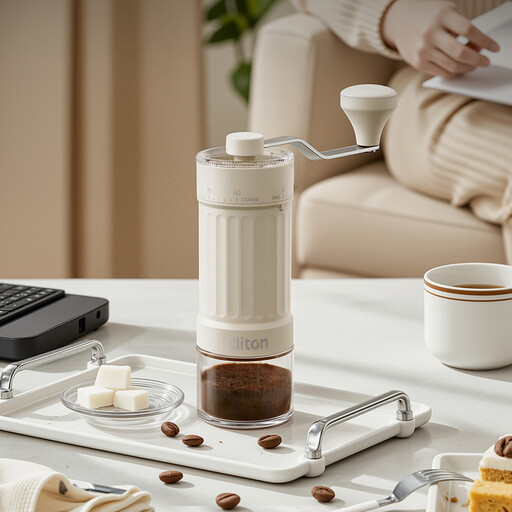 No image available
A manual grinder may be an option for small portions when you want to adjust the grind yourself.
The product description lists manual operation, a portable design and adjustable grind settings.
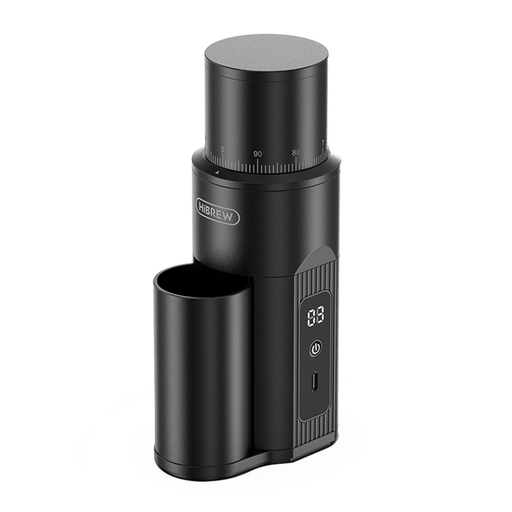 No image available
This coffee grinder may suit you if you want a wide choice of grind settings; check that its range works for your filter coffee.
The product name lists a dual 5200 mAh battery system, an aluminium body, a conical burr grinder and 100 stepless grind settings.
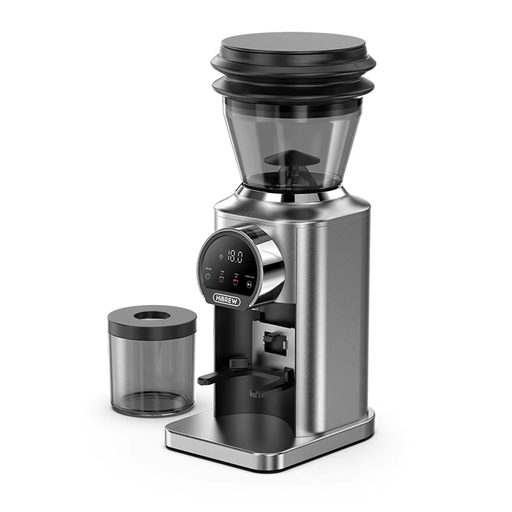 No image available
This coffee grinder may suit you if you want to adjust the grind and grinding time; check that the controls work for the way you’ll use it.
The product name lists a touchscreen, adjustable grinding time, 31 grind settings, a titanium-coated stainless steel burr, an anti-static system and a portafilter holder.
No. Rommelsbacher lists a 250 g bean hopper and a 170 g grounds container for the EKM 200. Compare the container’s capacity with the amount of ground coffee you need for a pot.
Agree on who will empty the grounds container and follow the cleaning instructions for the exact model. For the Molino, Melitta lists a removable upper burr and grounds container; for the EKM 200, Rommelsbacher lists a removable burr and grounds container. Check the manual to find out how the parts can be cleaned.
Not always. ACM ConsuWijzer states that consumer protection doesn’t apply when a contract is used mainly or exclusively for business purposes. So check which seller and manufacturer terms apply to the business purchase.
Check the product information, whether it’s suitable for the available power supply and which product markings apply. Ondernemersplein explains that, after assessing the applicable requirements, manufacturers affix the CE marking and draw up an EU declaration of conformity. A CE marking alone says nothing about the grind result or noise level.