
Vandaag of morgen in huis

Kwaliteit gegarandeerd

Welkomstaanbiedingen ontgrendelen: GRATIS bezorging | Tot 80% korting | Gratis 30 dagen JoyPlus-proefperiode
Download de app
At first glance, a coffee grinder seems like a simple appliance: add the beans, press a button and you’re done. In practice, the grinder largely determines how evenly your coffee is extracted. The wrong choice can result in bitter espresso, weak filter coffee, excessive grounds left behind or an appliance that is difficult to keep clean.
Anyone searching online for a coffee grinder will also encounter a wide range of terms, including electric coffee grinder, coffee bean grinder, coffee grinder with grind settings and conical burr grinder. Below, you’ll discover which specifications really matter and which models suit different brewing needs.
A coffee grinder with 30 or 40 settings may sound appealing, but the number alone does not tell the whole story. The increments between settings may be quite large, meaning you still might not be able to find the precise grind your coffee requires. For espresso, a small adjustment is often more valuable than an extensive list of settings.
A stepless adjustment gives you greater control, but it also takes a little more time to find the ideal position. For filter coffee, French press and straightforward everyday brewing, a model with fixed settings may be easier to use.
A blade grinder breaks coffee beans apart with rotating blades. This can produce a less uniform grind, while the desired fineness often depends on how long you hold down the button. A burr coffee grinder crushes the beans between two burrs, generally making it easier to select a consistent grind size.
The material is also worth considering. Steel burrs are a widely used option. A conical burr grinder guides the beans through a cone-shaped burr set. According to product descriptions from various brands, these systems are suitable for multiple grind levels, but the final choice depends on the settings, maintenance requirements and your preferred brewing method.
A large bean hopper is not automatically more convenient. Coffee beans left in an open hopper for extended periods gradually lose their aroma. For one or two people, a compact grinder or single-dose grinding may be more practical. For an office, family or small café, greater capacity can be a real advantage.
Also check whether the burr set, grounds container or powder chute can be removed. An appliance that is difficult to clean may accumulate old coffee residue over time, making it less pleasant to use.
Espresso requires a fine, precisely adjustable grind. A coffee grinder for espresso should therefore offer sufficiently fine settings and, preferably, allow for small adjustments. For a moka pot, the grind is usually slightly coarser than for espresso.
A coffee grinder for filter coffee or pour-over should instead be able to produce a consistent medium-coarse grind. French press requires a coarse grind. If you use several brewing methods, look for a wide adjustment range. Models such as the Starseeker E55 Pro are described as featuring a 55 mm titanium-alloy conical burr set and stepless fine adjustment. This makes the model appealing to users who frequently switch between espresso and pour-over.
A 50- to 90-gram hopper is well suited to everyday, single-batch brewing. According to its product specifications, the De'Longhi KG210 has a 90-gram hopper and a power output of 170 watts. The model uses blades and offers straightforward operation, making it particularly suitable for users who want to grind coffee beans without dealing with numerous settings.
Larger hoppers are available for preparing several cups. According to the product information, the Rommelsbacher EKM 200 has a bean hopper with a capacity of approximately 250 grams and a dose selector for 2 to 12 cups. The grinder uses steel burrs and offers separately adjustable coarseness. Note that this model does not have an automatic shut-off function.
Measure the available space on your countertop before ordering. A fully automatic coffee machine with an integrated bean grinder takes up more room than a standalone coffee grinder, but combines grinding and brewing in a single appliance.
A portable coffee grinder can be useful at the office, while travelling or when camping. According to its product description, the STARESSO D6E PLUS features a rechargeable 1000 mAh battery, USB-C charging and a stainless-steel burr. The appliance has a diameter of approximately 52 mm and is designed for espresso, moka pot, pour-over and French press. With cordless models, always check the charging time and cleaning instructions.
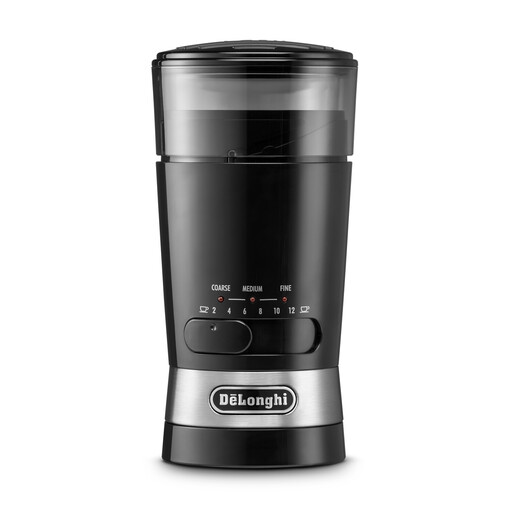
Why it’s a good fit: A compact electric coffee grinder for households that occasionally brew espresso, French press or other types of coffee.
The straightforward controls make it clear that grind size is primarily adjusted through grinding time. Don’t expect advanced digital dosing functions.
170 watts, a 90-gram hopper and a weight of approximately 1 kg.
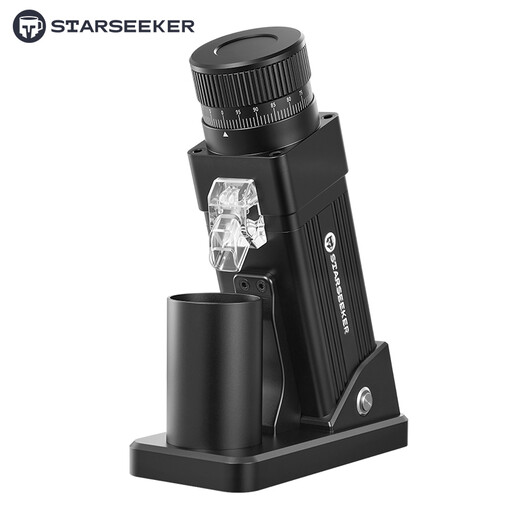
Why it’s a good fit: Designed for home baristas and small cafés that alternate between espresso and pour-over.
The stepless adjustment prevents you from being limited to a small number of fixed settings. The removable magnetic chute also makes cleaning easier.
55 mm conical burr set, stepless fine adjustment and a metal housing according to the product description.
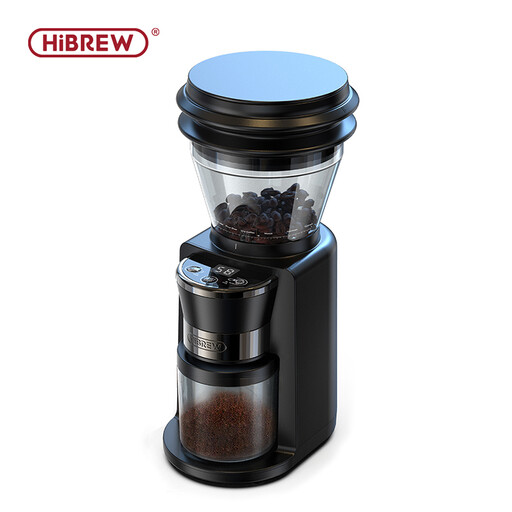
Why it’s a good fit: A practical choice for several cups a day and users who want to switch quickly between brewing methods.
With 34 settings and a container for ground coffee, operation is more intuitive than with a basic blade grinder.
210-gram bean hopper, 100-gram grounds container and a conical burr according to the product specifications.
A standalone coffee grinder gives you greater freedom to use a separate espresso machine, filter holder or French press. You can choose your own beans and brewing method. A fully automatic coffee machine grinds the beans immediately before brewing and is more convenient for households that want coffee at the touch of a button.
According to its product description, the Philips 1200 Series EP1220/00 has a ceramic grinder with 12 grind settings, a 275-gram bean hopper and a 1.8-litre water tank. The De'Longhi Magnifica S ECAM20.110.B offers, according to the listed specifications, a 250-gram bean hopper, manual grind-size adjustment and a steam wand. With this type of appliance, you should consider more than just the grinder: descaling, cleaning the brew group and maintaining the milk system are also important.
Browse a current selection of coffee grinders and automatic espresso grinders with different grind settings, capacities and grinding technologies.
A burr grinder can generally distribute the beans more evenly than a blade grinder. For espresso, precise fine adjustment is particularly important. In addition to the type of burr set, check the adjustment range and whether small incremental changes are possible.
Remove any grounds left in the container after use. Clean the grinding chamber regularly with a dry brush, following the instructions in the manual. Electrical components must not be immersed in water. With a burr coffee grinder, regular maintenance is especially important if you frequently use dark or oily beans.
Power consumption per grinding cycle is usually modest. The main recurring costs are coffee beans, filters and, where necessary, maintenance products. A fully automatic coffee machine may also require descaler, water filters and cleaning tablets. For that reason, consider not only the purchase price but also the maintenance instructions and availability of replacement parts.
