
Vandaag of morgen in huis

Kwaliteit gegarandeerd

Welkomstaanbiedingen ontgrendelen: GRATIS bezorging | Tot 80% korting | Gratis 30 dagen JoyPlus-proefperiode
Download de app
Freshly grinding coffee beans can make a big difference to both convenience and flavour. However, not every coffee grinder is automatically suitable for every brewing method. A compact blade grinder works differently from a burr grinder with conical grinding discs. What’s more, a large number of grind settings doesn’t always tell you everything about practical precision.
For British coffee drinkers, three questions are particularly important: do you want to grind quickly without manual effort, how much coffee do you make per session, and do you need a fine grind for espresso? Below, you’ll find out what to look for and which models suit different usage scenarios.
An electric coffee grinder with a high wattage sounds powerful, but the motor power doesn’t tell you how much control you have over the grind. Models with blades chop beans into smaller pieces. This can result in a mix of fine and coarse particles. For simple filter coffee, that may be fine, but for espresso or pour-over, a more consistent result is usually preferable.
A grinder with conical burrs crushes the beans between two rotating parts. Pay attention to the material, diameter and how the burrs are aligned. These details are more verifiable than general terms like “professional” or “barista quality”.
A coffee grinder for espresso requires a significantly finer grind than a coffee grinder for French press. For espresso, a small adjustment often matters, whereas a coarse grind for French press is less critical.
So check:
A coffee grinder with a grind setting is more versatile, but more settings don’t automatically mean that every setting is suitable for your brewing method.
A portable coffee grinder is handy for camping, travel or a small kitchen. The capacity is usually more limited than that of an electric grinder for multiple cups. A manual coffee grinder also requires time and effort, especially if you’re grinding several portions one after another.
So look at the amount of beans per grind, the weight and the space you have available. For one or two cups, a compact grinder may be suitable. For a household where several cups are made daily, an electric coffee grinder is often more practical.
A simple blade model, such as the De'Longhi KG210 or Butler Coffee Grinder, works with stainless steel blades. With these models, the fineness is mainly determined by the grinding time. That’s easy to use, but less reproducible than a set grind level.
A burr grinder with conical burrs is generally more interesting for users who switch between espresso and filter coffee. The STARESSO D6E PLUS, for example, mentions a stainless steel burr system, an adjustable grind and a rechargeable battery. According to the product description, the model is intended for espresso, moka pot, pour-over and French press.
For espresso, a finer and more precise range is important. The Starseeker E55 Pro mentions a 55 mm titanium alloy conical burr and a stepless fine adjustment. According to the product description, the setting is designed for adjustments from fine grind to coarser particles.
For filter coffee, a clear rotary dial is often sufficient. The TIMEMORE Chestnut C3S Pro mentions approximately 36 adjustable levels, a 38 mm conical burr and a foldable handle. The product information states a range from espresso to French press.
Coffee grounds easily get left around the burrs or blades. Check whether parts are removable and whether the manufacturer recommends a dry brush. Electric models must be unplugged before cleaning. Do not immerse the motor housing, plug or cord in water.
For a cordless model, the battery capacity is relevant. The STARESSO D6E PLUS, according to the product description, uses a 1000mAh battery and USB-C charging. For a corded model, check whether the power specifications are suitable for use in the UK, such as 220–240 V.
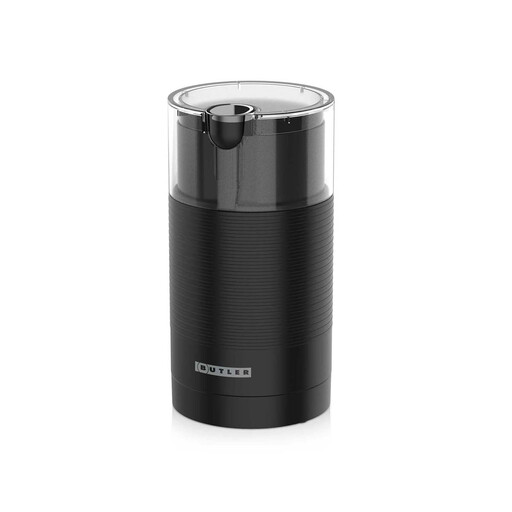
Why this fits the profile: The one-button operation and 70 g capacity keep things simple for anyone wanting to grind coffee at home without complicated settings.
The maximum quantity and grinding time are clearly described. Bear in mind that the grind is controlled by blades and time, not by fixed grind settings.
150 W power, 70 g capacity and a compact design for everyday use.
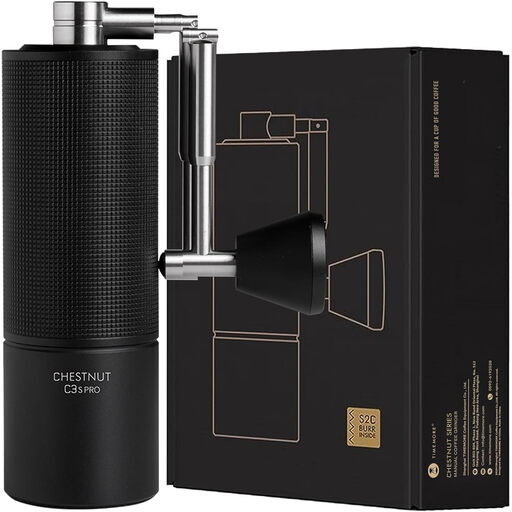
Why this fits the profile: This manual coffee grinder is designed for control, portability and switching between espresso and French press.
The product description mentions approximately 36 grind settings and a conical stainless steel burr. This lets you see the adjustment range you’re getting in advance.
Aluminium body, 38 mm conical burr and foldable handle.

Why this fits the profile: The electric version is designed for users who want precise adjustment and regularly make espresso and pour-over coffee.
The product specifications mention a stepless adjustment and 55 mm conical burrs. Do check beforehand whether you need the extra adjustment and the larger size.
72 W AC motor, metal body and stepless fine adjustment according to the product information.

Why this fits the profile: The combination of a manual coffee grinder, espresso maker and carry case is designed for travel, camping and use without a power socket.
The set uses no electric drive. The product description mentions 12 grind settings and a stainless steel conical burr.
Portable set, manual operation and 12 adjustable grind settings according to the product information.
We’ve put together a full, up-to-date list of products that fully meet these strict selection criteria and current European safety regulations.
That depends on usage. An electric coffee grinder uses relatively little electricity per grind, but the total energy consumption is mainly determined by how often and for how long you grind. A manual coffee grinder uses no electricity, but does require more time and effort.
Choose a model whose product description explicitly mentions espresso and a fine setting. An espresso coffee grinder ideally has a precise adjustment range. A model with fixed coarse settings or only blades is less suitable if you need to fine-tune the grind.
Unplug an electric model and remove loose coffee grounds with a dry brush. Follow the manual for removing burrs or blades. Only rinse parts if the manufacturer allows it. For several of the models mentioned, dry cleaning is recommended; water near the motor, plug or burrs can cause damage.
