
Small batches and limited storage space
You grind enough decaf for one or a few cups and want to put the grinder away after use. Its dimensions, capacity and how you operate it while grinding all play a part in your choice.


Start with your brewing method and the space you can spare for a grinder. Then choose between grinding by hand and the convenience of an electric grinder. If you switch between decaf and regular beans, also consider portioning, how easy it is to find your settings again, and cleaning. There is no single grind setting that works for every decaf bean. Manufacturer specifications describe features, but they are not directly comparable measurements of flavour, noise or coffee residue.
You grind enough decaf for one or a few cups and want to put the grinder away after use. Its dimensions, capacity and how you operate it while grinding all play a part in your choice.
You use both decaf and regular beans, and want to portion them out, find your settings again and clean the grinder when you switch.
You want to be able to adjust the grind for espresso. Check whether the manufacturer specifically describes the exact model as suitable for espresso; a filter grinder is not automatically suitable.
| What to consider | What should you check? | Who should pay particular attention? |
|---|---|---|
| Space and storage | Compare the dimensions of the exact model with the space you have available, and allow for the extra room needed while grinding. | I want to put the grinder away after use and have limited worktop space; there also needs to be room for the handle or grounds container. Around 27% of consumers say footprint and storage are their top priority. |
| Switching beans | Check how you add small portions, read the grind setting and access the burrs according to the instructions. | When I switch between decaf and regular beans, I want to portion them out and reassess the grind each time. Around 27% of consumers put switching between beans first. |
| Grind range | Decide which brewing method you use most and check whether the manufacturer explicitly lists the exact model for espresso, filter coffee or both. | I want a grinder that suits my filter coffee, espresso or both; the word ‘fine’ alone does not prove it is suitable for espresso. Around 26% of consumers prioritise a grind range suited to their brewing method. |
| Operation and cleaning | Read the instructions for details on how to use the grinder, access the burrs and clean it as recommended. | I want to know how much hands-on effort my daily routine involves and how to maintain the grinder according to the instructions. Around 20% of consumers prioritise ease of use and cleaning. |
A finer setting does not automatically mean a model is suitable for espresso. For example, Fellow says the Ode Gen 2 is not suitable for espresso, while Baratza lists a separate espresso range for the Encore ESP.
Check which brewing methods the manufacturer lists for the exact model rather than relying on the word ‘fine’ alone.
You also need to be able to fill and operate the grinder. A foldable handle does not mean the space needed while using the grinder is the same as the space it takes up in storage.
Measure the available space with the grinder both stored away and ready to use.
Wilfa describes the burrs on the Svart Aroma CGWS-130B as conical, while a Dutch retailer’s page lists flat burrs.
Compare the full model number and the manufacturer’s documentation with the version you want to buy.
Information about an overseas model does not confirm the mains voltage, plug or terms for a version you want to use in the Netherlands.
Before buying, check the seller, model code, mains voltage, plug and returns policy for the specific offer.
1Zpresso describes the J-Ultra as a compact hand grinder designed for espresso and small batches.
Baratza describes the Dutch Encore ESP as an electric grinder with settings for espresso and filter coffee.
Timemore describes the C3 series as compact hand grinders with a grind range from espresso to French press.
Wilfa describes the Svart Aroma CGWS-130B as an electric grinder with a timer and settings for uses including filter coffee and cafetière.
Fellow distinguishes the Opus 2, designed for several brewing methods, from the Ode Gen 2, designed for brewed coffee such as filter.
This selection includes manual and electric coffee grinders with different settings and designs. Check whether the features listed for each model suit your brewing method and available space.
 No image available
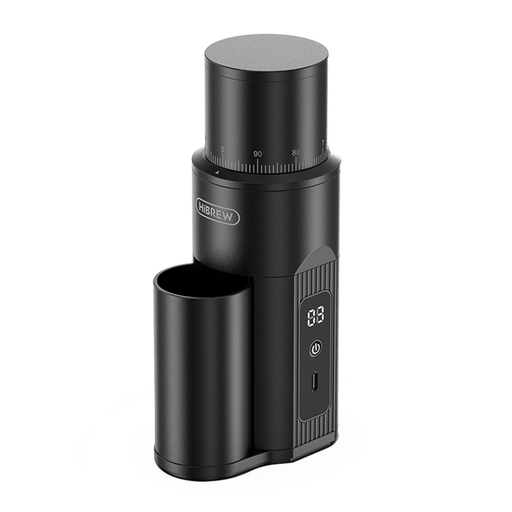
Consider this model if you’re looking for a grinder with adjustable grind settings; the number of settings alone does not prove which brewing methods it is suitable for.
The product name lists a conical burr and 100-level continuous grind adjustment.
The product name also lists a 5200 mAh dual-battery system.
 No image available
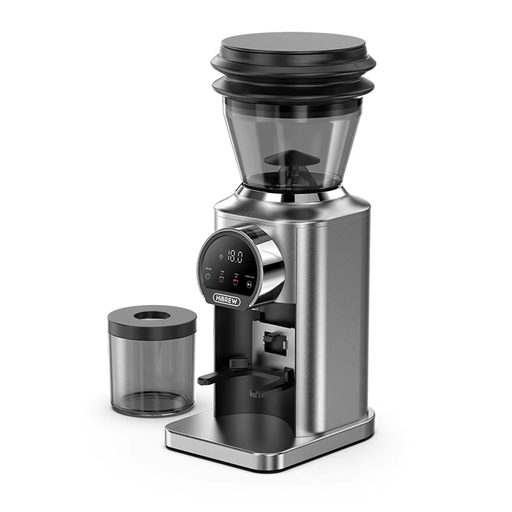
Compare this model if you use a portafilter, and check that the product information matches your brewing method.
The product name lists a titanium-coated stainless-steel burr, 31 grind settings and a portafilter holder.
A touchscreen and adjustable grinding time are also mentioned in the product name.
 No image available
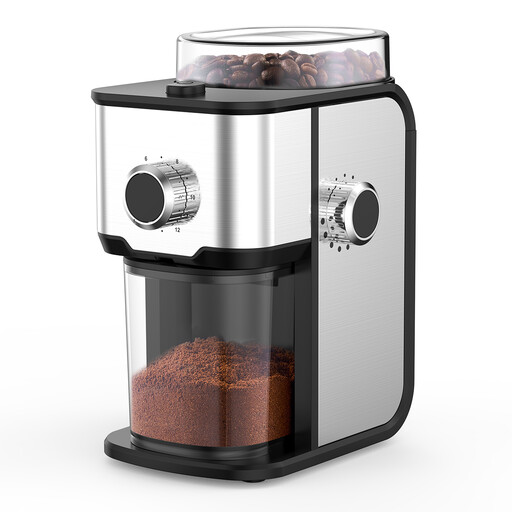
This grinder is worth comparing if you’re looking for an electric model; check whether the listed settings suit your brewing method.
The product name lists flat burrs, 14 grind settings and a quantity for 2–12 cups.
 No image available
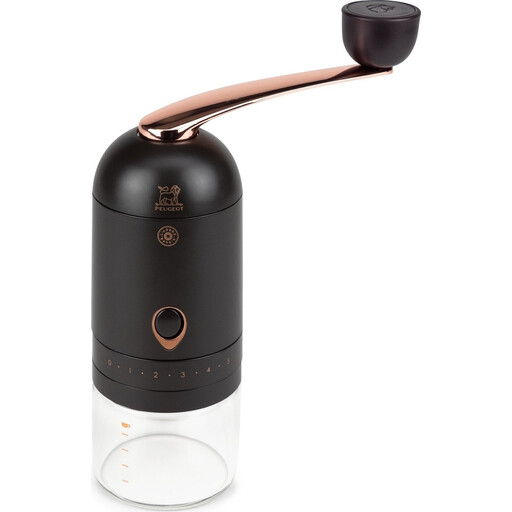
Compare this version if you want to grind by hand. Check the stated height against the space where you plan to use or store the grinder.
The product name lists manual operation and a height of 20 cm.
 No image available
Compare the listed uses with your usual brewing method and check the exact version before choosing.
The product name lists 34 settings and suitability for espresso, Turkish coffee and pour-over.
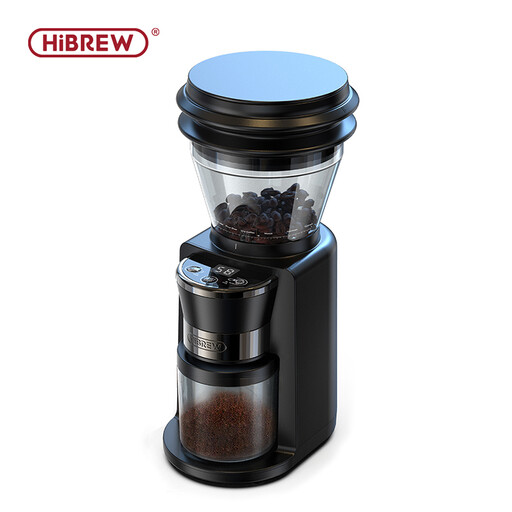
The title lists a conical burr and a clear bean hopper.
No. There is no universal grind setting for every grinder, bean and brewing method. Start with a setting that suits your brewing method and adjust it when you switch coffees.
Check whether the manufacturer explicitly says the exact model is suitable for espresso. For example, Fellow says the Ode Gen 2 is not suitable for espresso; Baratza lists a separate espresso range for the Encore ESP.
Follow the instructions for your model. For the J-Ultra, 1Zpresso recommends using a brush and air blower, and advises against cleaning it with water.
According to the Dutch government, the seller must provide a solution if a product is faulty; a manufacturer’s warranty is in addition to your statutory rights. For distance selling, you generally have a 14-day cooling-off period. Check the terms and exceptions that apply to your specific purchase.
Check the mains voltage and plug for the exact model. For the Dutch Encore ESP, Baratza lists 220–240 V AC; this specification does not automatically apply to other models. If in doubt, ask the seller for information about the version on offer.