
Colleagues making a batch together
If you regularly grind coffee for several people, compare the amount of beans per run with the capacity of the grounds container. The hopper capacity alone doesn’t tell you how much coffee you can grind in one go.


Start with a grinder whose coarse setting you can adjust to suit your cold-brew filter, then compare its practical capacity with the amount of beans you need for each batch. An electric grinder involves less manual effort for larger quantities; a hand grinder doesn’t need a permanent power connection, but its smaller capacity may mean grinding in several batches. A claim that a grinder is quiet is no substitute for comparable noise measurements.
If you regularly grind coffee for several people, compare the amount of beans per run with the capacity of the grounds container. The hopper capacity alone doesn’t tell you how much coffee you can grind in one go.
A coarse setting, a practical place to grind and a grounds container that’s easy to empty and clean can all affect your shared routine. The product specifications don’t provide comparable noise measurements for the models listed.
If you only grind a small amount now and then, it’s worth weighing up the manual effort and lack of a permanent power connection against the number of grinding sessions needed for a batch.
First, check that the grinder offers a coarse setting to suit your filter. Then compare the amount needed per batch with the grinder’s capacity, and consider how grinding, emptying and cleaning will work in your shared workspace.
| What to consider | What should you check? | Who is this important for? |
|---|---|---|
| Coarse grind for your filter | Check the adjustment range and the instructions for your cold-brew filter; the right setting can vary between systems. | If I want to avoid a grind that doesn’t suit my filter, I check the filter instructions first. Around 36% of consumers say a suitable coarse grind is their top buying priority. |
| Capacity per batch | Compare the amount of beans you need with the stated capacities of the hopper and grounds container, and check the manual for usage limits. | When I’m grinding for several colleagues, I want to know how many beans I can grind in one go and whether I’ll need to refill the grinder. Around 29% of consumers put batch capacity first. |
| Noise and mess | Consider where you can grind and how to empty the grounds container. If noise limits are strict, ask for comparable measurements taken under the same conditions. | In a shared space, I want grinding and tidying up to be manageable for everyone. Around 21% of consumers say minimising disruption is their top priority. |
| Cleaning and maintenance | Check the manual to see how to clean the grinding chamber and outlet, and which parts can be washed and dried. | If I share the grinder with colleagues, I want to know who will clean it and which parts are accessible. Around 14% of consumers value ease of maintenance most. |
For the Rommelsbacher EKM 200, the manufacturer lists a 250 g bean hopper and a 170 g grounds container separately. These figures don’t tell you how much you can grind without stopping.
Compare your batch size with each stated capacity separately, and check the manual for permitted usage limits.
Manufacturers’ descriptions of these features aren’t comparable noise measurements or an independent assessment of mess in an office.
Treat these terms as product features. If noise limits matter, ask for comparable measurements taken under the same conditions.
The EKM 200 is an electric option to compare for shared batches where a coarse setting and a grounds container are useful.
The Encore is an electric grinder worth comparing if you’re looking for a familiar range of grind settings for different brewing methods.
The Uniform WSFBS-200B is worth comparing if weighing beans and using a metal grounds container are part of your shared routine.
The manual C3 Max is an option to compare for small, occasional servings if you don’t want to use a permanent electric grinding station.
These product picks are electric burr grinders for anyone looking to adjust the grind for cold brew or prepare a shared batch.
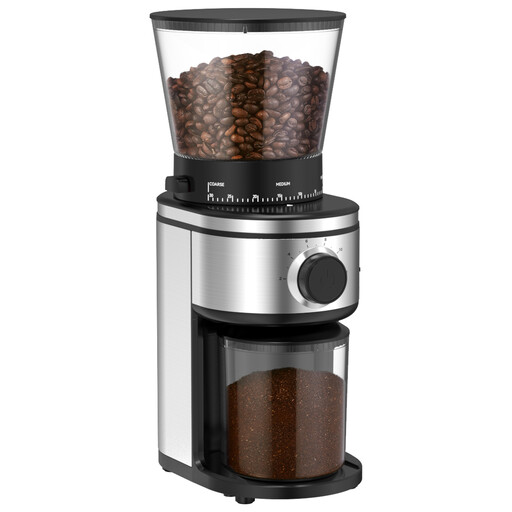 Image unavailable
An option if you want to adjust the grind size and set a quantity for several cups.
The product description lists 30 grind settings, a coarse setting for cafetière coffee and an adjustment for 2–12 cups. The cup setting isn’t a stated bean capacity.
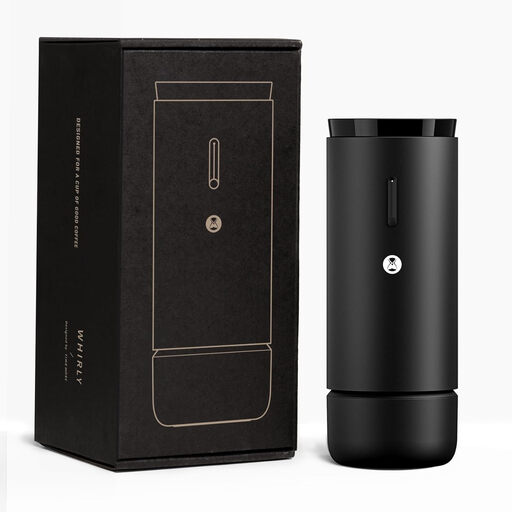 Image unavailable
An option if you want to grind coffee electrically somewhere without a permanent power connection.
The product description lists 30 settings, a rechargeable battery and a maximum bean capacity of 50 g. Compare this capacity with your batch size; a larger quantity may need an extra grinding session.
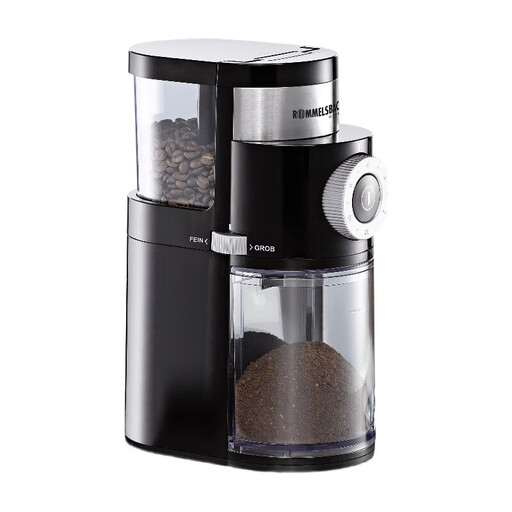 Image unavailable
An option if you’re looking for an adjustable coarse grind and a removable grounds container for shared use.
The manufacturer lists a 250 g bean hopper and a 170 g grounds container. The container capacity isn’t the maximum amount you can grind without stopping; check the manual for this information.
The product description mentions a setting for 2–12 cups and adjustable grinding from fine to coarse.
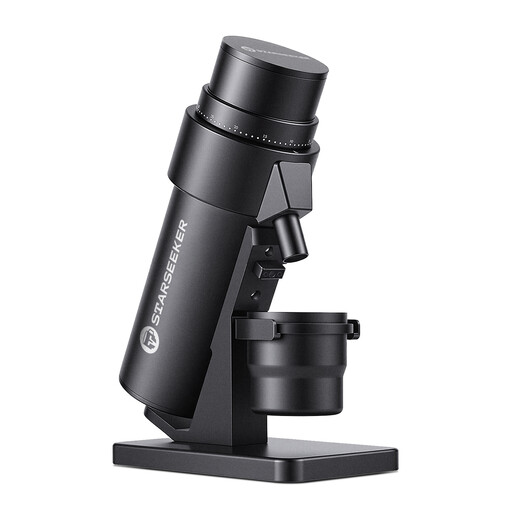 Image unavailable
An option if you’re looking for an electric grinder with adjustable settings from fine to coarse.
The product title lists 63 mm burrs. The description mentions settings for espresso and pour-over; check that the coarse range suits your filter.
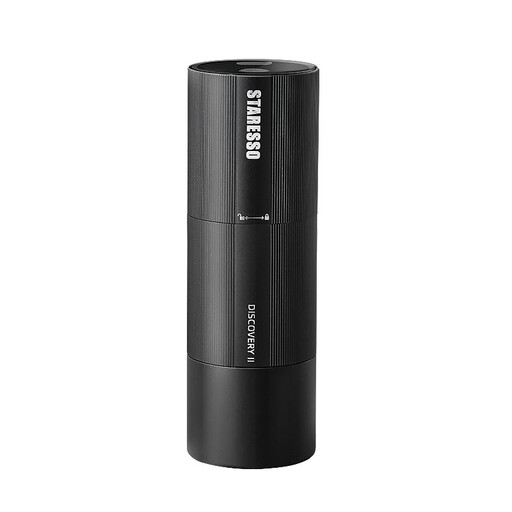 Image unavailable
An option if you want to compare portable electric grinders with adjustable settings.
The product description lists a stainless steel burr, a 1000mAh rechargeable battery and settings from espresso-fine to coarse for cafetière coffee. It says to clean the burr dry and store the grinder in a dry place.
No, not as a general rule. Toddy recommends a medium-coarse to coarse grind for its own system to help prevent the filter from clogging. Follow the instructions for your filter and adjust the grind to suit the result.
Follow the manual for the exact model and agree on who will empty the grinder after use. Baratza recommends brushing out residue from the grinding chamber and outlet on its grinders, and thoroughly drying the bean hopper and grounds container after washing them. This doesn’t mean you can wash every burr set with water.
Put prepared cold brew that needs to be chilled back in the fridge, and follow the instructions for the recipe and system you’re using. The Netherlands Nutrition Centre recommends setting your fridge to 4 °C. Toddy says its own system’s concentrate can be kept in the fridge for up to two weeks; don’t automatically apply that timeframe to other recipes or coffee with milk.
According to the Dutch government, the seller must provide a solution if a product is faulty; a manufacturer’s or additional guarantee doesn’t replace your legal right to a product that works properly. For a business purchase, you should also check the applicable terms of sale and service, as this government information describes consumer rights.
Electrical equipment covered by the EU Low Voltage Directive, operating at 50–1,000 V AC or 75–1,500 V DC, is subject to requirements including conformity obligations and CE marking. Check the exact model and power specifications; the directive alone doesn’t prove that a particular item complies. The rule doesn’t automatically apply to a hand grinder.