
Cafetière drinker with limited storage space
You grind small batches and want to put the grinder away after use. Also consider how much room you’ll need to use a hand grinder.


When choosing a coffee grinder for your cafetière, first check that it can grind coarsely; Bodum recommends a coarse grind for the CHAMBORD cafetière. A compact hand grinder suits small batches and limited storage space, but you’ll need to grind by hand. An electric grinder does the turning for you, but needs a permanent spot and a power socket. Also check the capacity and cleaning instructions for the exact model.
You grind small batches and want to put the grinder away after use. Also consider how much room you’ll need to use a hand grinder.
You want to adjust the coarseness to suit your beans and taste. Check the adjustment range of the exact model, not just the number of settings.
You want to do less by hand, so you’re comparing how an electric grinder works, its capacity and the kitchen space it needs with a hand grinder.
First check that the grinder offers a coarse setting to suit your cafetière. Then compare the space it needs for use and storage, how it works and how much you want to grind at a time.
| What to consider | What should you check? | Who is this important for? |
|---|---|---|
| Coarseness and adjustability | Check whether the manufacturer specifies a coarse setting or says the grinder is suitable for a cafetière. Setting numbers aren’t directly comparable across models. | I want to choose a grind to suit my cafetière and adjust the setting based on my brewing results; around 33% of consumers prioritise suitability for a cafetière grind above all else. |
| Storage and use | Compare the external dimensions and the space needed to use the grinder, including its handle or grounds container. | If my worktop or cupboard has limited space, I want to know where the grinder will fit during use and afterwards; around 27% of consumers put storage space at the top of their list. |
| Manual or electric | Decide how much you grind at a time and whether you’d rather turn the handle yourself or use an electric grinder. An electric model will need a space and a power socket. | I want to do less grinding by hand, especially if I make coffee more often, so I’m checking whether an electric model will suit my kitchen; around 20% of consumers prioritise reducing manual effort above all else. |
| Portions and cleaning | Check what kind of capacity is specified, and read the cleaning instructions and guidance on detachable parts for the exact model. | If I make several portions, I want to know whether I’ll need to grind in batches and how to clean the grinder; around 20% of consumers prioritise portion size and cleaning. |
A small size doesn’t tell you whether the grinder can produce a coarse enough grind for a cafetière.
Check the adjustment range and the exact model’s guidance on coarse grinding.
A bean hopper and a grounds container refer to different parts. For example, the Rommelsbacher EKM 200’s 250 g bean capacity isn’t directly comparable with the 15–20 g grounds capacity listed by 1Zpresso for the Q.
Decide how many grams you want to grind at a time, and check whether the stated capacity refers to beans or ground coffee.
1Zpresso specifically warns that the Q series must not be washed or soaked.
Follow the cleaning instructions for your grinder’s full model code.
Hario describes the Mini-Slim + as a hand grinder for up to two cups.
The Q is a hand grinder for which 1Zpresso lists the model dimensions and grounds capacity.
The electric EKM 200 is an alternative if you’d rather not grind by hand.
Wilfa describes the Svart Aroma as having a safety feature around the grounds container.
For the C3s/C3 series, Timemore describes hand grinders with settings down to a coarse grind for immersion brewing.
This selection includes electric coffee grinders and hand grinders. Compare the listed grind settings, operation and capacity with the space you have available.
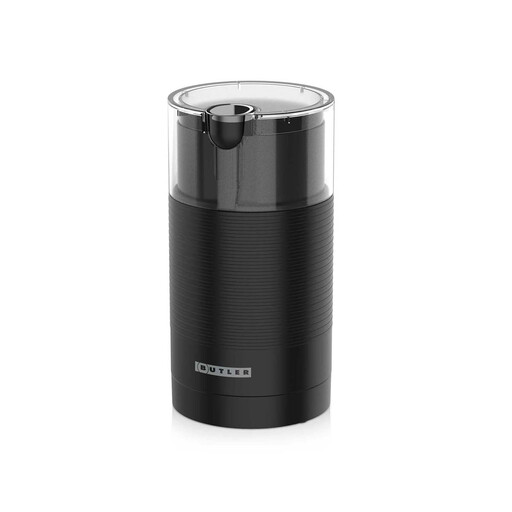 No image available
An electric grinder with settings from coarse to fine, for anyone who’d rather not use a hand crank.
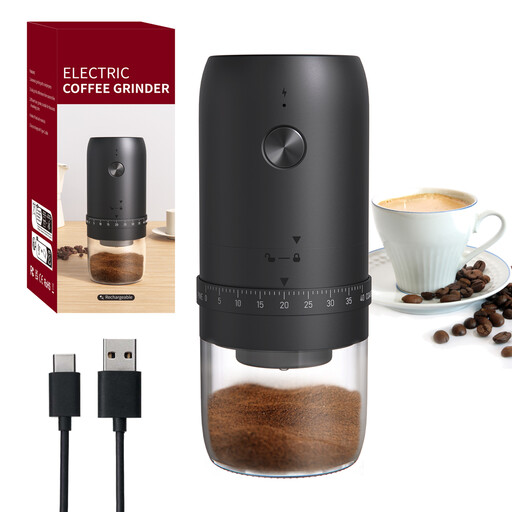 No image available
The product description mentions a coarse grind for a French press, for anyone who wants to grind electrically without using a hand crank.
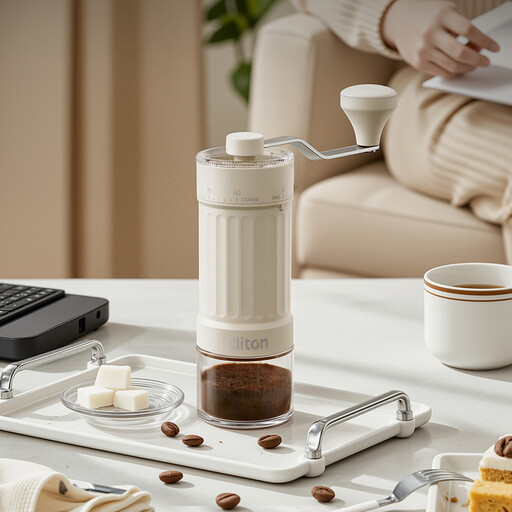 No image available
A hand grinder for anyone who doesn’t need electric operation and wants to adjust the grind themselves.
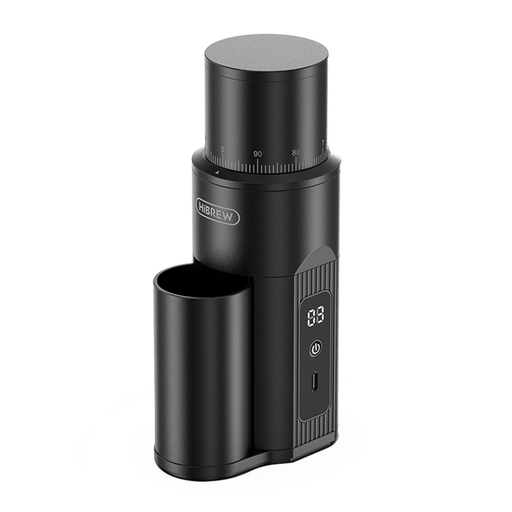 No image available
A model with a wide range of listed settings to adjust the grind; check for yourself whether the coarse setting suits your cafetière.
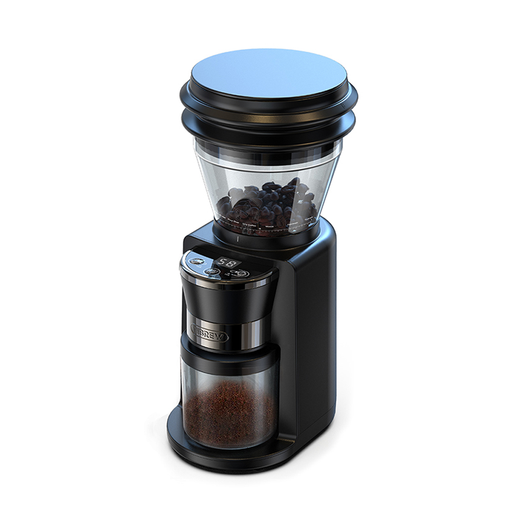 No image available
An automatic grinder with adjustable settings; check whether this model’s settings cover the grind you’re looking for for your cafetière.
Start with a coarse grind: Bodum recommends one for the CHAMBORD cafetière. Then follow the instructions for your grinder and adjust the setting based on your brewing results; settings aren’t interchangeable between models.
First check the instructions for the exact model. For the 1Zpresso Q series, the manufacturer says not to wash or soak the grinder and provides separate cleaning steps.
Not automatically. According to the Dutch government, purchases already come with a legal guarantee: the seller must offer a solution if a product is faulty. Extra cover may be worthwhile if its terms give you more rights than you already have; there is no fixed statutory guarantee period in the Netherlands.
According to the Dutch government, many distance purchases come with a 14-day cooling-off period. Before you order, check the seller’s information and whether your purchase is covered by these rules.
The Dutch government states that electrical appliances offered in the EU must carry a CE mark and that the instructions must include safety warnings. Check the marking, model version and instructions for the specific product; the product name alone doesn’t confirm these details.