
Vandaag of morgen in huis

Kwaliteit gegarandeerd

Welkomstaanbiedingen ontgrendelen: GRATIS bezorging | Tot 80% korting | Gratis 30 dagen JoyPlus-proefperiode
Download de app
Freshly ground coffee starts with the right coffee grinder. However, it is not wise to look only at wattage, the number of grind settings or an attractive product photo. For example, an inexpensive grinder may work perfectly well for simple filter coffee, but be less suitable when you want to fine-tune espresso precisely.
The key differences lie in the grinding mechanism, adjustment options, capacity and ease of use. With the checks below, you can avoid buying a bean grinder that no longer suits your brewing method after just a few weeks.
An electric coffee grinder rated at 200 watts may sound powerful, but wattage alone does not tell you how evenly the coffee is ground. Blade models chop the beans rather than grinding them between two burrs. This can result in particles of different sizes: fine dust alongside coarse pieces.
That is particularly problematic for espresso and pour-over, where a consistent grind helps you fine-tune the brewing process. A blade grinder can still be practical for occasional use and simple filter coffee.
An adjustable coffee grinder with 30 or 34 settings offers plenty of choice on paper. Also check how the mechanism is described. Fixed increments are not the same as stepless adjustment. For espresso, even a small change can affect the extraction time, while French press requires a coarser grind.
Also consider the combination of coffee grinder for espresso, filter coffee and French press. Not every model marketed for multiple methods offers the same level of control at every setting.
A large bean hopper is useful when preparing several cups consecutively. For one or two cups, a compact coffee grinder is often more practical. Beans left in a hopper for longer periods are also exposed to air. If you mainly want to grind fresh coffee per portion, it may be better to consider a manual coffee grinder or a portable electric coffee grinder with a smaller feed hopper.
A coffee grinder with burrs grinds beans between two rotating surfaces. With conical burrs, the ground particles generally fall down through the opening; flat burrs use two opposing discs. The product description should clearly state which system is used.
A blade grinder works with short grinding pulses. The fineness is then determined mainly by the grinding time. This is simple, but less consistent and repeatable. So do not look only for “stainless steel”, as this may refer to either blades or burrs.
If you use an espresso machine, a fine and precisely adjustable grind is important. For a moka pot, you will usually need a setting somewhere between espresso and filter. A coffee grinder for filter coffee or pour-over should offer enough medium-fine to coarse settings. French press requires coarser particles.
Check:
With a manual coffee grinder, the design also matters. A folding handle and slim body are useful for travelling, the office or camping. An electric coffee grinder requires less effort, but needs a power socket or a charged battery.
A bean grinder with a 200-gram hopper or more is better suited to multiple users or preparing several cups consecutively. According to the product specifications, the HiBREW G3 has a 210-gram bean hopper and a 100-gram grounds container. The Rommelsbacher EKM 200 lists a capacity of approximately 250 grams and a choice of 2 to 12 portions.
For occasional or small-scale use, models holding 50 to 70 grams are sufficient. Also check whether the burrs or grounds container can be removed. Coffee grounds can easily collect around the outlet. A supplied brush and a dry cleaning process make maintenance easier. Electrical components must not be immersed in water.
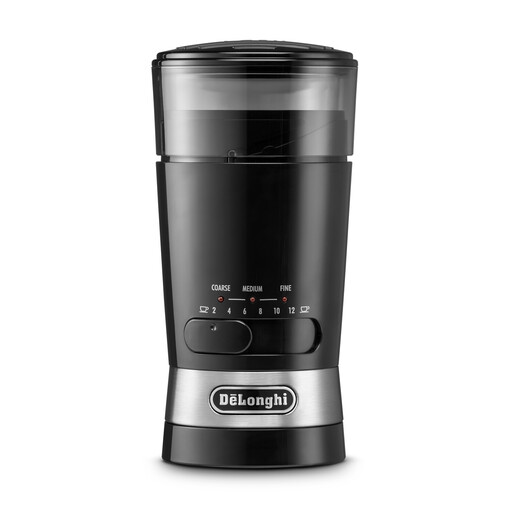
Why it suits this profile: The grinder is operated with a push button and has three grind settings, a power rating of 170 watts and a stated capacity of 90 grams. This makes it suitable for users who want to get started without complicated settings.
The specifications clearly state that this model uses stainless-steel blades and has three settings. Do not expect fine espresso adjustment like you would get from a burr grinder.
Compact size, a product weight of 1 kilogram and straightforward operation.
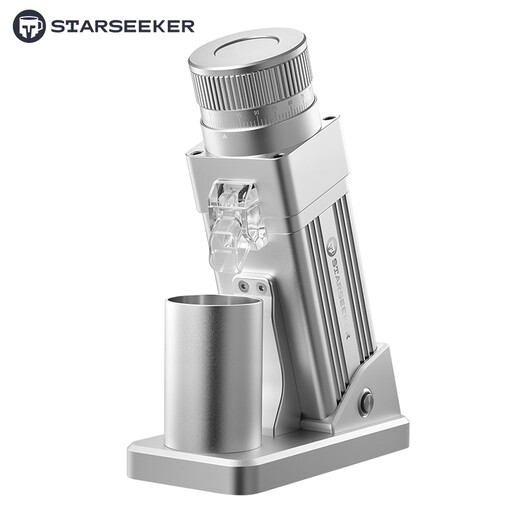
Why it suits this profile: This electric model features 55 mm titanium-alloy conical burrs and stepless fine adjustment. This makes it suitable for users who want to fine-tune espresso and pour-over more precisely.
The product information specifies the type of burr and stepless adjustment, rather than simply highlighting a high motor power rating.
55 mm conical burrs, a metal housing and a magnetically removable grounds outlet according to the product specifications.
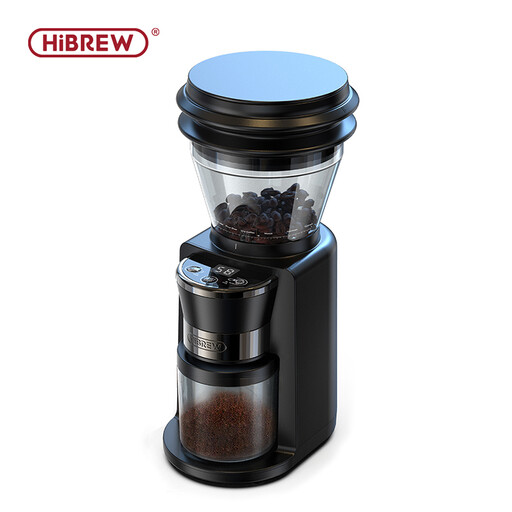
Why it suits this profile: According to the product information, this electric bean grinder has 34 settings, a 210-gram bean hopper and a 100-gram grounds container. This is practical for households that prepare several cups.
The specifications list a conical burr and 34 grind settings. This makes the difference from a basic blade grinder easy to verify.
34 settings, 220 watts of power and dimensions of 110 × 165 × 320 mm according to the product listing.
We have put together a complete, up-to-date list of products that fully meet these strict selection criteria and the applicable European safety regulations.
A manual coffee grinder is quiet, compact and suitable for one or a few portions. The TIMEMORE Chestnut C3S Pro lists a folding handle, a 38 mm conical burr and approximately 36 adjustable settings. This makes this type of grinder appealing for travelling, the office or a small kitchen.
An electric coffee grinder makes more sense when you prepare several cups every day or want to use as little manual effort as possible. For a corded model, check the mains voltage. Most of the electric models mentioned here are rated for 220–240 volts. A portable battery-powered model such as the STARESSO D6E PLUS lists a 1000mAh battery, USB-C charging and settings for espresso, moka pot, pour-over and French press.
These are different systems. Burrs generally offer greater control over the grind size and are therefore a more logical choice for espresso, pour-over and other methods where a consistent grind is important. A blade grinder is simpler and may be sufficient for occasional filter coffee. Always look at the specific product information rather than relying only on the product name.
The lifespan depends on frequency of use, cleaning, the grinding mechanism and correct loading. Do not run an electric grinder continuously for longer than stated in the instructions. Empty the hopper regularly, remove any remaining coffee grounds with a dry brush and keep moisture away from the grinding mechanism. The statutory guarantee in the EU is at least two years for many consumer products; check the terms for the specific product and seller.
The energy used per grind is usually limited because the appliance only runs for a short time. Actual consumption depends on the motor power, grinding time and how often you prepare coffee. A manual coffee grinder uses no electricity while grinding, but it does require physical effort.
