
Vandaag of morgen in huis

Kwaliteit gegarandeerd

Welkomstaanbiedingen ontgrendelen: GRATIS bezorging | Tot 80% korting | Gratis 30 dagen JoyPlus-proefperiode
Download de app
A box of coffee capsules might seem easy to choose. Yet many households and offices buy capsules that don’t fit their machine properly, taste different from what they expected or run out sooner than they thought. There are clear differences in size, preparation and contents, especially when it comes to Nespresso capsules and Dolce Gusto capsules.
When buying coffee, don’t look only at the brand name or attractive packaging. These three pitfalls are common:
Your machine is the starting point. Compatible coffee capsules for Nespresso Original have a different design from capsules for NESCAFÉ Dolce Gusto. A capsule might look as though it fits, but still fail to pierce or seal properly.
Check the product description:
If you’re unsure, follow your machine’s instructions. Don’t use a capsule if the packaging explicitly states that it’s for a different system.
An espresso is usually made with less water than a lungo. A lungo capsule is designed for a larger cup, while an espresso capsule is often brewed stronger and in a smaller volume. The recommended amount varies by product and is shown on the packaging.
For milk-based drinks, the contents matter even more:
If you’re looking for a straightforward black coffee, it’s worth considering Arabica, Robusta or a blend. Arabica coffee capsules are often described as having softer, aromatic flavour notes. Robusta can add more body and a bolder profile. The result still depends on the roast and the exact blend.
An intensity scale is a useful starting point, but it isn’t a universal measure of flavour. For example, Lavazza gives its Espresso Maestro Ristretto an intensity rating of 12/13. Douwe Egberts Lungo Intense has an intensity rating of 08 on a scale from 01 to 12. These figures are only easy to compare within the scale used by each brand.
Also check:
Store coffee capsules in a cool, dry place away from direct sunlight. It’s best not to use a capsule if it’s damaged or has become damp.
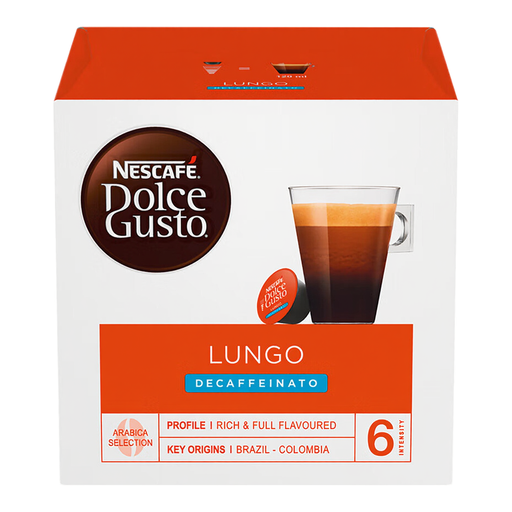
Why it suits this profile: This pack is designed for NESCAFÉ Dolce Gusto machines and makes 16 lungo drinks without caffeine. It’s a practical choice for households that enjoy a coffee later in the day, too.
The product information clearly identifies the Dolce Gusto system, the pack size and the decaffeinated variety. So you don’t have to rely on the front of the pack alone.
16 capsules; lungo format; described as completely caffeine-free in the product information; individually sealed capsules.
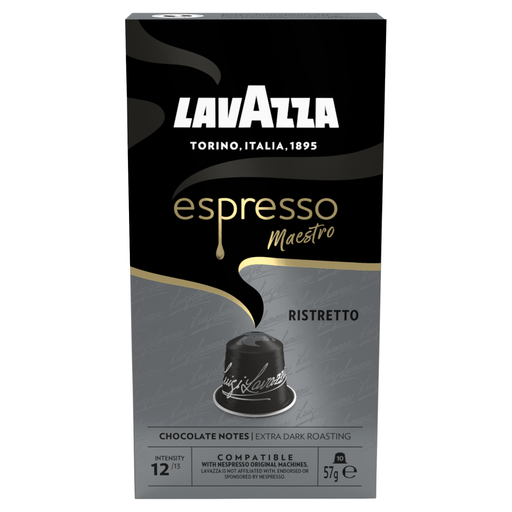
Why it suits this profile: According to the product information, these espresso capsules are suitable for Nespresso machines and are made from an Arabica and Robusta blend. The description mentions notes of chocolate and caramel.
The intensity is listed as 12/13, which is more specific than descriptions such as “bold” or “rich” alone. Check whether this scale matches your own taste preferences.
Nespresso compatibility according to the product description; Arabica and Robusta blend; clear intensity rating.
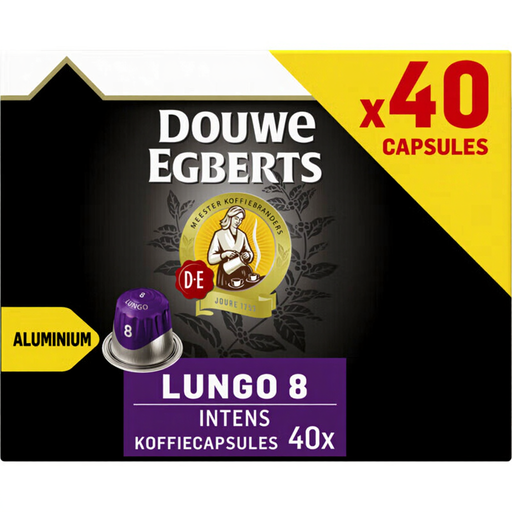
Why it suits this profile: With 40 capsules, this pack is a good fit for a household, shared kitchen or office where several lungos are made every day.
The pack states that it’s for the Nespresso Original system and contains 40 capsules, with an intensity rating of 08 on a scale from 01 to 12. This makes it easier to judge compatibility and strength before you buy.
40 capsules; 110 ml lungo according to the product information; Arabica and Robusta blend; dark roast.
We’ve put together a complete, up-to-date list of products that meet these strict selection criteria and the applicable European safety regulations.
No. First check whether your machine uses the Nespresso Original, Vertuo or another system. According to the product information, the Lavazza and Douwe Egberts products mentioned here are designed for Nespresso machines, but the exact machine type still matters.
The best-before information is on the packaging. Store unopened capsules in a cool, dry place away from heat, moisture and sunlight. Don’t use capsules if the packaging is damaged. Once opened, it’s best to keep the remaining capsules well sealed.
It depends on the price per capsule, the pack size and how you prepare your coffee. Compare the price per capsule and the number of cups you’ll actually get from a pack. A box of 40 capsules can be practical for frequent use, while a smaller pack may be more convenient if you want to try a flavour first.
