
Vandaag of morgen in huis

Kwaliteit gegarandeerd

Welkomstaanbiedingen ontgrendelen: GRATIS bezorging | Tot 80% korting | Gratis 30 dagen JoyPlus-proefperiode
Download de app
A coffee capsule machine seems simple enough: pop in a capsule, press a button and enjoy your coffee. Yet many households end up with a model that doesn't suit their daily routine. The main issues usually aren't about the coffee itself, but rather incorrect capsule compatibility, a water tank that's too small, or features that rarely get used in practice.
In this buying guide from the Joybuy Product Recommendation Officer, you'll discover what to consider before choosing a coffee machine for your home, home office or small workplace.
Not every capsule fits every machine. A Nespresso coffee machine designed for Original capsules won't automatically work with Vertuo capsules. Similarly, Dolce Gusto capsules and Senseo coffee pods each have their own shape and brewing method.
So check before you buy:
A machine that supports multiple systems can be practical, but always check which holders or adapters are included.
A compact coffee machine takes up little space, but it often has a smaller water tank too. The De'Longhi Essenza Mini, for example, has a tank of 0.6 litres. That's fine for a few espressos, but means more frequent refilling if several people are using it.
For a household or office, these figures are useful to compare:
Also consider where the tank is positioned. A machine might fit on your worktop, but could be awkward to refill if it's placed directly under a kitchen cabinet.
Many espresso capsule machines boast a pump pressure of 19 or 20 bar. That number doesn't solely determine how good your coffee will taste. The final flavour also depends on the capsule, water temperature, water volume and brew time.
So treat pump pressure as a point of comparison, not a standalone guarantee of quality. A Senseo coffee pod machine, for instance, uses a different brewing method and is listed in the product specifications as 1 bar. That doesn't make it unsuitable; it's designed for coffee pods and larger cups, not for the same brewing process as an espresso capsule machine.
Choose your coffee system first, then the machine. Common options include:
A model that supports multiple systems, such as the HiBREW H1C, can be handy if family members use different coffee capsules. Just check the dimensions of the holders and the instructions for each system.
Don't just measure the width of the machine; also check the clearance above it for the capsule lever. In addition, consider:
A L'OR Barista machine is relatively narrow at 15.7 cm wide, but it has a depth of 40.2 cm. A Senseo model is wider and taller, but can brew two cups at once.
If you want cappuccino or latte macchiato, check whether the machine has a separate milk frother, an integrated system or no milk function at all. A coffee machine with a milk frother offers more convenience, but also requires extra cleaning.
Look out for:
According to the product description for the Nespresso Lattissima One, milk drinks are available at the touch of a button and the milk jug is removable. The manufacturer also mentions cleaning and descaling alerts. Treat this as a product specification; the actual user experience depends on maintenance and daily use.
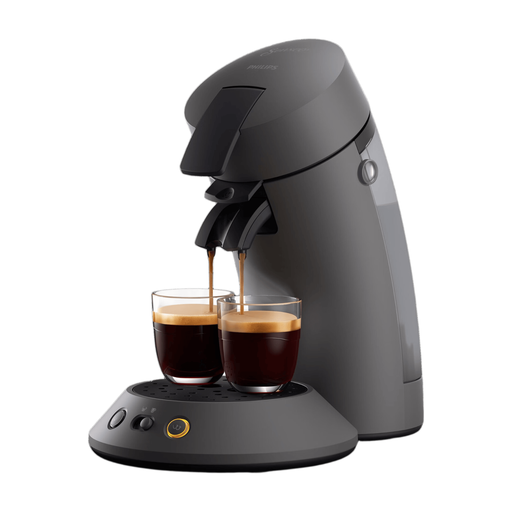
Why this fits the profile: This coffee pod machine uses Senseo pods, brews one or two cups at once and has a 0.7-litre water tank. That makes it straightforward for daily use.
The coffee type is clearly specified as pods. So there's no risk of confusing a capsule system with a coffee pod machine.
Two cups at once, automatic shut-off and two programmes: lungo and strong.
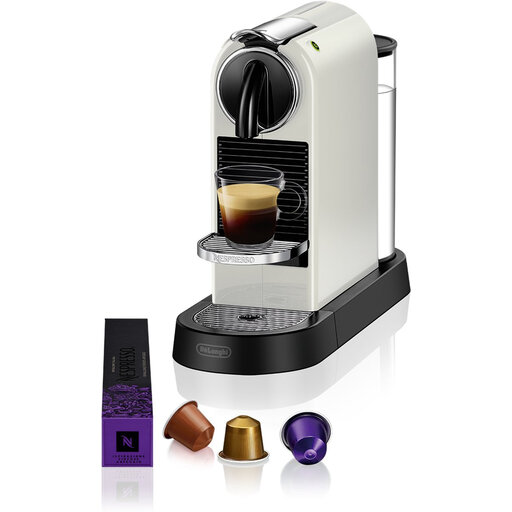
Why this fits the profile: For espresso and lungo lovers, this Nespresso Original model offers two programmable cup sizes and a 1-litre water tank.
The system and two drink sizes are clearly stated. So it's obvious from the start which coffee capsules you need.
19-bar pump pressure according to the specifications, 1-litre water capacity and automatic shut-off.

Why this fits the profile: This model is designed for users who want to combine different systems, including K-Cup, Nespresso, Dolce Gusto, E.S.E. pods and ground coffee.
The product information explicitly lists the supported systems. This means you're less reliant on a single type of capsule.
20-bar pump pressure according to the specifications, hot and cold mode and a 600 ml water tank.
We've put together a full, up-to-date list of products that fully meet these strict selection criteria and comply with current European safety regulations.
The purchase price is only part of the cost. Also compare the price per capsule or pod and the number of cups you drink each day. A machine with cheaper coffee pods can work out more cost-effective over time than a capsule model with pricier portions, but taste preference and convenience also play a part.
Also plan regular maintenance:
For cappuccino and latte drinkers, the milk component is the main factor in daily cleaning time. If you mainly drink black coffee, you'll usually benefit from a simpler machine without a milk module.
That depends on the system. Check the product specifications for terms like Nespresso Original, Nespresso Vertuo, Dolce Gusto, L'OR Barista or Senseo pods. Don't use a capsule that isn't explicitly listed as compatible.
The lifespan depends on usage, water quality, cleaning and descaling. An automatic shut-off helps with safe use, but doesn't replace regular maintenance. Keep the manual and follow the manufacturer's maintenance schedule.
The purchase price can be lower and the brewing process is simple. However, the cost per cup depends on the price of coffee capsules or pods. So calculate your average monthly consumption before making a decision.
