What should you look for when choosing?
First, decide how many crackers you want to keep between coffee breaks and what you plan to put on them. Then compare the labels of the product types that suit your needs.
| What to consider |
What should you check? |
Who is this important for? |
| Stock and packaging |
Compare the net weight and number of pieces. For a multipack, check how the individual packs are divided. |
If crackers are on the table at home several times a week, I want to be able to keep enough on hand without opening a new pack each time. Around 40% of consumers put this need first. |
| Toppings and labelling |
Check whether the cracker is sturdy enough for your toppings, and compare the ingredients, fibre, fat and salt per 100 g. |
For a cracker with generous toppings, I need a suitable, sturdy base; its nutritional make-up matters too. Around 30% of consumers prioritise this combination. |
| A small, crunchy bite |
Check whether a thin cracker or Melba toast suits your toppings, and look at the pack size. |
Sometimes, with my coffee, I just want a small, crunchy bite rather than a large cracker with toppings. Around 30% of consumers put this need first. |
Brands to consider
Packaging and cracker types can vary considerably, even for products meant for the same coffee break. The features listed apply to the products mentioned, not to a brand’s entire range.
Bolletje
Breakfast crackers, including a 270 g Multiseed pack containing 4 × 3 pieces, as listed by Jumbo.
- The smaller groups of pieces may make it easier to divide your supply across several coffee breaks.
- Bolletje lists wheat and sesame among the ingredients in its Multiseed variety. Check the current allergen information for this product.
Melba (Van der Meulen)
Thin crackers for a small, crunchy bite; Jumbo lists a 125 g pack of Plain Melba Crackers.
- Jumbo describes these crackers as light, thin and crunchy.
- Check whether 125 g will last for the number of coffee breaks you want to cover and whether the thin shape works with your toppings.
Albert Heijn
Own-brand options include light crackers in a 4-pack and 200 g packs of Wholemeal Sturdy Crackers.
- According to Albert Heijn, the pack of Wholemeal Sturdy Crackers is resealable; the product contains sesame and linseed.
- Don’t choose based on the word ‘wholemeal’ alone: check the ingredients and nutritional information on the pack for this product too.
Jumbo
Own-brand options include 375 g packs of Wholemeal Crispbread containing 5 × 5 pieces, and 2 × 125 g multipacks of High-Fibre Light Crackers.
- The two pack formats let you choose between crispbread with a stated number of pieces and a multipack of light crackers.
- These are different product types. Jumbo lists 14 g of fibre and 1.18 g of salt per 100 g for the light variety; don’t use these figures as nutritional information for the crispbread.
Tastino (Lidl)
Lidl lists 210 g packs of Tastino Luxury Wholemeal Crackers.
- The stated pack size makes it easier to assess whether the product suits your stocking needs.
- Lidl says this product is available in store only. Check the label there if the ingredients or nutritional information are key to your choice.
Goud Gebakken (ALDI)
ALDI lists, among other products in this own-brand range, 375 g packs of crispbread and 200 g packs of robust crackers.
- You can compare the larger pack of crispbread with the smaller packs of robust crackers in multigrain or spelt varieties.
- Don’t treat the varieties as the same product: compare the ingredients, allergens and nutritional information on the pack you choose.
Crackers and crispbread on Joybuy
These products come in different pack sizes and formats, for crackers or crispbread to enjoy during regular coffee breaks. First decide whether you’re looking for a flavoured option, crispbread or a selection pack; then check the contents and label of the exact pack.
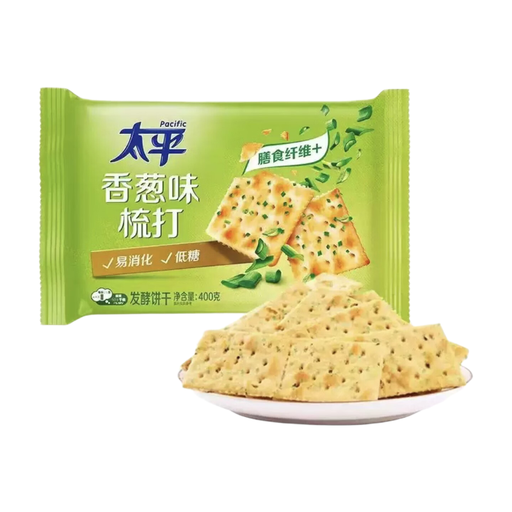 Image unavailable
Pacific Biscuits Onion Flavour Family Pack 400 g
For anyone who wants to serve onion-flavoured crackers at several coffee breaks. The pack contains 400 g; check the ingredients and allergen information for this flavour on the label.
View on Joybuy
 Image unavailable
Bolletje Whole Grain Crispbread 265 g
A crispbread option for regular coffee breaks. The pack contains 265 g; check how the pieces are packed if you only want to open some of them at a time.
View on Joybuy
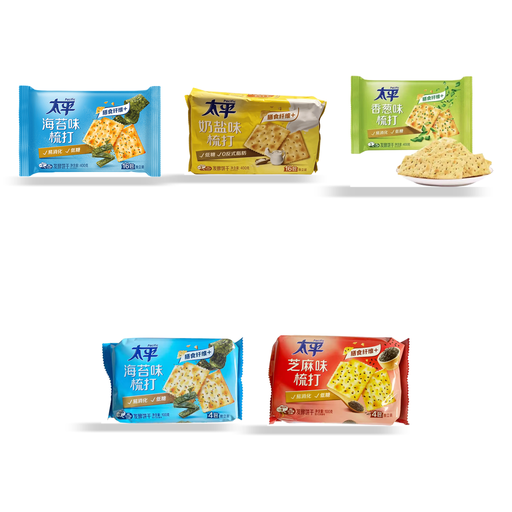 Image unavailable
Pacific Biscuits Large Gift Pack
For a shared coffee break when you’re considering a selection pack of crackers. Before opening, check which products are included and read the allergen information and storage instructions on each pack.
View on Joybuy
 Image unavailable
Wasa High-Fiber Crackers 300 g
A 300 g pack for anyone looking for crackers to enjoy over several coffee breaks. Compare the nutritional information per 100 g, and check for individual packs if you want to store portions separately.
View on Joybuy
 Image unavailable
g'woon Wholemeal Crispbread 375 g
A 375 g pack of crispbread for several occasions at home. Check the ingredients list if the type of flour used matters to you, and see how to store the pack after opening.
View on Joybuy
Frequently asked questions
How do I compare larger packs of crackers?
Start with the net weight and number of pieces, then compare the nutritional information per 100 g for similar products. The Netherlands Nutrition Centre recommends this as a basis for comparing nutritional values. Also bear in mind the differences between crispbread, light crackers and thin Melba crackers.
Are all crackers with ‘wholemeal’ in the name made with the same ingredients?
No. Check the ingredients list for the exact variety to compare the types of flour used. The name also won’t tell you how much salt or fat the product contains per 100 g; you’ll need to check the nutritional information for that.
What should I check on a cracker pack if I have an allergy?
Read the ingredients and allergen information on the current pack of the product you want to eat. For example, Bolletje lists cereals containing gluten and sesame seeds in its Multiseed Breakfast Crackers; don’t assume this applies to another variety.
How should I store crackers after opening?
Follow the storage instructions on the pack you choose, and seal an opened pack as directed. With a multipack, it’s also worth checking whether you can open just one section at a time and how the remaining sections are packed.
Can I rely on a value pack of Melba toast as a regular staple?
Only if the product type, pack size and current availability suit the way you plan to use it. Jumbo stated on its product page that the 200 g Crispy Plain Melba Toast Value Pack was no longer available online, so check the pack you’re planning to buy at the time.


