Don’t serve rye bread to a guest with coeliac disease: rye contains gluten, according to the Dutch Coeliac Association. For topped slices, look for bread labelled gluten-free, or choose gluten-free rolls if individual portions are more convenient. Check the current packaging and keep the bread separate from regular bread during preparation and serving.
Who are these alternatives for?
Hosting a guest with coeliac disease
You want to choose bread labelled gluten-free and make sure crumbs from regular bread don’t end up on your guest’s plate. The Dutch Coeliac Association points out that rye contains gluten and that cross-contamination can also happen in the kitchen.
Fans of dark or seeded bread
You’re not looking for rye itself, but for gluten-free bread to serve as topped slices. Albert Heijn and PLUS, for example, stock gluten-free multiseed and brown loaves. Taste and texture vary from one product to another.
Planning a coffee morning
You want to make it easy for guests to have their own portion. Gluten-free rolls or small crusty rolls are an alternative to a loaf you slice yourself. Check which options are available at your local shop.
What should you look for when choosing?
If you’re catering for a guest with coeliac disease, rule out rye bread first. Then decide between topped slices and individual portions, and check the label on your chosen product before buying.
| What to consider |
What should you check? |
Who is this important for? |
| Choosing and serving gluten-free bread |
Check the gluten-free label and allergen information on the packaging. Use clean, separate utensils when serving. |
When I’m putting bread out for someone with coeliac disease, I want to keep rye and crumbs from regular bread away from their portion. For around 33% of consumers, that reassurance would be the top priority. |
| Individual portions |
Choose between sliced bread, rolls and small crusty rolls; check how many portions are in each pack. |
When I’m serving coffee to several guests, I want to be able to give everyone their own portion easily. For around 27% of consumers, serving would come first. |
| Bread for savoury toppings |
Check the type of product and the ingredients in gluten-free dark, brown or seeded bread; don’t judge by colour alone. |
I’m looking for an alternative for savoury toppings that can take the place of rye bread as a hearty option on the table. For around 20% of consumers, that would be the main consideration. |
| Availability |
Check your shop’s current range or your delivery area, as well as the storage instructions on the packaging. |
I want to know whether my shop stocks the bread I’ve chosen before the coffee morning. For around 20% of consumers, availability would matter most. |
Common mistakes
-
Mistaking dark bread for gluten-free bread
A dark colour or seeds on the bread don’t tell you whether it contains rye. According to the Dutch Coeliac Association, rye contains gluten.
If you’re serving a guest with coeliac disease, choose a product labelled gluten-free and check the ingredients and allergen information on the current packaging too.
-
Putting gluten-free bread on a plate with crumbs on it
The Dutch Coeliac Association warns that crumbs from regular bread can contaminate gluten-free food in the kitchen.
Use a clean chopping board, knife and serving plate. Keep the gluten-free bread wrapped and separate until you’re ready to serve it.
-
Assuming every loaf contains iodised salt
According to the Netherlands Nutrition Centre, bakers aren’t required to use baker’s salt. So don’t assume gluten-free bread always contains the same type of salt either.
If the type of salt matters to you, check the ingredients list for baker’s salt or iodised salt. PLUS lists iodised salt for Schär Meesterbakker Classic; this doesn’t tell you anything about other products.
-
Assuming an online range reflects local stock
A product listed online may not be available at your chosen shop when you need it.
Check your local shop’s range or delivery area shortly before the coffee morning, and check the current packaging when you buy it.
Brands to consider
AH Glutenvrij
Albert Heijn’s AH Glutenvrij range includes dark multiseed bread, multiseed rolls and white rolls.
- Choose between a loaf for slicing and individual rolls.
- Check the packaging when you buy: ingredients and allergen information can change.
PLUS
PLUS stocks gluten-free white, brown and multiseed bread, as well as gluten-free small crusty rolls.
- Different product types for topped slices or individual portions.
- Check the current packaging and availability at your local shop.
Schär
Schär offers gluten-free loaves and ciabatta, among other products. Check which type suits your coffee morning.
- PLUS lists iodised salt for the specific product Schär Meesterbakker Classic.
- Don’t assume that other Schär products have the same ingredients.
Consenza
Albert Heijn stocks a gluten-free seeded loaf with chia from Consenza as an option for anyone wanting to serve seeded bread.
- A seeded loaf to consider if you’re looking for slices to top rather than individual rolls.
- Check the current ingredients and nutritional information on the packaging of your chosen variety.
Bake your own gluten-free bread for a coffee morning
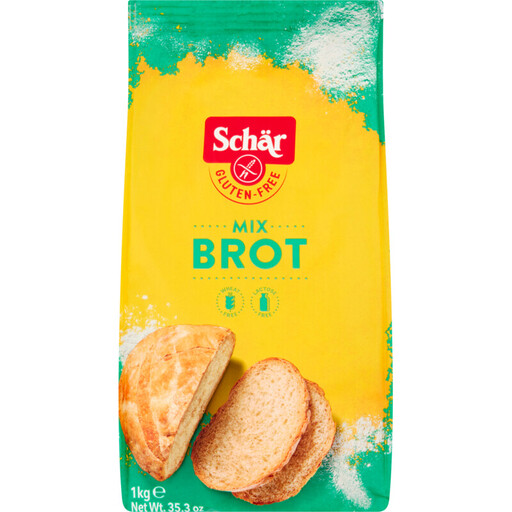
This bread mix is an option if you want to prepare gluten-free bread yourself before the coffee morning. If you need slices or rolls ready to serve, you’ll need a ready-made product.
 No image available
Schär Bread Mix-Mix B Gluten Free, 1 kg
For anyone who wants to prepare the bread in advance: this is a 1 kg gluten-free bread mix, not a ready-to-serve loaf.
Check the current packaging for ingredients, allergens and the gluten-free label. Prepare and serve the bread using clean utensils, separately from regular bread.
View at Joybuy
Frequently asked questions
Can I serve rye bread to a guest with coeliac disease?
No. Rye contains gluten, according to the Dutch Coeliac Association. Choose bread labelled gluten-free and check the current packaging; a dark colour doesn’t make rye bread suitable.
How do I keep gluten-free bread separate during a coffee morning?
Use a clean chopping board, knife and plate, and keep the bread separate from regular bread. The Dutch Coeliac Association points out that cross-contamination in the kitchen can happen through bread crumbs alone.
Does gluten-free bread automatically contain iodised salt?
No, don’t assume it does: according to the Netherlands Nutrition Centre, bakers aren’t required to use baker’s salt. Check the ingredients list of your chosen bread for baker’s salt or iodised salt.
Where can I find bread or rolls for a gluten-free coffee morning?
Albert Heijn, PLUS and Jumbo list gluten-free bread options online; Dirk and ALDI also include gluten-free products in their ranges. Check which type is available locally and read the current packaging before you buy.


