
Readers of long code files
If you want to see lots of lines of code or documentation at once while programming, vertical screen space is an important point of comparison. BenQ Netherlands lists a 3:2 screen with 3840 × 2560 pixels for the RD280U.


For coding and offline documentation, your choice mainly depends on how you arrange your work windows: a 3:2 monitor offers relatively more vertical space, while a 21:9 monitor gives you more room to place windows side by side. A 27-inch 4K monitor is a conventional middle ground. For each model, check that your computer supports the resolution and connection you need, and that the stand suits your workspace.
If you want to see lots of lines of code or documentation at once while programming, vertical screen space is an important point of comparison. BenQ Netherlands lists a 3:2 screen with 3840 × 2560 pixels for the RD280U.
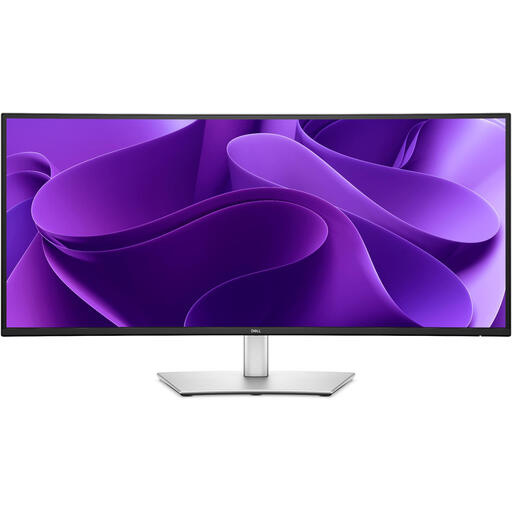
If you want to keep your editor, terminal and locally stored documentation open at the same time, focus on horizontal space and how much desk width you’ll need. LG Netherlands and Philips describe 34-inch ultrawide models with 3440 × 1440 pixels.
If you use your laptop both on the go and at a desk, check the video connection, whether it can be powered via USB-C and whether the screen is adjustable. BenQ Netherlands and LG Netherlands’ specifications show that connections vary by model.
Choose this if: you mainly read long code files or documentation from top to bottom. BenQ Netherlands specifies a 28.2-inch screen and 3840 × 2560 pixels in a 3:2 format for the RD280U.
The trade-off: an ultrawide gives you more room for wide windows side by side. Also check that your computer can handle the resolution over your chosen connection.
Choose this if: you mainly want to place your editor, terminal and offline documentation next to each other. LG Netherlands and Philips list 3440 × 1440 pixels for their respective 34-inch models mentioned here.
The trade-off: the 3:2 monitor mentioned has more vertical pixels, at 2560, than these ultrawide models, which have 1440. Also consider how much space the screen takes up.
Choose this if: you want to compare a conventional screen shape with 4K resolution. Dell specifies an IPS monitor with a 27-inch screen and 3840 × 2160 pixels for the S2725QS.
The trade-off: compared with a 34-inch ultrawide, there’s less horizontal space for multiple wide windows. Check the connections for the exact model code.
| What to consider | What to look for when buying | Who is this important for? |
|---|---|---|
| Vertical reading space | Compare the aspect ratio and native resolution. Also decide what text size you find comfortable. | If you read long code files or documentation from top to bottom, you’ll want to see more lines at once; around 36% of consumers give vertical space their highest priority. |
| Side-by-side windows | Compare the aspect ratio and resolution with the width available on your desk. | If you want to keep your editor, terminal and offline documentation open at the same time, side-by-side space matters; around 29% of consumers put this need first. |
| Connection and laptop power | Check the ports on your computer and monitor, whether you need video via USB-C, the required charging power and the cables included. | If you want to connect the monitor to your own laptop, the video connection and any power supply need to be compatible with it; around 21% of consumers give this connection their highest priority. |
| Adjusting the screen to your workspace | Check the height adjustment, reflections and lighting. See whether you need a monitor arm and whether the model supports one. | If you want to adjust the screen to your own workspace, adjustability and positioning matter; around 14% of consumers make this their top priority. |
The Dell S2725QS is described as having HDMI and DisplayPort; the separate S2725QC is the model with USB-C. Connections on one version don’t automatically apply to the other.
Before buying, check the full model code and the ports listed for that model.
If your computer requires a USB-C connection, you may need a suitable adapter or a different monitor model.
A 34-inch screen with 3440 × 1440 pixels and a 28.2-inch screen with 3840 × 2560 pixels distribute their pixels differently across the width and height.
First decide whether you mainly need more lines of text or wider windows side by side. Then compare the resolution, aspect ratio and available desk space.
Screen position, reflections and lighting are all separate things to consider. Dutch guidance on screen work also recommends alternating screen-based tasks with other work.
Consider the screen alongside your workspace setup and adjust it to suit you.
The RD280U is a 3:2 programming monitor worth comparing if vertical reading space matters to you.
The 34BA75QE-B is an ultrawide model for anyone who wants to place their editor, terminal and documentation side by side.
The 34B2U5600C/00 is a wide business monitor worth comparing if you also want to switch between computer sources.
The S2725QS is a 27-inch 4K model; the separate S2725QC has different connections.
The ProArt Display 6K PA32QCV is a larger, high-resolution monitor worth comparing if screen space matters more to you than a compact setup.
These models suit a setup with an ultrawide monitor or a conventional 27-inch 4K screen. Compare the connections and resolution with your computer.
 No image available
Suited to an ultrawide setup where you want to place multiple windows side by side.
34 inches, 21:9 and WUHD 5120 × 2160 at 120 Hz or WFHD 2560 × 1080 at 240 Hz; these are alternative Dual Mode settings.
USB-C with up to 140 W Power Delivery, KVM switch, USB hub and 2.5 Gigabit Ethernet.
 No image available
An ultrawide option for a desk setup with your editor, terminal and documentation side by side.
21:9 and 3440 × 1440 pixels.
USB-C hub with 90 W Power Delivery, RJ45 and KVM switch; the stand offers height and tilt adjustment.
 No image available
Suited to anyone comparing a conventional 27-inch screen with 4K resolution and USB-C.
IPS, 3840 × 2160 pixels and USB-C with 65 W Power Delivery.
The description also lists HDMI and a height-adjustable stand.
 No image available
A 27-inch 4K option to compare if you’re looking for a conventional screen size for coding and documentation.
IPS panel and 3840 × 2160 pixels.
The connections listed are HDMI, DisplayPort and Thunderbolt.
 No image available
Suited to a workspace where your editor and locally stored documentation sit side by side.
21:9, 3440 × 1440 pixels and 100 Hz; HDMI and DisplayPort.
The description lists Picture-by-Picture for two devices and a stand with height and tilt adjustment.
No, the monitor displays what the connected computer shows. What matters most for your choice is whether you can place locally stored documentation legibly next to or below your editor; check that the documentation is available on your computer.
Only if both the monitor and laptop support the required video function and the charging power suits your laptop. BenQ specifies USB-C with DisplayPort Alt Mode and 90 W Power Delivery for the RD280U. Also check your own laptop’s connections and charging requirements.
Adjust the screen height and lighting to suit you, and reduce distracting reflections. According to the Dutch Arboportaal, Working Conditions Decree 5.10 requires screen work to be regularly alternated with other work or a break; whether this applies depends on the work situation.
For a standard online consumer purchase, ACM ConsuWijzer says you generally have a statutory cooling-off period of up to 14 days after delivery; exceptions may apply. The statutory guarantee is separate from the manufacturer’s warranty. If a product doesn’t perform as you could reasonably expect under normal use, contact the seller to find a solution.