
Programmer beside a bright window
Wants to read code and test output clearly when daylight falls on or behind the work area. Arboportaal recommends positioning your viewing direction parallel to the window.


Start by reducing reflections: if possible, position your viewing direction parallel to the window, and use blinds or curtains if needed. Then choose what suits your preferences: extra vertical space, a 27-inch 4K screen or USB-C docking. Check that the ports and charging power are suitable for your laptop. Manufacturer specifications are not comparative measurements of readability beside the same bright window.
Wants to read code and test output clearly when daylight falls on or behind the work area. Arboportaal recommends positioning your viewing direction parallel to the window.
Switches between code and test results and wants enough space to view lines and windows clearly. Aspect ratio, resolution and text scaling are all worth considering.
May want to connect an external screen and peripherals, and charge the laptop via USB-C. Check that the laptop supports video over that port and that the charging power is sufficient.
First, address the light and reflections. Then compare the screen layout and text display, and finally check that the USB-C features are compatible with your laptop.
| What to consider | What should you check? | Who is this important for? |
|---|---|---|
| Reflections and glare | Check the screen coating and adjustability, and consider how you can position the screen in relation to the window. Arboportaal recommends a viewing direction parallel to the window. | If daylight on the screen bothers me, I want to be able to adjust the setup and blinds or curtains first; around 36% of consumers prioritise reducing reflections. |
| Small code and test messages | Compare the screen size and native resolution of the exact model, and check that the text remains comfortable to read at a suitable scaling setting. | If I read lots of small code and messages, I want text to look sharp without becoming awkwardly small when scaled; around 29% of consumers give text sharpness top priority. |
| Space for code and results | Compare the aspect ratio and native resolution: a 3:2 layout prioritises vertical space more than the 27-inch 16:9 models mentioned here. | If I view long tests and output stacked vertically, I want enough vertical space; around 21% of consumers prioritise space for code and test results. |
| Connecting and charging a laptop | Check video output over USB-C, cable compatibility and your laptop's charging power requirements. | If I want to connect my laptop to the monitor and possibly charge it, the USB-C port needs to be compatible with my device; around 14% of consumers give laptop connectivity top priority. |
For the BenQ RD280U, BenQ lists 350 nits as typical brightness and 400 nits as peak HDR brightness. These figures mean different things.
Compare brightness figures measured on the same basis, and tackle bothersome reflections by adjusting the screen position and using blinds or curtains.
The USB-C features and charging power described vary by model. Check the exact monitor model and your laptop's video and power requirements.
Depending on your devices, you may need a different cable or a separate laptop power supply.
According to BenQ, the BenQ RD280U has a 3:2 aspect ratio and a native resolution of 3840 × 2560 pixels; the 27-inch 4K models mentioned here have a different screen layout.
Decide whether you mainly want to see lines stacked vertically or windows side by side, then check that the text scaling suits the way you work.
BenQ describes the RD280U as a programming monitor with a 28.2-inch 3:2 panel and Nano Matte coating.
Dell describes the P2725QE as a 27-inch 4K USB-C hub monitor for a workspace with a laptop and peripherals.
EIZO describes the FlexScan EV2740X as a 27-inch 4K office monitor with USB-C docking and Auto EcoView.
Philips describes the 27E1N1900AE/00 as a 27-inch 4K IPS USB-C monitor with a height-adjustable stand.
This selection from Joybuy includes 27-inch 4K monitors and an ultrawide option for code, test results and connecting a laptop.
 No image available
A 27-inch screen with 4K resolution for code and test messages; the product information also lists an anti-glare screen.
3840 × 2160 pixels; 60 Hz; 4 ms; HDMI and DisplayPort; height-adjustable stand.
 No image available
A 27-inch 4K screen for viewing code and test output at your desk.
3840 × 2160 pixels; USB-C with DP Alt Mode and 98 W power delivery; adjustable stand.
 No image available
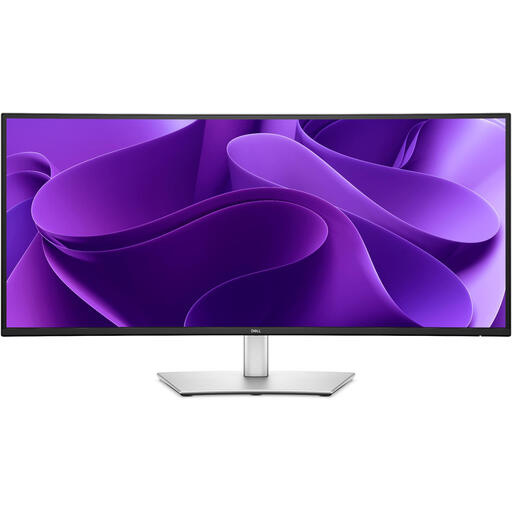
An ultrawide screen described in the product information as suited to working with several windows side by side.
34.1 inches; 3440 × 1440 pixels; USB-C hub with 90 W Power Delivery, RJ45 and KVM; stand with height and tilt adjustment.
 No image available
A 27-inch 4K option for viewing code at high resolution; the product information lists anti-glare and reflection-reducing features.
3840 × 2160 pixels; 450 cd/m² typical brightness; USB-C upstream and USB ports; ambient light sensor that adjusts brightness and colour temperature.
 No image available
A 27-inch 4K screen for code and test results; the product information lists an IPS Black panel.
3840 × 2160 pixels; USB-C with 90 W power delivery and USB ports; stand with height, tilt and swivel adjustment.
Not on its own. For reflections, Arboportaal recommends first adjusting the screen's position in relation to the window and using blinds or curtains if needed. Also, don't compare typical brightness with a peak HDR figure as if they were measured in the same way.
Arboportaal recommends positioning your viewing direction parallel to the window. If reflections are bothersome, adjust the setup or blinds or curtains, then set the monitor to a suitable height.
Only if the laptop can output video through that port, the cable is suitable and the monitor provides enough power if you want to charge it. Check the ports and power requirements of both devices.
A 3:2 screen prioritises vertical space more than the 27-inch 16:9 models mentioned here. Choose based on whether you mainly want to see lines stacked vertically or windows side by side, and take text scaling into account.
The cited guidance from Arboportaal doesn't specify a universal monitor size or brightness in nits. For employees who work at a screen for more than two hours a day, Arboportaal does outline conditions for screen-based work, including that the screen and keyboard must not be attached to each other; the rules that apply depend on the work situation.