
Coder using two editors
Writes calculations with a second file or example open alongside, and wants easy access to coding symbols, navigation and shortcuts. Visual Studio Code supports side-by-side editors and customisable keyboard shortcuts.


When coding with two editor windows, the key thing is to choose a layout that gives you easy access to coding symbols and navigation keys. Having two editors side by side doesn’t, in itself, mean you need a physical split keyboard. A compact keyboard leaves more room on your desk, while a numeric keypad can be useful if you regularly enter test amounts. Choose a physical split model only if you want to adjust the position of the keyboard halves, and always check the exact key layout and whether it might take time to get used to.
Writes calculations with a second file or example open alongside, and wants easy access to coding symbols, navigation and shortcuts. Visual Studio Code supports side-by-side editors and customisable keyboard shortcuts.
Enters amounts and percentages repeatedly, and weighs up the convenience of a numeric keypad against the extra desk space the keyboard takes up.
Wants to be able to adjust the position of their hands and keyboard. A physical split keyboard offers a different setup, but it is not a proven solution for aches and pains.
Start with the key layout and how easy it is to reach symbols. Then consider whether a numeric keypad, a different hand position or a particular feel when typing would suit your workspace.
| What to consider | What to look for when buying | Who is this important for? |
|---|---|---|
| Coding symbols and editor navigation | Check the physical ANSI or ISO layout, the system layout settings, and the position of symbols and arrow keys. | If I often switch between files while coding, I want symbols and navigation keys to be easy to reach. Around 36% of consumers say coding symbols and editor navigation are their top priority when choosing a keyboard. |
| Entering amounts and percentages | Try entering representative test amounts using both the number row and a numeric keypad. Also consider how much desk space you have. | If I enter a lot of test amounts, a separate numeric keypad could be useful, but I also want enough room for my mouse. An estimated 21% of consumers say entering amounts is their top priority. |
| Hand position | Compare how you can position each half, the key positions and the space available on your desk. | If I want to change my hand position during long typing sessions, I look for a keyboard with independently positionable halves. Around 29% of consumers prioritise adjustable hand positioning. |
| Key noise and feel | Check the exact switch variant and, if possible, try how it feels to type in a similar working environment. | In a shared workspace, I want to choose a typing feel that suits me and take the noise into account. Around 14% of consumers say key noise is their top priority when choosing a keyboard. |
You set up your editor layout in software; a physical split keyboard is a separate choice that affects hand position.
Choose a split model only if you also want to adjust the position of the keyboard halves.
An unfamiliar key layout can take time to get used to.
Different switches, key layouts or model variants can affect the typing feel, symbols and features.
Compare the full model name, version, switch and key layout before you choose.
Choosing the wrong version could mean extra time spent exchanging it or changing the settings.
Whether a numeric keypad is useful depends on how often you enter amounts. The layout also determines how much space the keyboard takes up.
Try entering a representative set of amounts and carrying out coding tasks before choosing between a compact and full-size keyboard.
Keychron describes the V1 Max as a programmable, hot-swappable keyboard with a compact 75% layout.
According to Logitech, the MX Mechanical range includes a full-size model with a numeric keypad and a smaller Mini.
According to the manufacturer, Split Break is a physical keyboard in two parts, designed for people who want to position each half separately.
According to the manufacturer, the ErgoDox EZ has two independently positionable halves and customisable key functions.
EPOMAKER describes the F75 as a compact 75% model with hot-swap functionality and several connectivity options.
These keyboards are suited to compact typing and programmable keys, or to entering numbers using a numeric keypad. Check the layout, connection and any US QWERTY specification for each version.
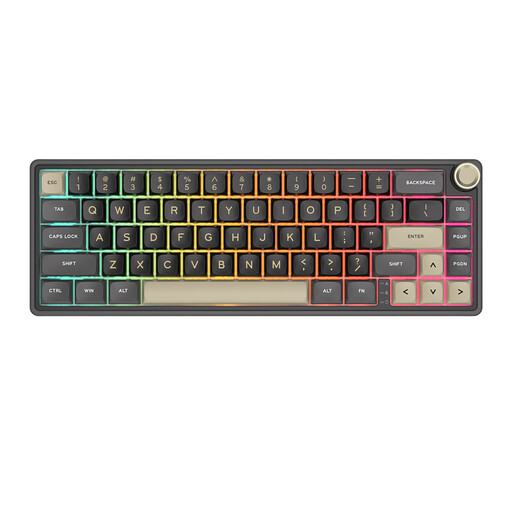 No image available
Suited to a compact, wired coding setup.
Mechanical keyboard with 66 keys, QMK/VIA and hot-swappable Chartreuse switches.
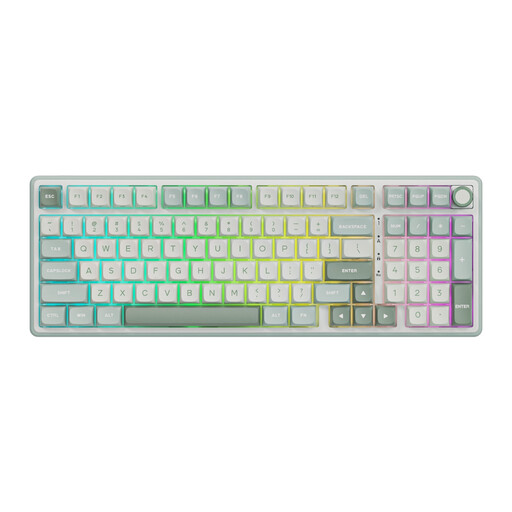 No image available
Suited to entering test amounts if you want a built-in numeric keypad.
Wired mechanical keyboard with a numeric keypad, hot-swappable switches and PBT keycaps.
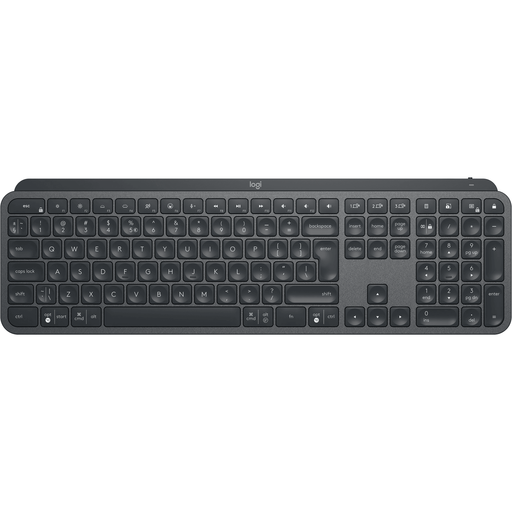 No image available
Suited to a full-size setup with a numeric keypad for entering test amounts.
QWERTY US version; key customisation via Logi Options+ and switching between up to three devices are listed features.
 No image available
Suited to a compact setup if you want to keep the function row and arrow keys.
75% layout, US QWERTY and tri-mode connectivity; this version lists hot-swappable switches.
 No image available
Suited to compact coding with a function row and arrow keys.
82-key layout, US QWERTY, tri-mode connectivity, TFT screen and hot-swappable keys.
No. Visual Studio Code lets you open editors side by side; a physical split keyboard is a separate choice that affects your hand position.
Check your keyboard layout settings and the shortcut in the editor. Visual Studio Code documents shortcuts for each platform and lets you customise them, although conflicts with other shortcuts can occur.
For employees who work with a screen for more than two hours a day, the Dutch Arboportaal states that the screen and keyboard must not be attached to each other. Laptop users must be able to use a separate screen or keyboard. This is a workplace requirement that applies in certain circumstances, not an obligation to buy a particular type of keyboard.
ACM ConsuWijzer explains that online consumer purchases generally come with a statutory cooling-off period of up to 14 days after delivery, subject to legal exceptions. The statutory guarantee is separate from any commercial guarantee: under the applicable rules, the seller is responsible for faulty products. There is no single fixed statutory guarantee period that applies to all keyboards.