
Coder who often switches between editors
You want to move quickly between files, editor windows and code, so easy access to shortcuts is a priority.


Choose based on your main task: navigating between code windows, typing for long periods or entering lots of pattern numbers. Using split editor windows doesn’t automatically mean you need a physical split keyboard. Also check that the physical keyboard layout and active software layout work with your shortcuts and coding characters.
You want to move quickly between files, editor windows and code, so easy access to shortcuts is a priority.
You want to find a hand and workstation setup that suits you, and compare a fixed, curved frame with keyboard halves that can be positioned separately.
You regularly enter numerical index data and are weighing up a numeric keypad against the extra width of a full-size keyboard.
The percentages show an indicative breakdown of the main considerations when choosing for this task; they are not measured market shares.
| Consideration | What to look for | Who is this important for? |
|---|---|---|
| Navigation and shortcuts | Check that navigation and function keys are readily accessible, and test your editor commands with the active keyboard layout. | If I often switch between files and editor windows, I want to use commands without constantly reaching for the mouse. Around 36% of consumers say navigation and shortcuts are their main consideration. |
| Hand position when typing for long periods | Compare a fixed, curved frame with separately adjustable halves, and check your desk space and any support accessories you may need. | When typing for long periods, I want to consider my hand position and the rest of my workstation without assuming a keyboard will resolve health problems. Around 29% of consumers prioritise hand position. |
| Coding characters and keyboard layout | Check the physical keyboard variant and test characters such as braces and the backslash in your own operating system. | When I write code, I want characters and shortcuts to work predictably with my chosen layout. Around 21% of consumers prioritise coding characters and keyboard layout. |
| Pattern numbers and mouse space | Work out how often you enter sequences of numbers, then check whether the model has a numeric keypad and fits on your desk. | When I enter lots of pattern numbers in a row, a numeric keypad can be useful, but I also want to leave enough room for my mouse. Around 14% of consumers say entering numbers is their main consideration. |
Having editors side by side is a software feature. Separate keyboard halves address a different choice: how you position your keyboard.
Test your navigation commands first, then choose the physical design based on your hand position and preferred layout.
Your operating system’s active layout affects the characters and shortcuts recognised by an editor.
Check the exact keyboard variant and test coding characters with your own operating system and editor.
A full-size keyboard takes up more width. In its factsheet, TNO and Arboportaal recommend a narrower keyboard for many tasks, so the mouse can be positioned closer.
Weigh up how much number entry you do against the desk space available and the position of your mouse.
The angled setup you want for a Kinesis Freestyle2 depends on the accessories and palm supports that are compatible with the version you choose.
Before buying, check what’s included with your chosen version and whether the accessories are compatible.
An additional accessory may be needed for some setups.
The MX Keys S is a conventional keyboard with software-configurable actions, while the ERGO K860 has a fixed, curved split frame.
The Q11 is a mechanical keyboard with a 75% layout, separately positionable halves and QMK/VIA support.
The Freestyle2 combines a conventional-looking layout with two separately positionable halves.
The ErgoDox EZ is designed for anyone looking for a columnar layout, separate halves and configurable key functions.
The KC 6000 SLIM is a slim, full-size keyboard for anyone who wants a numeric keypad.
These models are designed for compact keyboard layouts with navigation or configurable keys, as well as full-size models with a numeric keypad.
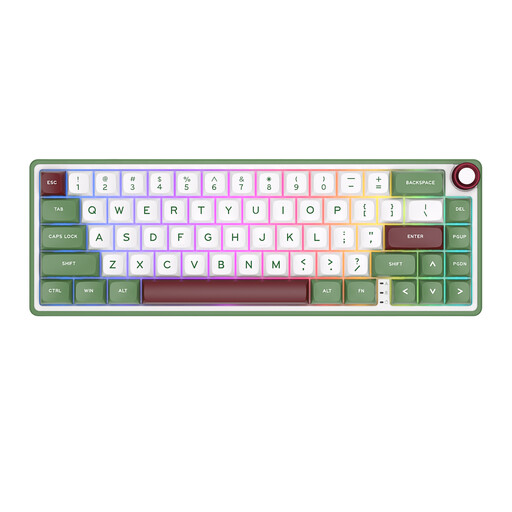 No image available
Could suit you if you’re looking for a compact model and want to configure editor commands yourself.
66 keys; the product information lists QMK/VIA, key remapping and macro support. The title also mentions hot-swappable switches and a volume knob.
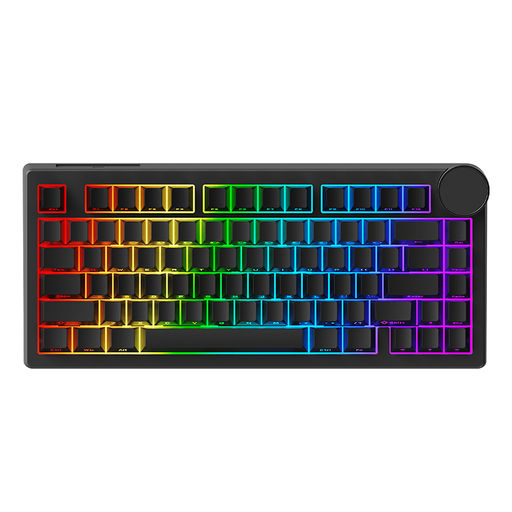 No image available
Could suit you if you’re looking for a compact layout with navigation keys readily available.
The product information lists 81 keys, a function row, arrow keys and a navigation cluster. According to the description, key remapping and macros are managed via a Windows web driver.
 No image available
Could suit you if you’re looking for a compact layout with arrow and function keys.
82 keys; the product information lists Bluetooth, 2.4 GHz and USB-C, plus compatibility with Windows and Mac. The physical layout is US QWERTY.
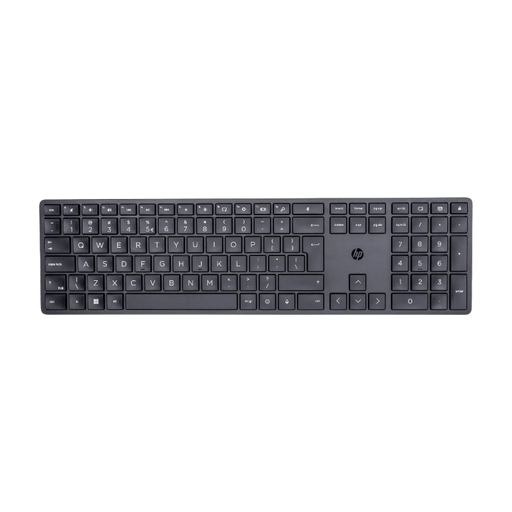 No image available
Could suit you if you enter pattern numbers and want to use programmable keys.
Full-size with a numeric keypad; the product information lists more than 20 programmable keys and a width of 428,2 mm. Allow for mouse space at this width.
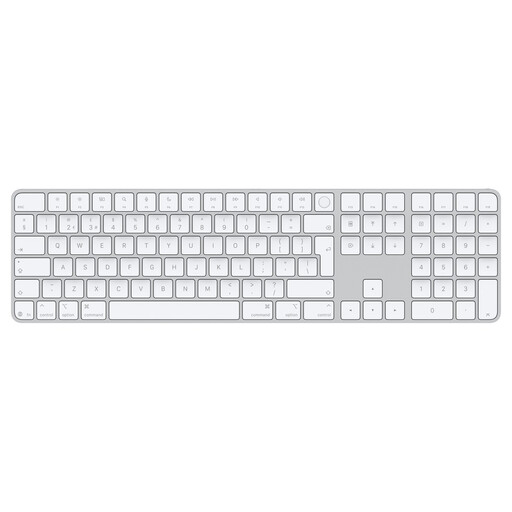 No image available
Could suit you if you’re looking for a numeric keypad and document navigation keys for a compatible Mac.
This version is designed for Mac models with Apple Silicon; the product information lists macOS 11.4 or later. The stated width is 41,87 cm, so allow for mouse space.
No. Opening editor windows side by side doesn’t in itself require a physical split keyboard. Visual Studio Code lets you display editors side by side and customise shortcuts; choose separate keyboard halves only if you want to try positioning them physically.
First check your operating system’s active keyboard layout, then test your editor commands and coding characters. Visual Studio Code notes that shortcuts follow the current keyboard layout.
That depends on the setup you want. According to Kinesis, VIP3 lifters can only be used with the palm supports to provide stability. For other angled setups, check which accessories are compatible with the version you’ve chosen.
For a standard online consumer purchase in the Netherlands, you’re generally entitled to a cancellation period of up to 14 days after delivery, subject to possible legal exceptions. You’re also entitled to a product that meets acceptable standards; the Dutch government states that there’s no fixed statutory warranty period in the Netherlands.
For employees who use a screen for more than 2 hours a day, Arboportaal says the screen and keyboard must not be attached to each other. When using a laptop, it must be possible to use a separate screen or keyboard. This isn’t a general requirement for every individual buyer, nor does it mean you need a physical split keyboard.