
Vandaag of morgen in huis

Kwaliteit gegarandeerd

Welkomstaanbiedingen ontgrendelen: GRATIS bezorging | Tot 80% korting | Gratis 30 dagen JoyPlus-proefperiode
Download de app
Coconut water seems simple at first glance: a tropical drink that tastes great chilled and is convenient at home or on the go. However, products vary considerably. Some cartons contain 100% coconut water, while others contain fruit juice, fructose or cane sugar. The size also makes a difference: 1 litre of coconut water is practical for home use, but less convenient to take with you.
If you only look for words such as “natural”, “refreshing” or “with electrolytes”, you could end up buying a product that does not suit the way you intend to use it. Use these checkpoints to compare coconut water based on the ingredients list, nutritional values and packaging.
Always check the ingredients. With 100% coconut water, coconut water should be listed as the only ingredient. For example, Grace lists “Coconut water” as its ingredient, while FOCO 100% Coconut Water also lists coconut water as the only ingredient.
Other varieties are more like tropical fruit drinks. According to the product information, Bamboo Tree consists of 98.5% coconut water and cane sugar. Vietcoco lists 99% coconut water, less than 1% fructose and vitamin C. This does not necessarily make these drinks unsuitable, but they are less appropriate if you are specifically looking for coconut water without added sugar.
Coconut water naturally contains minerals. Brands may describe these in their product information as naturally occurring electrolytes. However, the exact amounts vary between products and are not always fully listed in the nutritional table.
According to its own product information, FOCO contains naturally occurring electrolytes. Vita Coco mentions potassium and vitamin C, among other nutrients, in its product description. Treat this as product information, not as a medical claim or a substitute for personalised dietary advice. For everyday drinking, the ingredients list remains more important than a prominent claim on the packaging.
A coconut water multipack containing twelve cartons may seem practical, but it requires enough storage space and regular consumption. A 1-litre carton is convenient for a household or for use in smoothies, while a 330 or 500 ml pack may be more suitable for work, exercise or drinking on the go.
Also check how long the product keeps after opening. Many products need to be refrigerated and consumed within a few days. A large carton that is opened several times is therefore not practical for every household.
Look for terms such as:
Please note: “without added sugar” does not mean sugar-free. Coconut water naturally contains sugars. For example, Cocomax’s nutritional information lists 4.5 grams of sugar per 100 ml; according to the product description, no sugar has been added.
Always compare products per 100 ml rather than only per pack. This allows you to see the difference between a large carton and a small drinks carton. Cocomax lists 21 kcal and 5.3 grams of carbohydrates per 100 ml. Grace lists 22 kcal and 5 grams of carbohydrates per 100 grams. These values provide a useful indication of the composition, but may vary by batch or product. Therefore, also check the packaging when you buy.
Choose the size based on your routine:
After opening, coconut water should generally be kept refrigerated. The exact storage period varies by brand. Always follow the instructions on the carton and check the seal before drinking.
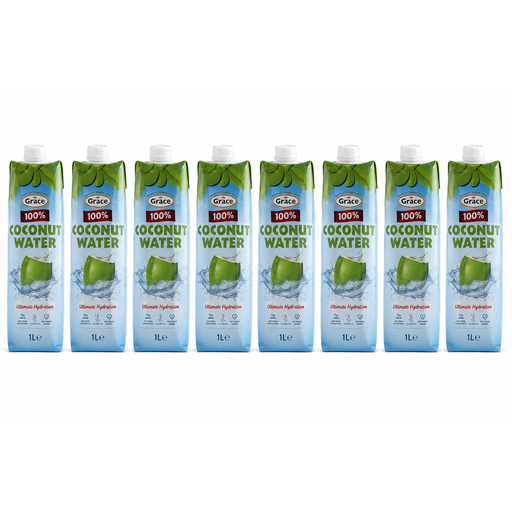
Why it suits this profile: The box of eight 1-litre cartons is suitable for households that drink coconut water regularly and want to stock up.
The product information states that it contains 100% coconut water and no added sugars. Check the current packaging when it arrives.
1 litre per carton, 0 grams of fat per 100 grams, and refrigeration after opening according to the product information.
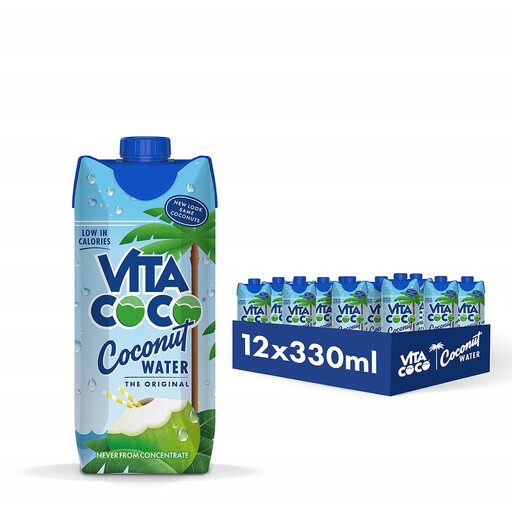
Why it suits this profile: The individual portions are practical if you want to take chilled coconut water to work, on the go or after exercise.
The product description states that it contains 99% coconut water and a small amount of fructose. It is therefore not a 100% variety; the difference is clear in advance.
12 cartons of 330 ml, 18 kcal per serving according to the product information, and chilled drinking without opening a large carton.
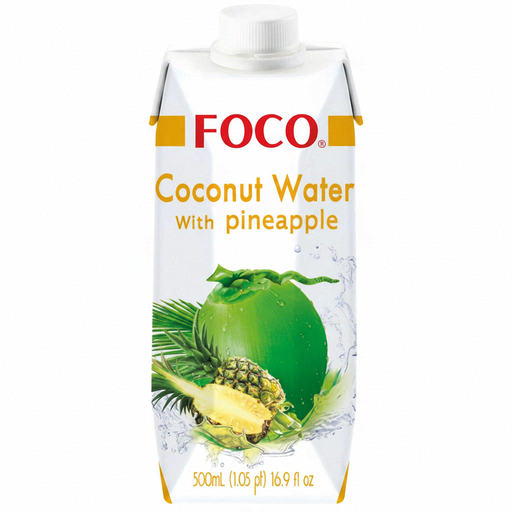
Why it suits this profile: The combination with pineapple juice is ideal if you want to drink coconut water after exercise or on a hot day with a distinct fruity flavour.
The ingredients list coconut water, 5% pineapple juice and vitamin C. This makes it clear that it is not 100% coconut water, but a flavoured variety.
500 ml per carton, 20 kcal per 100 ml, and a combination of coconut water and pineapple for smoothies or mixed drinks.
A fruit flavour can make the lightly sweet taste of coconut more accessible. Alongside coconut water with pineapple, FOCO also offers coconut water with guava. According to the product information, the pink guava variety contains 5% pink guava juice, vitamin C and 20 kcal per 100 ml. Both varieties are intended as tropical fruit drinks rather than coconut water without added ingredients.
If you would prefer to control the ingredients yourself, choose 100% coconut water and add pineapple, guava or other fruit at home. For a ready-made flavour, a 500 ml carton is simpler.
We have compiled a complete, up-to-date list of products that fully meet these strict selection criteria and the applicable European safety regulations.
No. “Without added sugar” means that no extra sugar has been added, but other ingredients may still be present. Therefore, check the ingredients list. With 100% coconut water, coconut water is listed as the only ingredient.
This varies by brand and packaging. According to the product information, Grace recommends keeping the opened carton refrigerated and drinking it within two days. Other products state a maximum of three days. Always follow the instructions on the label.
Coconut water can be a refreshing drink to choose after exercise. Some product descriptions refer to naturally occurring electrolytes, but the composition varies by brand. Therefore, compare the nutritional values and choose a size that you can drink straight away.
