
Vandaag of morgen in huis

Kwaliteit gegarandeerd

Welkomstaanbiedingen ontgrendelen: GRATIS bezorging | Tot 80% korting | Gratis 30 dagen JoyPlus-proefperiode
Download de app
When you search for coconut snacks, you’ll quickly come across a wide range: from coconut biscuits and coconut rice cakes to coconut mochi, sweets and Asian desserts. Some snacks are crunchy and dry, while others are soft, chewy or creamy. Without reading the packaging carefully, you could easily end up with something that’s too sweet, contains allergens, or loses its texture soon after opening.
A product may be called a coconut variety, yet coconut makes up only a small part of the ingredients. For example, Verkade Nizza Coconut contains 2% coconut according to the product information. Bin Bin Rice Crackers Coconut Flavour lists 4.4% coconut milk, alongside coconut flavouring.
If you want a clear coconut taste and more of the ingredient itself, look at the quantitative ingredient declaration. Three Squirrels Freeze-Dried Thai Coconut Flakes, for instance, states 97% coconut and 3% sugar. That’s verifiable information and says more than words like “tropical” or “rich in flavour”.
Some coconut snacks contain less sugar or no sugar at all, but can still be high in carbohydrates or sweeteners. Sportlife Cherry And Coconut Jar is sugar-free according to the product information and uses sorbitol, isomalt, maltitol, acesulfame-K and sucralose. The nutritional information shows 70g of carbohydrates per 100g.
Always compare the table per 100g. With sweet coconut snacks, the values vary widely: from around 182 kcal per 100g for Mae Napa Sticky Rice Cake Coconut & Sweet Potato to 596 kcal per 100g for the freeze-dried coconut flakes. Portion size and when you eat them are therefore important.
For on-the-go, the office or sharing, individual packaging and a resealable bag are practical. For desserts, a frozen product is a better choice, but you’ll need space at -18 °C and must follow the preparation instructions.
Also pay attention to the shelf life after opening. Crunchy coconut biscuits, wafers and rice crackers lose their bite more quickly if the packaging isn’t sealed properly. Store most ambient products in a cool, dry place away from direct sunlight, as stated on the label.
First, check whether the product suits your diet. Many Asian snacks contain wheat, milk, soya, egg or nuts. This applies, for example, to Franzzi Coconut Latte Flavored Filled Cookies, which list wheat, soya and milk. Koh-Kae Coated Peanuts Coconut Cream contains peanuts and wheat. Royal Family Mochi-Creamy Coconut contains soya.
Under EU regulations, “coconut” is listed as a nut for allergen information. Also check the “may contain traces” warning if you have an allergy. Don’t rely solely on the product name or image; the label on the packaging is what counts.
Choose based on when you want to eat the snack:
For frozen products, the preparation method is a firm requirement. China Town Glutinous Rice Ball Coconut must be prepared in boiling water until the balls float, according to the product information. TCT Glutinous Rice Cake Taro Filling needs to be steamed or briefly heated in the microwave. These products are therefore not the same as ready-to-eat Japanese mochi.
Don’t just compare the price per pack, but also the net weight. A bag of 92g, such as Franzzi Coconut Latte Filled Cookies, is suitable for a small snack moment. A 300g pack of Mi Lao Tou Crispy Rolls makes more sense if you’re sharing.
For a gift or treat, individually wrapped products are handy. Love & Love Japanese Style Pandan & Coconut Mochi is wrapped individually and has a net weight of 180g. For everyday use, a resealable pack, like Koh-Kae, can help reduce waste. Always check the storage instructions on the label after opening.
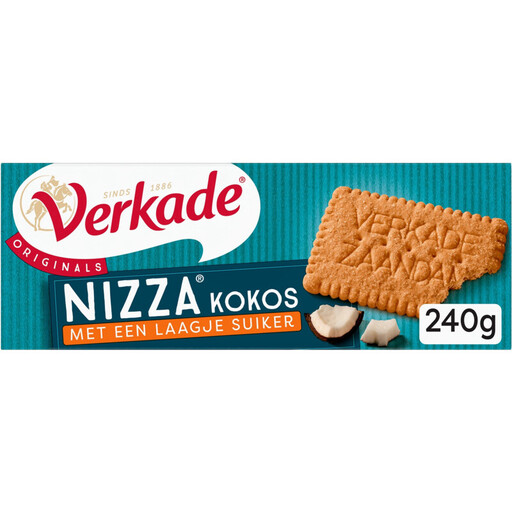
Why this fits the profile: A familiar, long-life coconut biscuit for coffee or sharing at home. The pack contains 240g.
The product information states the coconut content of 2%, so you can adjust your flavour expectations based on the ingredients list.
Crunchy texture, sugar layer and clear allergen information for wheat and gluten.
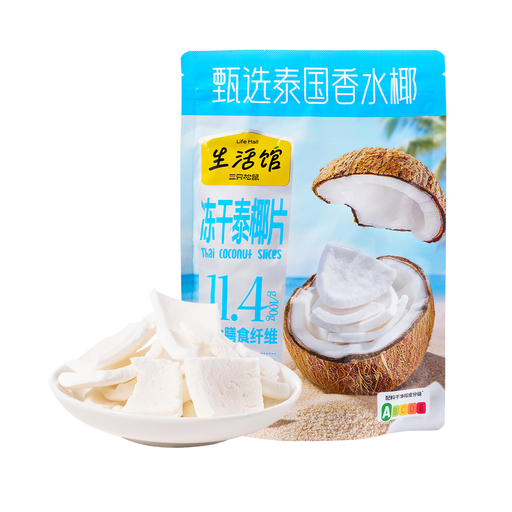
Why this fits the profile: For those who mainly want the coconut flavour and a short ingredients list, without biscuit, cream or rice filling.
The ratio is clearly stated: 97% coconut and 3% sugar. This makes the product content verifiable.
Freeze-dried, crispy texture and ready to eat. The packaging lists coconut as an ingredient and allergen category.
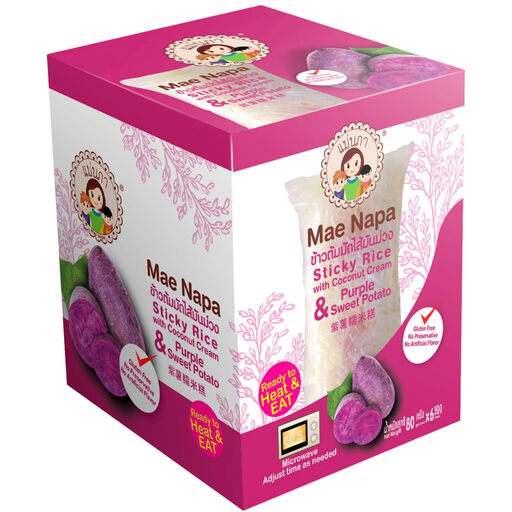
Why this fits the profile: For fans of Thai snacks and soft desserts who want six individual portions to store or share.
The portions are individually wrapped. The preparation suggestion of around 15 seconds in the microwave is stated, so you can adjust the texture.
480g total, 36% coconut cream and 19% purple sweet potato according to the product information; suitable as a dessert or snack.
We’ve put together a full, up-to-date list of products that fully meet these strict selection criteria and comply with current European safety regulations.
Choose a product that is ready to eat and individually wrapped. Coconut mochi, Mae Napa Sticky Rice Cake and individually wrapped biscuit or date snacks are practical for the office, school or a day out. Do check whether storage outside the fridge or freezer is allowed.
Store coconut biscuits, wafers and rice cakes in a sealed container in a cool, dry place. This helps keep them crunchy for longer. Mochi and desserts may have different instructions. Love & Love, for example, states that the product must be refrigerated after opening and eaten within the specified period.
That depends on the specific product. Some snacks only list coconut, while others contain wheat, milk, soya, peanuts or almonds. Always read the allergen information on the current packaging. If you have a severe allergy, the warning about possible traces is also important.
