Cocktail nuts can make a crunchy, savoury addition when peanuts are allowed under the allergy requirements and school rules. However, a protein declaration alone doesn’t automatically make them a recovery food. For a lunch that follows the Wheel of Five, the Netherlands Nutrition Centre recommends unsalted nuts as a guide, but you should also check the latest label and make sure the pupil can eat the product safely.
Who is this guide for?
Lunch packers keeping an eye on protein
You want to know how much protein a product actually provides, without automatically treating a savoury snack as sports nutrition. Compare the nutritional values on the same basis and check the amount you pack. The Netherlands Nutrition Centre explains that doing sport doesn’t automatically mean you need a separate product for extra protein.
Parents who put school rules first
You want a lunch addition that fits the school’s allergy requirements and food policy. Peanuts and tree nuts are separate allergens; general information doesn’t replace your school’s rules. The NVWA and Stichting Voedselallergie provide information about allergens and peanuts.
Lunch packers looking for an unsalted option
You’re looking for an alternative to seasoned cocktail nuts that fits with the Wheel of Five. Unsalted peanuts are a separate product choice, not the same snack without the seasoning. The Netherlands Nutrition Centre includes unsalted nuts in the Wheel of Five.
What should you look for when choosing?
A protein figure is only useful when you consider the nutritional basis and the amount you’re putting in the lunchbox. For school lunches, the Netherlands Nutrition Centre recommends using products from the Wheel of Five as a starting point.
Cocktail nuts with a crunchy coating
When: Choose this option if flavour and crunch matter most to you, and peanuts are allowed under the school rules and allergy requirements.
Trade-off: Duyvis and Jumbo describe their cocktail varieties as peanuts with a crunchy coating. That product description alone doesn’t prove they’re suitable as recovery food.
Unsalted peanuts
When: Choose this different type of product if an unsalted addition to lunch matters more to you than a seasoned coating.
Trade-off: Duyvis has a separate range of unsalted peanuts. According to Flink Nederland, the label for Duyvis Ongezouten Pinda Noten 235 g lists 27 g of protein, 614 kcal and less than 0.01 g of salt per 100 g. These values apply to that variety.
| What to consider |
What should you check? |
Who is this most relevant to? |
| Protein and portion |
Compare protein using the same nutritional basis and check how much you’re actually packing. Include the energy value in your comparison too. |
If you want to know how much protein the portion you pack provides, compare the nutritional basis and portion size rather than looking at the product name alone. Around 31% of consumers prioritise a protein contribution they can check. |
| Allergens and school rules |
Read the latest allergen information and check the rules at your school. Don’t assume there’s a nationwide school policy. |
When packing lunch for a pupil, you want the ingredients to meet relevant allergy requirements as well as the school’s rules. Around 31% of consumers prioritise suitability for school and allergy requirements. |
| Unsalted alternative |
Check that you’re buying unsalted peanuts and consider them as part of the whole lunch. |
If you’d rather pack an unsalted addition, you’re deliberately choosing a different type of product from seasoned cocktail nuts. Around 23% of consumers prioritise an unsalted lunch option. |
| Portioning and storage |
Treat the pack size as a sales format, not a portion, and follow the storage instructions for the specific variety. |
If you want to decide how much to pack for lunch yourself, it helps to portion out the product separately from the bag size and follow the storage instructions. Around 15% of consumers prioritise practical portioning and storage. |
Common mistakes
-
Automatically treating cocktail nuts as recovery food
General information about protein and sport doesn’t prove that a particular snack aids recovery. The Netherlands Nutrition Centre makes no product-specific recovery claim for cocktail nuts.
Choose based on nutritional values you can check and the whole lunch, not on a sports promise. Compare the nutritional basis with the portion you pack.
-
Assuming a peanut product is safe because peanuts are botanically not nuts
Peanuts are a separate allergen. The botanical distinction doesn’t mean a product meets allergy requirements or school rules.
Check for peanuts and tree nuts on the latest label, and ask what rules apply at your school. The NVWA explains the allergen information required on prepacked products.
-
Confusing a small pack with a suitable portion for a child
Pack sizes are sales formats, not portion recommendations for a particular age group. The Netherlands Nutrition Centre also warns about choking on whole nuts and peanuts.
Decide separately how much to pack and whether the pupil can eat the product safely. Don’t rely on the pack size alone.
Brands to consider
Duyvis
Duyvis offers both Borrelnootjes Cocktail with a crunchy coating and a separate range of unsalted peanuts.
- The two product ranges let you choose between seasoned cocktail nuts and unsalted peanuts.
- The product descriptions don’t prove a general high-protein benefit or recovery effect. Flink Nederland lists specific nutritional values per 100 g for the 235 g unsalted variety; these don’t apply to the entire range.
Albert Heijn
AH Borrelnoten Cocktail is an own-brand product from Albert Heijn.
- The product page identifies the cocktail nuts.
- Albert Heijn advises customers to check the packaging, as ingredients, nutritional values and allergen information may change.
Jumbo
Jumbo Borrelnoten Cocktail is a peanut product with a crunchy batter coating.
- Jumbo describes the product and provides storage advice: keep in a cool, dry, dark place.
- The product description alone doesn’t support a high-protein or sports recovery claim.
Lidl
The Lidl listing in this guide is for Duyvis Borrelnootjes.
- The listing makes it clear that this is a Duyvis product.
- Treat this as a Duyvis listing, not as a variety identified as a Lidl own-brand product.
ALDI
ALDI’s Dutch range page shows the nuts, seeds and kernels category.
- The category gives you an overview of nut products in the range.
- Check the individual product packaging before attributing ingredients, nutritional values or allergens to a product.
PLUS
PLUS lists Duyvis Borrelnootjes Cocktail in a 275 g bag.
- The product page identifies the brand, variety and pack size.
- This is a listing for a Duyvis product, not a PLUS own-brand cocktail nut, and it doesn’t prove a protein or recovery benefit.
Joybuy products for this lunch choice
These Joybuy product options are seasoned Duyvis cocktail nuts made with peanuts and a coating. Choose them only if these ingredients meet the allergy requirements and school rules.
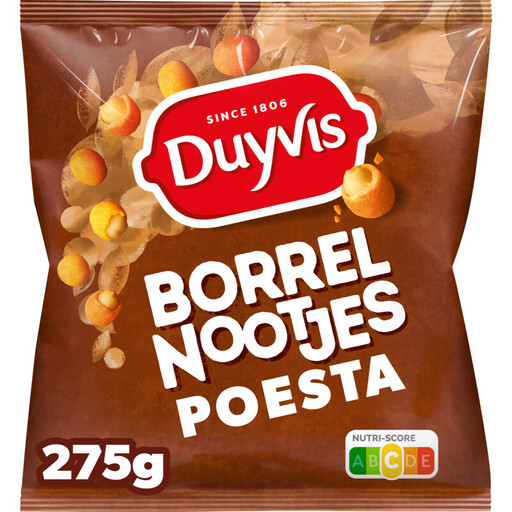 Image unavailable
Duyvis Borrelnootjes Poeta, 275 g
An option if you’re looking for a seasoned peanut snack with a crunchy coating.
Pack size: 275 g. Contains peanuts, wheat, milk and celery; may contain traces of soya, mustard and nuts.
View at Joybuy
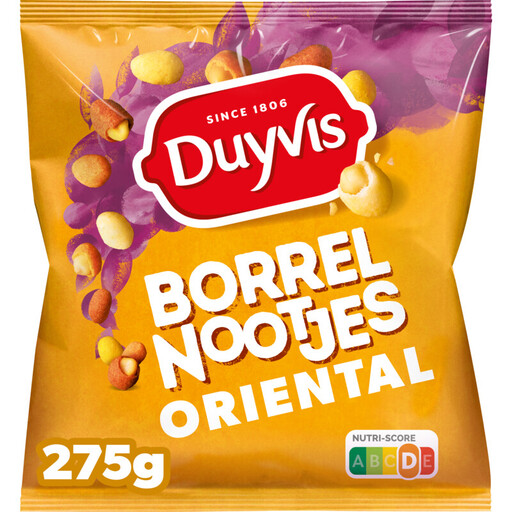 Image unavailable
Duyvis Oriental Borrelnootjes, 275 g
A seasoned peanut snack with a crunchy coating and mild curry flavour.
Pack size: 275 g. Contains peanuts, gluten (wheat and barley) and soya; may contain traces of milk, nuts and mustard.
View at Joybuy
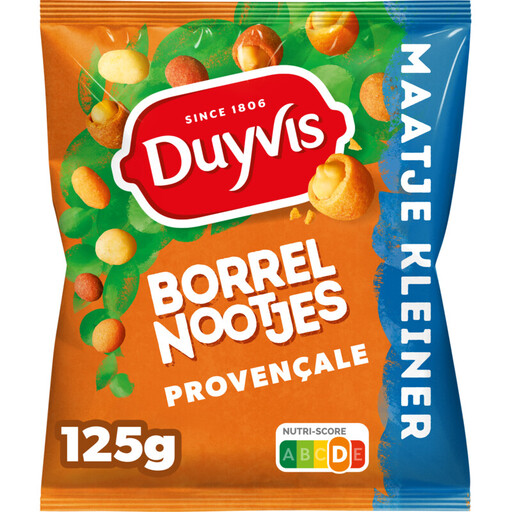 Image unavailable
Duyvis Bran Nuts Provencale, 125 g
A smaller pack of peanuts with a crunchy coating and onion and garlic flavour.
Pack size: 125 g. Contains peanuts and wheat; may contain traces of milk, nuts, soya and mustard.
View at Joybuy
 Image unavailable
Duyvis Coated Peanuts Provençal, 275 g
A seasoned peanut snack with a crunchy coating and onion and garlic flavour.
Nutritional information: 15 g of protein and 1.3 g of salt per 100 g. Contains peanuts and wheat; may contain traces of milk, nuts, soya and mustard.
View at Joybuy
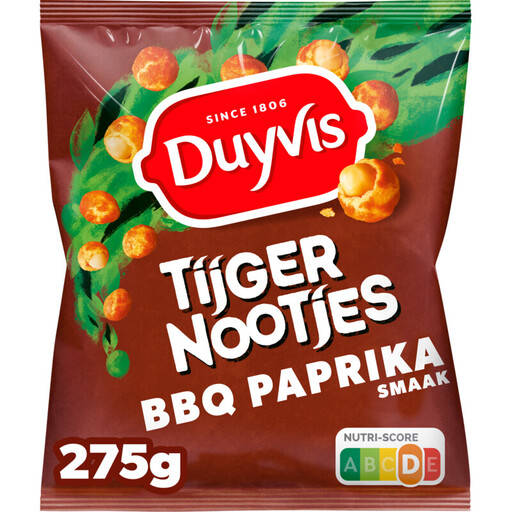 Image unavailable
Duyvis Tigernut BBQ Paprika, 275 g
A peanut snack with a double crunchy coating and BBQ paprika flavour.
Pack size: 275 g. Contains peanuts and wheat; may contain traces of milk, nuts, soya and mustard.
View at Joybuy
Frequently asked questions
Are peanuts the same allergen as tree nuts?
No. The NVWA treats peanuts and nuts as separate allergens for labelling purposes. Stichting Voedselallergie explains that peanuts are botanically legumes; this distinction doesn’t automatically make a peanut product suitable under a school’s rules.
What should you bear in mind with young children?
The Netherlands Nutrition Centre warns about choking on whole nuts and peanuts. Check whether the pupil can eat the product safely, and don’t assume that a small bag means it’s suitable for their age.
Does a pupil who plays sport automatically need special protein products?
No. The Netherlands Nutrition Centre’s general advice on sport doesn’t mean you should assume that every pupil who plays sport needs a special protein product. The advice isn’t specific to children and doesn’t support a recovery claim for cocktail nuts.
What allergen rules apply in the Netherlands?
Allergen information must appear on the label of prepacked products. According to the NVWA, new rules have also applied since 1 January 2026 for warnings about allergens that unintentionally get into food, for example through cross-contamination. These rules don’t replace an individual allergy assessment or a school’s rules.
Does a protein declaration automatically count as an authorised high-protein claim?
No. The European Commission states that nutrition claims are only permitted if they’re included in the annex to Regulation (EC) No 1924/2006. Check that the specific claim and product meet the relevant conditions; the product name or a protein declaration alone doesn’t settle the matter.


