
Snack buyer keeping an eye on fat
You want to compare total fat per 100 g without confusing it with the amount per portion. The product values come from the retailer information listed by Jumbo, PLUS and Albert Heijn.


If you’re looking for a product that qualifies as low fat under EU claim rules, the cocktail nuts reviewed here don’t fit the bill: the checked own-brand varieties contain 32.5 to 33 g of fat per 100 g, while the limit for solid foods is 3 g per 100 g. If you still want to choose cocktail nuts as a snack, compare the nutrition information for the exact variety per 100 g and decide how much to measure out yourself. A smaller bag or a different flavour doesn’t automatically make a product low fat.
You want to compare total fat per 100 g without confusing it with the amount per portion. The product values come from the retailer information listed by Jumbo, PLUS and Albert Heijn.
You’re looking for cocktail nuts for measured snack breaks and want to compare the portion size on the packaging with your own. The checked product information from Jumbo and Albert Heijn shows that stated portions can vary by variety.
You want to buy less at a time, but bear in mind that a small bag may contain several portions. Albert Heijn lists a 125 g Duyvis Cocktail pack; check the label for your chosen variety too.
Start by asking whether you need a product that meets the conditions for a low-fat claim. If you’re mainly looking for a measured snack, compare the exact variety and pack on a like-for-like basis.
| What to consider | What should you check? | Who should take this into account? |
|---|---|---|
| Total fat | Check total fat per 100 g and distinguish it from saturated fat and the value per portion. | If I’m looking for a product that can be labelled low fat, I check total fat per 100 g first. Around 33% of consumers put this at the top of their list of selection criteria. |
| Pack size | Check the net weight and how many portions the pack contains according to the label. | When I want to know how much I’m bringing home at once, I compare the contents of the exact packs. Around 33% of consumers say pack size is their main consideration. |
| Your own portion | Use a portion weight of your choosing to compare values between varieties. | If I want to measure out how much I snack on, I don’t just look at the portion stated on the pack. Around 20% of consumers put portion control first. |
| Flavour and variety | Check the exact flavour, ingredients and nutrition table; don’t use information from a different variety. | When I’m looking for a particular flavour or variety, I want to make sure the label matches that exact pack. Around 14% of consumers give this preference the greatest weight. |
A variety with slightly less fat than another type of cocktail nut may still be well above the conditions for a low-fat claim. The European Commission sets a limit of 3 g of fat per 100 g for solid foods. This is a condition for making a product claim, not a personal daily limit.
Compare the total fat per 100 g and check whether the product meets the conditions for the claim.
A lower fat content per 100 g doesn’t tell you how much you eat. A larger bag also contains more product, while the nutritional value of what you eat depends on your portion size.
Choose a pack that suits how you’ll use it and weigh out the amount you want to eat.
A larger bag also needs space for storing the product after opening, in line with the instructions on the packaging.
Retailer information may show portion values for different weights. This means the values per portion aren’t necessarily comparable, even when the products are in the same snack category.
Compare the nutrition information per 100 g first. Then, if useful, calculate the values for each variety using the same portion weight.
Duyvis Cocktail is available in several pack sizes. A smaller pack may suit you if you want to buy less at a time.
AH Cocktail 300 g is an own-brand variety you can assess by checking its label information and pack size.
Jumbo Cocktail is listed in a 300 g pack and a 500 g value pack. Assess each variety separately.
Alesto cocktail nuts are listed as a supermarket product. Use the label for the variety you’re actually considering.
The listed cocktail nut range includes oriental, provençale and cocktail flavours in 300 g packs.
PLUS Mild Cocktail Nuts 300 g is an own-brand variety. ‘Mild’ describes the flavour, not the fat content.
These products are Duyvis cocktail nuts in a range of flavours and pack sizes. Compare the information for the exact variety: the stated fat values mean none of these options is low fat.
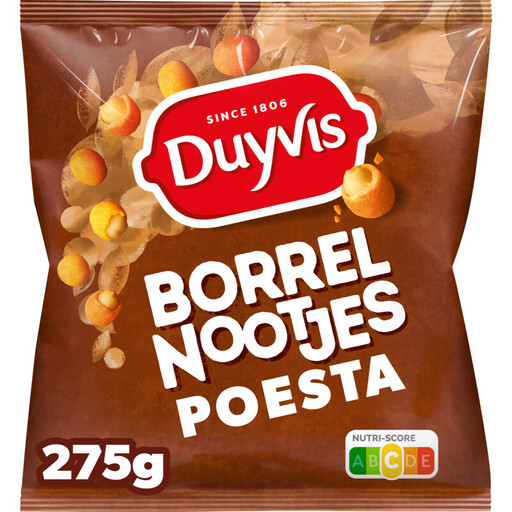 Image unavailable
Suits anyone looking for a ready-to-eat snack to enjoy with drinks, but not anyone who needs a product that meets the conditions for a low-fat claim.
The product information lists 34 g of fat per 100 g and a pack size of 275 g.
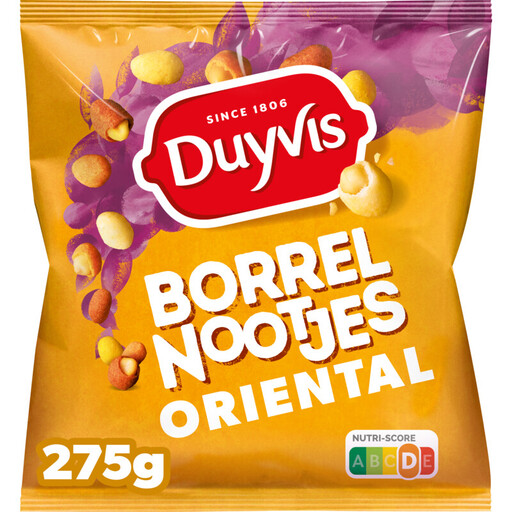 Image unavailable
Suits anyone looking for an oriental-style snack; the stated nutrition value doesn’t meet the conditions for a low-fat claim.
The product information lists 34 g of fat per 100 g and a pack size of 275 g.
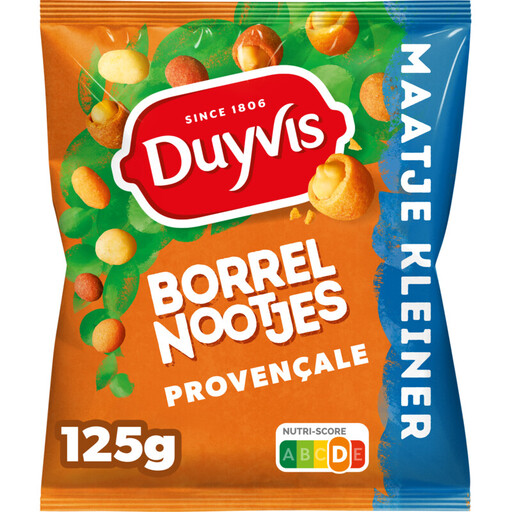 Image unavailable
Suits anyone looking to buy a smaller quantity; a small pack doesn’t mean the snack is low fat.
The product information lists 33 g of fat per 100 g, a net weight of 125 g and a stated portion of 30 g.
 Image unavailable
Suits anyone looking for a coated peanut snack with a Provençal flavour, but not anyone who needs a product that meets the conditions for a low-fat claim.
The product information lists 35 g of fat per 100 g and a pack size of 275 g.
For solid foods, the European Commission sets a maximum of 3 g of fat per 100 g for the ‘low fat’ nutrition claim. This is a condition for making a product claim, not a personal recommended intake.
Compare the values per 100 g first. This makes varieties with different stated portion sizes easier to compare; if you like, you can then work out the values for the same portion weight.
Use the nutrition value per 100 g and the weight of your own measured portion. A portion value on the pack applies to the stated weight and may not match your portion.
Check the ingredients and the ‘contains’ and ‘may contain’ statements for each exact variety. Ingredients can differ by flavour or pack; the NVWA explains that allergens must be clearly stated on the label.
Check that the product information matches the right variety, and review the ingredients, allergens, net weight and nutrition values. The European Commission states that food sold online must provide the same mandatory food information as products sold in physical shops.