
Someone who enjoys a drink and wants to eat less fat
You want to assess the ingredients in cocktail nuts and decide how much to eat, without mistaking a small portion for a low-fat product.


First, check the total fat per 100 g, then work out how much fat is in the portion you weigh out. A large sharing bag doesn’t determine your personal portion. According to the Netherlands Nutrition Centre, a food can only be labelled ‘low fat’ if it contains no more than 3 g of fat per 100 g. The nutrition information for Duyvis Provençaals 275 g states 35 g per 100 g, so this variety doesn’t meet that limit, even if you only eat a small amount.
You want to assess the ingredients in cocktail nuts and decide how much to eat, without mistaking a small portion for a low-fat product.
You choose a bag size to suit the group and keep your own portion separate, so the amount for your guests doesn’t automatically become your portion too.
As well as checking the nutritional information, you check the ingredients list and warnings on the packaging for the exact flavour you’re buying.
Compare the nutrition information per 100 g for the exact variety. For solid foods, the Netherlands Nutrition Centre sets a maximum of 3 g of fat per 100 g for a ‘low fat’ claim.
| What to consider | What should you check? | Who should pay particular attention? |
|---|---|---|
| Total fat and the ‘low fat’ claim | Compare the total fat per 100 g for the same type of product, and check which nutrition claim appears on the exact variety. | If I want to eat less fat, I look at the ingredients first, not just the bag size. Around 34% of consumers make fat content their main selection criterion. |
| Your own portion | Use the nutrition information per 100 g for the exact variety, then calculate the amount for the number of grams you weigh out. | If I’m eating from a sharing bag, I want to know how much I’m having myself. Around 33% of consumers consider their own portion their main priority. |
| Allergens for the group | Check the ingredients list and warnings about possible traces on the current packaging. | If I’m buying snacks for guests, I want to consider any allergens that may be relevant to them. Around 20% of consumers put allergen safety first. |
| Bag size and storage | Compare the net weight with how much you expect to use, and follow the storage instructions on the packaging. | If I’m buying a sharing bag, I want to choose a size that suits the group and know how to store any leftovers. Around 13% of consumers consider bag size and storage their main priority. |
The ‘low fat’ limit applies per 100 g, not to a portion you choose yourself. A smaller portion doesn’t change the product’s composition.
First, check the total fat per 100 g, then work out how much is in the amount you weigh out. For solid foods, the Netherlands Nutrition Centre sets a maximum of 3 g per 100 g for a ‘low fat’ claim.
Libelle’s taste test on 25 January 2018 assessed flavour, crunchiness and colour. It doesn’t tell you whether a variety is suitable if you’re trying to eat less fat.
Start by checking the nutrition table for the exact variety. Then consider your taste preferences separately.
ALDI lists several TRADER JOE'S flavours. That means the nutrition information for one flavour doesn’t automatically apply to another.
Check the brand, full product name, flavour and net weight on the packaging you intend to buy.
A large pack gives you more to share, but you’ll also need to store any leftovers properly once it’s opened. The Netherlands Nutrition Centre recommends storing nuts in a tightly sealed container in a dry place.
Choose a pack size that suits how much you expect to use, and follow the storage instructions on the packaging.
Duyvis lists Cocktail in several pack sizes: the manufacturer names 125 g, 275 g, 500 g and 1000 g.
Albert Heijn lists AH Cocktail Nuts as an own-brand option.
Jumbo lists Cocktail Nuts in a 300 g pack.
Lidl has a Dutch product listing for cocktail nuts.
ALDI lists TRADER JOE'S Cocktail Nuts in bacon and cheese, poesta or paprika flavours, in 300 g bags.
PLUS lists Mild Cocktail Nuts in a 300 g bag.
This Joybuy selection includes bags of cocktail nuts for sharing with guests. The listed fat content is above the limit for a ‘low fat’ claim, so check the ingredients if that claim is important to you.
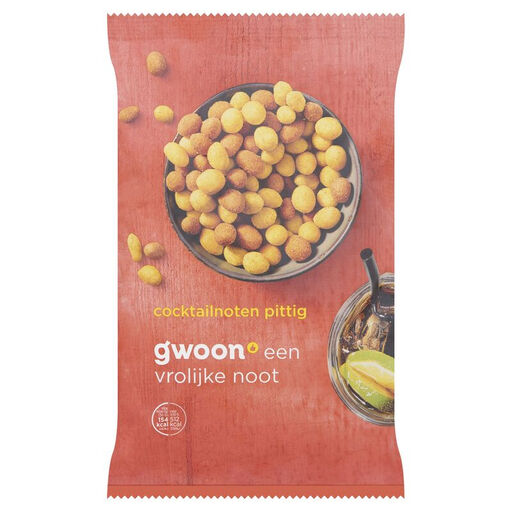 Image unavailable
The sharing bag could suit a get-together with guests, while you weigh out your own portion separately.
The product information lists 300 g and 30,49 g of fat per 100 g. This variety doesn’t meet the limit for a ‘low fat’ claim.
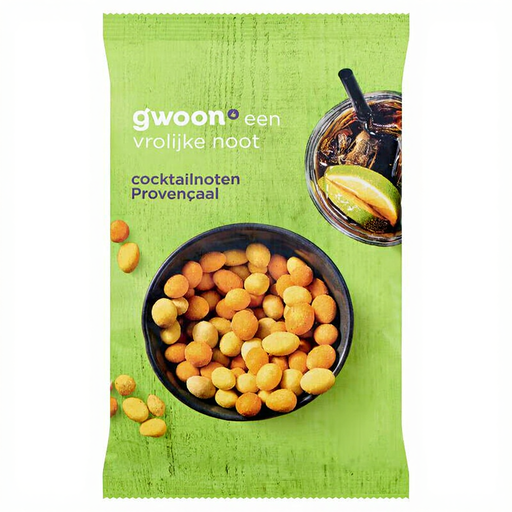 Image unavailable
The product description suggests serving these at parties. You can buy the bag for your guests and weigh out your own portion separately.
The product information lists 300 g and 32,4 g of fat per 100 g. This variety doesn’t meet the limit for a ‘low fat’ claim.
No. A nutrition goal and the ‘low fat’ product claim aren’t the same thing. For solid foods, the Netherlands Nutrition Centre sets a maximum of 3 g of fat per 100 g for this claim; your personal nutrition goal isn’t defined by that limit.
No, use the nutrition information for the exact flavour and pack. The details for Duyvis Provençaals 275 g don’t automatically apply to Cocktail or other varieties.
Multiply the number of grams you weigh out by the fat content per 100 g, then divide the result by 100. At 35 g of fat per 100 g, 25 g of this specific Duyvis Provençaals variety contains 8,75 g of fat by calculation. This is an example calculation, not a recommended portion.
Choose a net weight that matches how much you expect to serve the group, and keep your own portion separate. Duyvis lists Cocktail packs from 125 g to 1000 g; the bag size doesn’t change the nutrition information per gram.
For the exact variety, read both the ingredients list and any warnings about possible traces on the current packaging. The NVWA explains allergen labelling on packaging; don’t assume that information for one flavour also applies to another.