What should you look for when choosing?
First, work out which ingredient or component you need to avoid. Then compare flavours and pack sizes, and consider how you’ll serve the snacks while watching TV.
| What to consider |
What should you check? |
Who is this for? |
| The relevant allergen |
Check the ingredients list and warnings on the exact pack, paying particular attention to the allergens you need to avoid. |
If I need to avoid peanuts or specific nuts, I first check whether they’re in the product and read the warnings carefully. Around 36% of consumers say avoiding the relevant allergen is their top purchase priority. |
| Gluten in the crunchy coating |
Check the ingredients in the coating and flavourings, as well as the current gluten-free claim or certification. |
If I eat gluten-free, I want to know what’s in the coating and flavourings before choosing a snack. Around 29% of consumers say avoiding gluten is their top purchase priority. |
| Milk protein or lactose |
Work out whether you need to avoid milk protein or limit lactose, then check the ingredients and any milk-related warnings. |
If I avoid milk or limit lactose, I look for the information that suits my needs. Around 21% of consumers say having suitable information about milk or lactose is their top purchase priority. |
| Serving snacks separately |
Keep the original packs with the snacks and check how to keep different products and serving utensils separate. |
If I’m putting out snacks for people with different dietary needs, I want to be able to see clearly which pack goes with each bowl. Around 14% of consumers say organising a shared TV dinner is their top purchase priority. |
A snack alternative at Joybuy
This Joybuy selection is a packaged snack alternative for a TV dinner, not cocktail nuts themselves.
 No image available
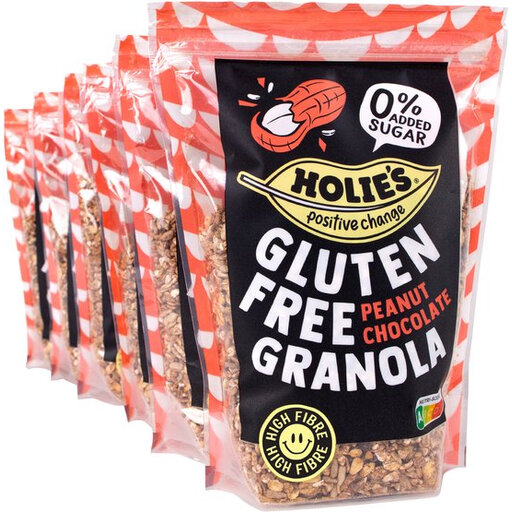
Holie’s gluten-free peanut and chocolate granola, 6 × 330 g
The product name says gluten-free, and the product information suggests it can be eaten as a snack; this is granola, not a cocktail nut.
Pack size: 6 × 330 g.
The product information states that it contains 0% added sugar and 14 g of fibre per 100 g.
According to the product information, this granola contains peanuts and oats, and may contain traces of almonds, cashews, hazelnuts, pecans and soya. Check the information on the exact pack before buying.
View at Joybuy
Frequently asked questions
Does lactose-free mean suitable for a cow’s milk allergy?
No. According to the Netherlands Nutrition Centre, lactose intolerance is related to milk sugar, whereas a cow’s milk allergy involves milk proteins. Choose according to what you need to avoid, and don’t rely on a lactose-free claim alone.
Should I always avoid any product labelled ‘may contain’?
That warning doesn’t mean the same thing for everyone with a food allergy. The Netherlands Nutrition Centre describes ‘may contain’ as a warning about possible cross-contamination. If you’re unsure, speak to your healthcare professional or allergy adviser about what’s right for your allergy.
How can I check whether cocktail nuts are gluten-free?
Check the current pack for an appropriate gluten-free claim or certification, and read the ingredients in the coating and flavourings. The Dutch Coeliac Society notes that cocktail nuts are usually not gluten-free; check any other flavour or pack separately.
How can I keep snacks separate when sharing a TV dinner?
Keep the original packs with the snacks and use separate bowls and serving utensils for different dietary needs. The Dutch Coeliac Society explains that cross-contamination can also happen in the kitchen, so serving snacks separately is a practical precaution, not a guarantee that a product is suitable.
What should I check on the label if I have an allergy?
Read the ingredients list and warnings on the exact pack. The Netherlands Food and Consumer Product Safety Authority states that the 14 legally designated allergens must be clearly highlighted in the ingredients list. Dutch rules on warnings about possible cross-contamination have applied since 1 January 2026; according to the NVWA, safe stock produced earlier may still be sold.


