Who is this relevant to?

People buying nibbles who have a food allergy

You want to check the allergen that matters to you, as well as possible cross-contamination, for each variant. According to their product descriptions, Duyvis Cocktail and Jumbo Cocktail are peanut snacks. The Netherlands Food and Consumer Product Safety Authority explains the role of allergen information on labels.

People who eat gluten-free

You’re looking for a product with a suitable gluten-free label and don’t want to confuse it with other ‘free from’ claims. The European Commission sets out separate requirements for gluten-free labelling.

People organising drinks with different dietary needs to consider

You keep product information to hand and assess each person’s needs separately. A milk allergy concerns milk proteins; lactose intolerance concerns lactose and is not the same thing.

What should you look for when choosing?

Start with the specific allergen or dietary restriction that applies to the person eating the snack. A claim about one property says nothing by itself about other allergens.

What to consider What should you check? Who is this important for?
The allergen to avoid Check the exact variant and ingredients list. Cocktail nuts made with peanuts are not suitable for someone with a peanut allergy. If I need to avoid a specific allergen, I want to know first whether it’s in the variant I’ve chosen. Around 31% of consumers prioritise avoiding the allergen that affects them.
Gluten-free labelling Look for a gluten-free label on the exact variant, and check for any other relevant allergens too. If I eat gluten-free, I want a label that specifically relates to gluten. Around 25% of consumers make this their top priority.
Possible cross-contamination Read the precautionary warnings and the information on the packaging of the product you’re buying. If possible accidental presence matters to me, I want to be able to check the warnings for the allergen that affects me. Around 25% of consumers prioritise this clarity.
Different dietary needs Make a note of each person’s dietary restriction, then check the exact products and packaging information. If I’m shopping for a group with different needs, I want to be able to check what’s suitable for each person. Around 19% of consumers prioritise this practical approach.

Common mistakes

  • Assuming ‘free from’ means free from all allergens

    A claim about one property doesn’t tell you which other allergens may be present. Duyvis describes Cocktail as a peanut snack; its claim about artificial colourings is not an allergen statement.

    First identify the allergen you need to avoid, then check the exact variant and its accompanying information.

  • Treating lactose intolerance and milk allergy as the same thing

    Lactose is milk sugar; a milk allergy concerns milk proteins. So an assessment focused on lactose doesn’t prove that a product is suitable for someone with a milk allergy.

    Check the information relevant to the dietary restriction in question, and ask for product-specific details if you’re unsure.

  • Relying on online product information alone

    Ingredients and allergy information can change. Albert Heijn recommends checking the packaging.

    Check the exact variant every time you buy it, and read the packaging you receive before eating the product.

Brands to consider

Duyvis

Duyvis offers several peanut-based Borrelnootjes flavours, including Cocktail.

  • Duyvis describes Cocktail as peanuts with a crunchy coating and lists several pack sizes.
  • The peanut centre makes Cocktail unsuitable for anyone with a peanut allergy. The claim about artificial colourings doesn’t mean it’s free from allergens.

Albert Heijn

Albert Heijn sells AH Borrelnoten cocktail among its own-brand options.

  • The product information directs you to the packaging for the latest product and allergy details.
  • This general advice is no guarantee that the variant is free from a particular allergen.

Jumbo

Jumbo lists Borrelnoten Cocktail 300 g as a product variant.

  • The product description mentions peanuts with a crispy coating and includes storage instructions.
  • This variant isn’t suitable for anyone with a peanut allergy. The description alone doesn’t prove that it’s suitable for people avoiding gluten or milk.

Lidl

Lidl’s Alesto range includes nuts and party snacks, among other products.

  • The range could be a useful starting point when looking for snacks to serve with drinks.
  • A general description of the range doesn’t give allergen information for an individual product.

ALDI

ALDI lists Trader Joe’s Borrelnoten in Bacon-kaas, Poesta and Paprika flavours.

  • The product page lists a 300 g pack.
  • A flavour name doesn’t tell you whether a variant is suitable for anyone avoiding milk, gluten or other allergens.

PLUS

PLUS lists Borrelnoten Mild 300 g as an own-brand option.

  • The product page describes the variant as vegetarian and provides storage advice.
  • A vegetarian label doesn’t mean the variant is free from allergens that matter to you.

Joybuy product selection

This selection features a different type of snack as an alternative to classic savoury cocktail nuts.
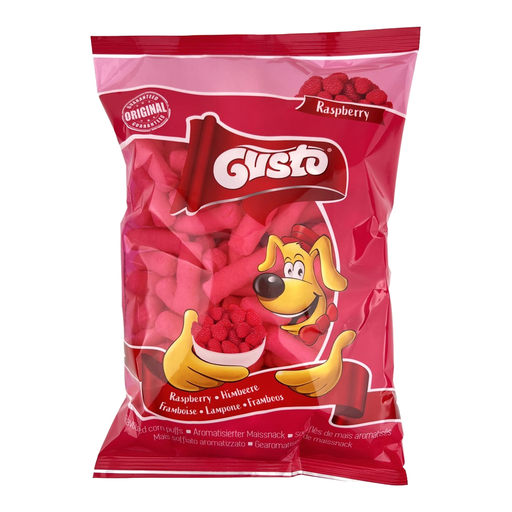
Gusto Raspberry Corn Puffs, Fruity Sweet, 80 g

Gusto Raspberry Corn Puffs (Fruity Sweet, 80 g)

A sweet raspberry-flavoured corn snack: a different type of snack from savoury cocktail nuts.

Joybuy

Frequently asked questions

Is lactose-free the same as suitable for someone with a milk allergy?

No. A milk allergy concerns proteins in milk, whereas lactose intolerance is about digesting milk sugar. If you have a milk allergy, also check the relevant information about possible cross-contamination. For lactose intolerance, make sure the product meets the dietary requirements in the advice you’ve been given.

What does ‘may contain’ mean on a snack packet?

The warning indicates that an allergen may be present accidentally, for example during production. It isn’t a list of ingredients, nor is it a guarantee that the product is free from an allergen. Check the warning for the specific allergy you have.

Is a claim about colourings also an allergen statement?

No. Duyvis’ claim about artificial colourings in Cocktail relates to colourings. The product description identifies Cocktail as a peanut snack; for information about other allergens, check the details for the exact variant.

Does a gluten-free label make a snack suitable for people with other allergies?

No. The European Commission sets out requirements for gluten-free labelling, but that doesn’t tell you whether a product contains peanuts, milk or other allergens. Check these separately in the information for the exact variant.

Are older allergen labels always banned after 1 January 2026?

Not always. According to the Netherlands Food and Consumer Product Safety Authority, existing stocks of packaged products can be sold after that date if the food is safe; the production date is relevant. A label alone doesn’t determine whether a product is suitable for your dietary needs.
