What should you look for when choosing?
First compare the energy per 100 g, then decide on your portion. Check organic certification, ingredients and allergens as separate criteria.
| What to consider |
What should you look for? |
Who is this important to? |
| Energy per portion |
Compare kcal per 100 g and calculate it for the number of grams you weigh out. |
If I want to keep the crunchy cocktail nut, I weigh out my portion rather than relying on a low-calorie label. Around 40% of consumers prioritise energy per snack occasion. |
| Organic certification |
For the exact variant, check the EU organic logo, control code and agricultural origin. |
If organic certification matters more to me than the coating, I’ll also consider cashews as an alternative. Around 30% of consumers make certification their first requirement. |
| Ingredients and salt |
Read the ingredients list and compare the salt per 100 g; check the allergens on the packaging. |
If I’m looking for a simple recipe or no added salt, I check the exact preparation method and ingredients. Around 20% of consumers prioritise the ingredients. |
| Flavour and crunchy coating |
Check the product description and flavour; an uncoated cashew is a different type of snack. |
If the seasoned, crunchy cocktail nut is what matters most to me, I consider the portion and other characteristics afterwards. Around 10% of consumers prioritise that familiar snack-time flavour. |
Cocktail nuts at Joybuy
This product selection is for anyone who wants to keep the cocktail nut and weigh out their own portion.
 No image available
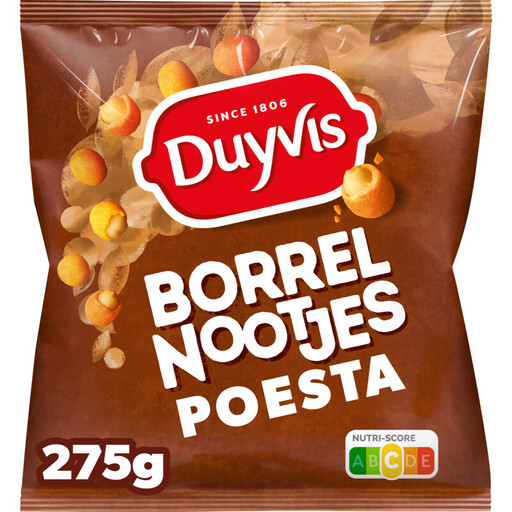
Duyvis Poeta cocktail nuts 275 g
The crunchy-coated peanuts are a good fit if you want to keep the cocktail nut and control how much you eat at each snack occasion.
The product information lists 539 kcal per 100 g. That’s above the European Commission’s threshold of no more than 40 kcal per 100 g for a ‘low-calorie’ claim.
View at Joybuy
Frequently asked questions
Can I call cocktail nuts low in calories if I only have a small bowl?
No. A smaller portion doesn’t change the nutrition claim for the product. For solid foods, the European Commission sets the threshold for a ‘low-calorie’ claim at no more than 40 kcal (170 kJ) per 100 g; a small portion you weigh out may contain less energy than a larger one.
How can I check whether cashews are organic?
Check the EU organic logo, control code and agricultural origin on the packaging. The logo is compulsory for prepacked organic foods produced in the EU and sold as organic; different conditions apply to its use on imported products.
How do I compare calories when portion sizes differ?
First compare the nutritional values per 100 g, then calculate them for the same weighed amount. Jumbo Cocktail Nuts list 527 kcal per 100 g; for 15 g, that works out arithmetically at 79.05 kcal.
Does unsalted mean the same as unroasted?
No. Unsalted describes the salt content, while unroasted describes how the cashews are prepared. Albert Heijn lists unroasted cashews with cashew nuts as the ingredient, as well as a separate roasted, unsalted variety containing cashew nuts and sunflower oil.
Are organic cashews suitable for people with a peanut or nut allergy?
Organic certification isn’t an allergen label. The product information for the cashews checked here lists cashew and the possible presence of other nuts or peanuts, so check the allergen information on the exact packaging. The Netherlands Food and Consumer Product Safety Authority explains that allergen information must appear on the label of prepacked products.


