
Vandaag of morgen in huis

Kwaliteit gegarandeerd

Welkomstaanbiedingen ontgrendelen: GRATIS bezorging | Tot 80% korting | Gratis 30 dagen JoyPlus-proefperiode
Download de app
Buying a coat seems simple, until you find yourself in the Dutch wind and rain with a hood that blows off, sleeves that are too short or a lining that doesn’t keep you warm enough. When choosing coats for women and men, it’s not just about colour or brand. The material, fit and intended use all determine whether a women’s coat or men’s coat really suits your day-to-day life.
An outer fabric with a water-repellent finish can make light rain bead off for a while. That doesn’t automatically mean the coat is suitable for a long bike ride or walk in a heavy shower. Check whether the product information mentions a waterproof coat, taped seams and a hydrostatic head rating. A DWR finish can also become less effective over time and may need to be reapplied.
A thick padded coat can be comfortable for your commute, but too warm for walking or exercise. An outdoor coat with a breathable outer layer is more practical when you’re active. Look for a balance between insulation, ventilation and freedom of movement. A fleece jacket, for example, works well as an extra layer, but on its own it doesn’t always offer enough protection from rain and strong winds.
A coat that fits well over a T-shirt may feel too tight over a jumper or fleece. Measure your chest, waist and, if needed, hips, then compare your measurements with the size guide for the specific model. Check the sleeve and back lengths, as well as adjustable cuffs. A 3-in-1 jacket needs extra attention: the outer layer, inner layer and combined fit may all have different measurements.
A technical raincoat or walking coat may state its hydrostatic head rating in millimetres. This is a laboratory measurement of the pressure the fabric can withstand. A higher figure may indicate greater rain protection, but the construction matters too. Seams, zips, the hood and cuffs can all be potential weak points. Look for terms such as taped seams, a storm flap and an adjustable hood.
According to the product description, the PELLIOT fleece-lined coat has a hydrostatic head rating of 35.900 mm H₂O according to JIS. This is a product specification provided by the manufacturer; it doesn’t mean you’ll stay completely dry in every situation. The description also mentions an adjustable hood, hem and cuffs.
When you’re walking, camping or exercising, perspiration can cause moisture to build up inside your coat. Manufacturers sometimes use MVTR to measure this, expressed in grams per square metre per 24 hours. A higher stated figure may mean that more water vapour can pass through the fabric, but the result also depends on your clothing layers, the temperature and how hard you’re exerting yourself.
According to PELLIOT’s own product information, the model mentioned has a breathability rating of 16.000 g/m²/24 hours. Treat this as a point of comparison, not a guarantee that you’ll feel dry in every condition.
For a winter coat, the amount of filling isn’t the only thing that matters. The length, collar, hood and fastening also affect how much warmth it retains. A puffer jacket with 100% polyester filling may be suitable for cold days in the city. For changeable weather, a separate shell with a fleece or down layer offers more flexibility.
Also check the care instructions. Some coats shouldn’t be tumble-dried, while others specify a low drying temperature. Always follow the care label and fasten the zips before washing. This helps prevent unnecessary wear to the fabric, coating and lining.
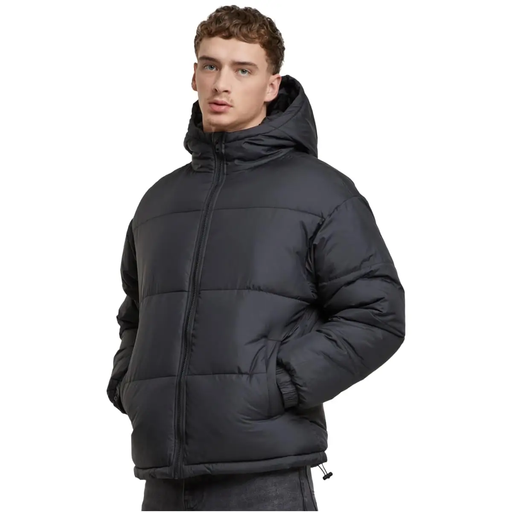
Why it suits this profile: This padded coat is designed for everyday wear and cold days in the city. The hood and polyester filling provide practical basics, without a technical outdoor construction.
The product information clearly lists the material, filling, size guide and care instructions. This helps you assess it realistically as a winter coat for everyday wear, rather than a technical raincoat.
100% polyester filling, polyamide outer layer and a hood. Size L is listed for a chest measurement of 92–99 cm.

Why it suits this profile: This women’s coat is designed as a shell for walking and changeable weather. Its fit, adjustable hood and pockets make it a good choice for anyone who values practical details.
The description mentions fully taped seams, windproof and waterproof DryVent fabric, and a DWR finish. According to The North Face’s own product information, the coat can also be treated again to maintain its water-repellent performance.
100% polyester outer fabric, mesh lining, adjustable hem and hood. The size guide lists a chest measurement of 90–96 cm for M.

Why it suits this profile: The shell and fleece lining combination is designed for camping, travelling, walking and commuting in changeable weather. According to the product description, the layers can be worn separately or together.
It’s more than just a thick layer: the 3-in-1 design lets you adapt to the temperature and your activity. According to PELLIOT’s own research and product information, the hydrostatic head, breathability and abrasion resistance are listed separately.
The product description lists a hydrostatic head of 35.900 mm H₂O, breathability of 16.000 g/m²/24 hours and more than 40.000 abrasion cycles.
We’ve put together a complete, up-to-date list of products that meet these strict selection criteria and the applicable European safety regulations.
It depends on how you’ll use it. For everyday cycling or walking, a waterproof and windproof coat with an adjustable hood is practical. A padded winter coat is a better choice for cold, dry days. If you often switch between activity and rest, you could choose a fleece jacket or a 3-in-1 jacket with multiple layers.
Measure your chest at its widest point and compare it with the size guide for the model. Allow room for a jumper or fleece underneath. Check the sleeve and back lengths too. Don’t rely solely on a general size such as M or L, as fits vary between brands and models.
Its lifespan depends on how you use, wash and store it, as well as the material. A coat worn every day and washed frequently will wear out faster than one worn occasionally. Follow the care label, avoid unsuitable detergents and only reapply a water-repellent coating if the manufacturer allows it. When buying, check the abrasion resistance, zip quality, seams and how easy the coat is to care for.
