
Calorie-conscious snackers
You fancy coated peanuts while studying, but first compare the calories and your own portion size. Use category information as a general guide only; the label on the variety you choose determines the calculation.


When choosing coated peanuts for a study session, check the nutritional information for the exact variety and how much you actually eat. A smaller portion doesn’t make the product itself low in calories. The Netherlands Nutrition Centre lists 133 kcal per 25 g for generic coated peanuts, but this isn’t the on-pack figure for every flavour or pack.
You fancy coated peanuts while studying, but first compare the calories and your own portion size. Use category information as a general guide only; the label on the variety you choose determines the calculation.
You don’t want to keep deciding how much to eat during every study break. Check the pack size, portion it out in advance if you like, and follow the storage instructions for what’s left.
You’re after a savoury, crunchy snack and want to compare flavours such as cocktail, Provençal or Oriental. Flavour and packaging alone don’t tell you anything about the calories.
First compare the nutritional information for the exact variety, then decide which quantity and pack size suit your study breaks.
| What to consider | What to look for | Who is this important for? |
|---|---|---|
| Calories per portion | Check the calories per 100 g on the pack and weigh your portion. Calculate the calories using: calories per 100 g × portion weight in grams ÷ 100. | If you want to manage how much you eat during a study break, check both the figure on the label and the weight of your portion. Around 42% of consumers prioritise the calories in their snack. |
| Portioning in advance | Check the net weight and storage instructions; one bag doesn’t automatically equal one portion. | If you want to measure out portions in advance for several breaks, the pack size and storage instructions are practical considerations. Around 33% of consumers prioritise preparing portions ahead of time. |
| Flavour and ingredients | Choose your preferred seasoning, then check the nutritional information and allergens for that specific variety. | If you’re mainly looking for a flavour that suits your preferences, compare the varieties without assuming that their flavour or dietary characteristics mean fewer calories. Around 17% of consumers prioritise flavour. |
| Quantity for several breaks | Check the net weight and consider how many separate portions you want to divide up and store. | If you want to have enough ready for several study breaks, the amount in each pack is a factor in your choice. Around 8% of consumers prioritise having enough for several breaks. |
The 133 kcal per 25 g listed by the Netherlands Nutrition Centre for generic coated peanuts is a category figure, not a value that applies to every brand or variety. The European Union describes declared nutritional values as averages, so compare the information on the exact pack.
Fewer grams reduce the calories in that portion, not the energy per 100 g of the product.
Use the nutritional information for the variety you choose and the weight of your portion. For solid foods, the Netherlands Nutrition Centre defines a low energy density as less than 40 kcal per 100 g; portion size alone doesn’t support a product claim like this.
Flavour, a vegan label and claims about colourings are all different characteristics from energy content. For example, the PLUS product page describes one variety of coated peanuts as vegan; that alone says nothing about its calorie content.
Check the nutritional information separately from flavour and dietary characteristics. The Netherlands Food and Consumer Product Safety Authority (NVWA) states that nutrition claims must comply with European rules.
Ingredient and allergen information applies to the specific variety and may change. Albert Heijn advises customers to check the latest product information.
If you have a relevant allergy, always read the label on the exact flavour and pack. The NVWA lists peanuts and cereals containing gluten as separate allergens, among others.
The range includes several seasoned varieties of coated peanuts, including Cocktail, Provençale, Poesta and Oriental.
AH Cocktail Coated Peanuts is an own-brand variety with its own product page.
Jumbo Cocktail Coated Peanuts is described as a 300 g product.
Lidl has a Dutch product page for coated peanuts; Alesto is the name of its nuts and dried fruit range.
ALDI’s Dutch product page describes TRADER JOE'S coated peanuts in 300 g bags.
PLUS Oriental-style Coated Peanuts is described as a 300 g variety.
These Joybuy products are coated peanuts for anyone who wants to compare flavours or weigh out portions for study breaks.
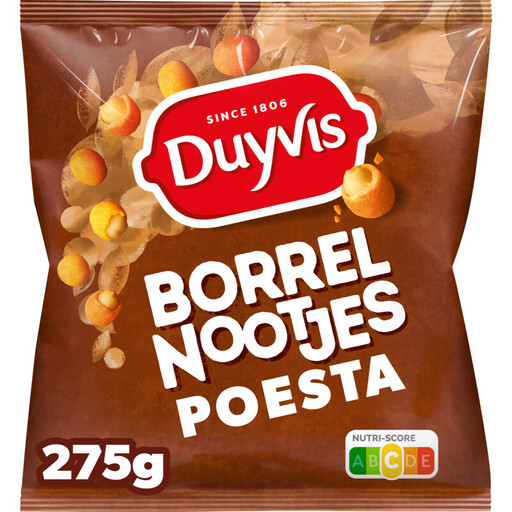 No image available
The pack gives you a specific amount to divide between several study breaks in advance.
Net weight: 275 g. The product description mentions a savoury spice blend and a crunchy peanut coating.
Contains peanuts, milk, gluten (wheat) and celery; may contain traces of soya, mustard and other nuts.
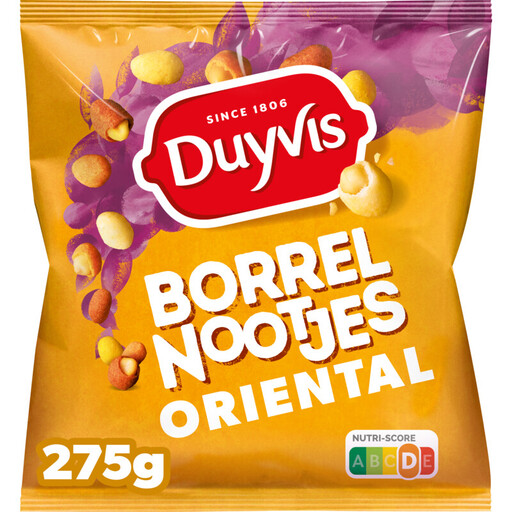 No image available
This variety is a good fit if you fancy curry-flavoured coated peanuts during a study break.
Net weight: 275 g. Duyvis describes Oriental as curry-flavoured.
Contains peanuts, gluten (wheat and barley) and soya; may contain milk, nuts and mustard.
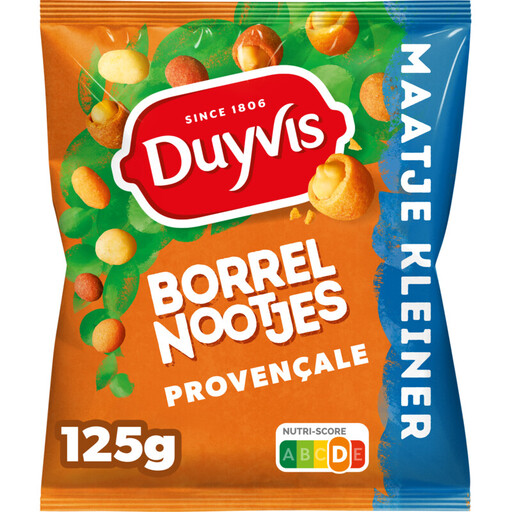 No image available
The smaller bag may suit you if you’d rather open a smaller amount at once and portion it out yourself.
Net weight: 125 g. The product description mentions Provençal onion and garlic flavour.
Contains peanuts and gluten (wheat); may contain milk, nuts, soya and mustard.
 No image available
You can portion out the contents of the bag in advance; the stated nutritional value lets you calculate the energy in each weighed portion.
Net weight: 275 g. Stated energy: 542 kcal per 100 g. The product description mentions onion and garlic flavour.
Contains peanuts and gluten (wheat); may contain milk, nuts, soya and mustard.
Multiply the calories per 100 g shown on your pack by the weight of your portion in grams, then divide by 100. The Netherlands Nutrition Centre lists 133 kcal per 25 g for generic coated peanuts; for a branded variety, use the nutritional information on the exact pack.
The weight of the bag isn’t a personal portion recommendation. If you use 25 g as a portion for your calculation, 125 g works out to five portions of that size; choose the amount you want to weigh out.
A product containing peanuts isn’t suitable if you have a peanut allergy. If you have a gluten or other food allergy, check the ingredients, highlighted allergens and any warnings for the exact variety. The NVWA lists peanuts and cereals containing gluten as separate allergens; the Jumbo cocktail variety reviewed is described as peanuts with a crunchy coating.
Follow the instructions on your pack. For the 125 g Duyvis Provençale Coated Peanuts, the PLUS product page advises storing them in a cool, dry place and keeping the opened bag in a light- and airtight container where possible.
No, a smaller pack doesn’t change the energy per 100 g. For solid foods, the Netherlands Nutrition Centre defines a low energy density as less than 40 kcal per 100 g; the NVWA points out that nutrition claims must comply with European rules. So don’t judge a product claim on pack size alone.