
Label checkers
You want to choose coated peanuts based on their fat content, rather than claims such as ‘light’ or ‘oven-baked’. Compare the nutritional information per 100 g on a like-for-like basis.


First compare the fat content per 100 g; a smaller bag doesn’t tell you anything about the recipe. If your main aim is to eat less fat, also work it out based on your portion size. For a journey, choose an amount that suits the number of people eating, and store any opened coated peanuts in a cool, dry, dark place in a tightly sealed container.
You want to choose coated peanuts based on their fat content, rather than claims such as ‘light’ or ‘oven-baked’. Compare the nutritional information per 100 g on a like-for-like basis.
You want to decide in advance how much to take and eat. The pack weight and whether the packaging can be resealed properly after opening are both relevant.
You’re buying for several people who may have different preferences or allergies. Check the ingredients and allergen information on the packaging of the exact variety.
To compare recipes, look at the fat per 100 g; to work out how much to take on your journey, also consider your portion size and the number of people eating.
| What to consider | What to look for | Who is this important for? |
|---|---|---|
| Fat content and claims | Compare the fat in grams per 100 g for the same product category and variety. The European Commission sets a maximum of 3 g of fat per 100 g for a ‘low fat’ claim on solid foods. | If you’re mainly looking for a different recipe, compare the fat content rather than relying on the bag size or how the product is prepared. Around 42% of consumers put recipe fat content first. |
| Portion size and storage | Work out the fat per portion using: fat per 100 g × portion weight in grams ÷ 100. Once opened, follow the storage instructions on the packaging. | If you want to decide in advance how much to eat during a journey, both portion weight and being able to reseal the packaging matter. Around 25% of consumers prioritise portion size and storage while travelling. |
| Pack size | Compare the net weight with how much your travelling party expects to eat. A larger bag doesn’t, in itself, tell you anything about the fat content. | For a group, choose an amount that suits everyone rather than assuming a larger pack is automatically more suitable. Around 17% of consumers prioritise pack size. |
| Allergens | Read the ingredients list and allergen warnings on the packaging of the exact variety. The NVWA explains that allergens must be listed on the label. | If someone in the car has a relevant allergy, first check whether the snack is suitable for them. Around 16% of consumers prioritise allergen suitability. |
The weight of the bag and the fat content per 100 g answer different questions. A smaller portion can limit how much fat you eat, but it doesn’t change the recipe.
First compare the nutritional information per 100 g, then work out how much fat is in your portion.
The claim refers to fat. Energy and salt are listed separately in the nutrition table.
Decide which nutritional values matter for your choice and check each one separately on the label.
Coated peanuts should be stored in a cool, dry, dark place in a tightly sealed container. A warm car isn’t the same as a kitchen cupboard.
Take an appropriate amount with you and follow the storage instructions on the packaging for any leftovers.
Duyvis describes its Oriental variety as peanuts in a crunchy curry-flavoured coating, in a 275 g pack.
Albert Heijn lists AH Borrelnoten cocktail as an own-brand option.
Jumbo lists its own coated peanuts in different pack sizes, including 300 g and 500 g, alongside Duyvis products.
Lidl lists Duyvis Borrelnootjes in a 200 g pack.
Aldi lists Trader Joe’s coated peanuts in flavours such as oriental, provençale and cocktail, in a 300 g pack.
PLUS lists Borrelnoten Provencaals in a 300 g pack.
These Joybuy products are regular coated peanuts for journeys; their product names and available information don’t support a low-fat or reduced-fat recipe claim.
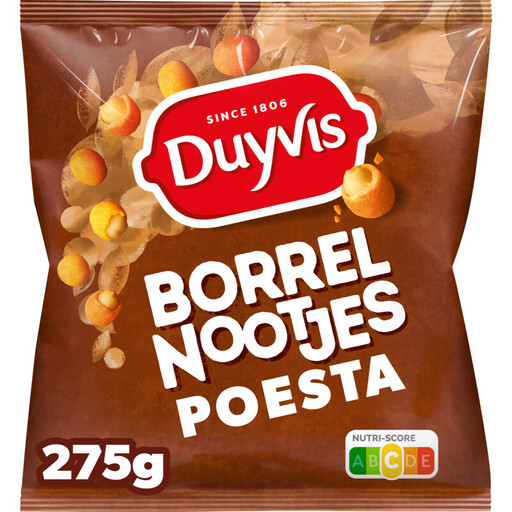 No image available
The product information describes this as a ready-to-eat snack for journeys.
Pack size: 275 g. The product description mentions a savoury flavour and recommends sealing the pack tightly after opening.
Contains peanuts, milk, wheat and celery; may contain traces of soya, mustard and other nuts.
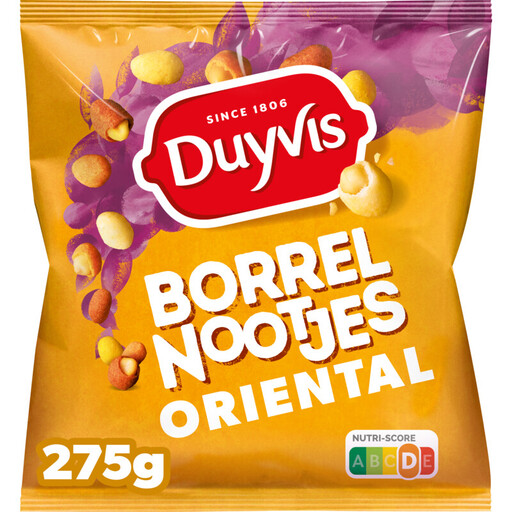 No image available
The product information describes this as a ready-to-eat snack to share.
Pack size: 275 g. The flavour is described as curry; seal the pack tightly after opening.
Contains peanuts, gluten (wheat and barley) and soya; may contain milk, nuts and mustard.
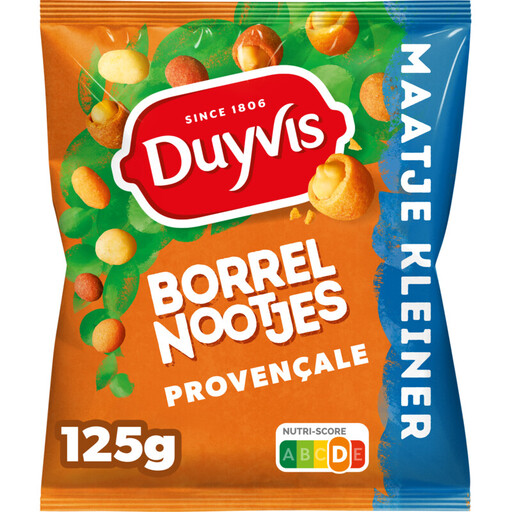 No image available
The product information describes this as a snack for journeys and lists 30 g portions.
Pack size: 125 g, with 4–5 portions according to the product description. The flavour is described as onion and garlic.
Contains peanuts and wheat; may contain milk, nuts, soya and mustard.
 No image available
The product description says this snack is ready to eat.
Pack size: 275 g. The flavour is described as onion and garlic; seal the pack tightly after opening.
Contains peanuts and wheat; may contain milk, nuts, soya and mustard.
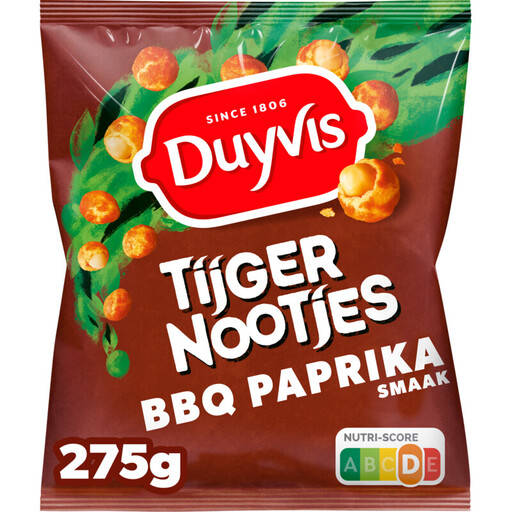 No image available
The product description says this snack is ideal for sharing.
Pack size: 275 g. The flavour is described in the product name as BBQ Paprika; seal the pack tightly after opening.
Contains peanuts and wheat; may contain milk, nuts, soya and mustard.
According to the European Commission, solid foods must contain no more than 3 g of fat per 100 g to carry a ‘low fat’ claim. The NVWA states that nutrition claims in the Netherlands must comply with European rules.
Multiply the fat content per 100 g shown on the label by the weight of your portion in grams, then divide by 100. You can use the same calculation separately for other nutritional values you want to compare.
Follow the instructions on the packaging and store coated peanuts in a cool, dry, dark place in a tightly sealed container. Voedingscentrum recommends keeping opened coated peanuts in a kitchen cupboard for 2–5 days; this isn’t a guarantee that they’ll keep in a warm car.
Albert Heijn warns that ingredients, nutritional values and allergen information may change. So check the current packaging, especially if someone in your travelling party has a relevant allergy.
Not necessarily: choose a net weight that matches how much your travelling party expects to eat. A larger pack tells you nothing about the fat content of the recipe.