A smaller portion of coated peanuts contains fewer calories than a larger one, but that doesn’t make the product itself low in calories. According to the European Commission, the ‘low calorie’ claim can only be used for solid foods containing no more than 40 kcal per 100 g. So compare the nutritional values per 100 g and weigh your portion. If you’re choosing a snack for a child, also consider their age, advice from the Netherlands Nutrition Centre and the school’s rules.
Who is this guide for?
Snackers who keep an eye on portions
You want to keep eating coated peanuts and understand the difference between kcal per 100 g and the amount you actually eat. The Netherlands Nutrition Centre uses 133 kcal per 25 g as a general example; this isn’t the nutritional value of a specific product.
Parents choosing a school snack
For children aged 4 to 12, the Netherlands Nutrition Centre recommends snacks from the Wheel of Five. Check the school’s policy too: OBS De Venen is one example of a school where peanuts and nuts aren’t allowed.
Shoppers who want to portion snacks themselves
You’re looking for a bag you can divide up yourself, rather than treating the entire contents as one portion. Duyvis lists several pack sizes, while the product information reviewed from Jumbo and PLUS includes 300 g options.
What should you look for when choosing?
First compare the nutritional values per 100 g, then weigh the amount you want to eat and check separately whether coated peanuts are allowed where you’ll be eating them.
| What to consider |
What should you check? |
Who is this important for? |
| Calories per portion |
Compare the kcal per 100 g on the packaging, then weigh your portion. The Netherlands Nutrition Centre’s figure of 133 kcal per 25 g is a general reference, not a value that applies to every variety. |
If you want to keep eating coated peanuts but measure how much you have, the energy per portion is the deciding factor. Around 36% of consumers say calories per portion are their top purchasing priority. |
| Suitable for school |
Ask about the school’s specific policy and read the information about peanuts, nuts and possible cross-contamination. |
When choosing a snack for school, you’ll want to take the rules and allergies at that school into account. Around 29% of consumers say suitability for school is their top purchasing priority. |
| Everyday food choices |
As well as energy, check the salt and ingredients. For children aged 4 to 12, the Netherlands Nutrition Centre recommends snacks from the Wheel of Five. |
If you’re choosing an everyday snack for a child, there’s more to consider than calories alone. Around 21% of consumers say everyday nutritional quality is their top purchasing priority. |
| Packaging and storage |
Check the net weight, storage instructions and whether the packaging suits your needs. Follow the instructions on the label. |
If you want to divide a bag between several occasions, pack size and storage are practical considerations. Around 14% of consumers say packaging convenience is their top purchasing priority. |
Common mistakes when choosing
-
Confusing a small portion with a low-calorie product
A smaller amount reduces the energy you get from that portion, but it doesn’t change the nutritional value per 100 g.
Compare varieties on the same per-100 g basis, then work out the energy in your weighed portion.
-
Treating a whole bag as one school snack
Bag weight and eating portion are two different things. Duyvis lists Borrelnootjes Cocktail in 125 g, 275 g, 500 g and 1000 g packs.
Decide how much to eat separately from the packaging, and use the bag size only to plan what to buy and how to divide it up.
-
Assuming peanuts are allowed under a nut-free school policy
A school may ban both peanuts and nuts. OBS De Venen’s policy applies to that school and isn’t a nationwide ban.
Check your school’s policy and, if you’re unsure, ask about peanuts, nuts and possible cross-contamination.
-
Looking only at calories when choosing an everyday snack for a child
For children aged 4 to 12, the Netherlands Nutrition Centre highlights food choices that support growth and development. Weighing the energy in a portion of coated peanuts doesn’t automatically make it a suitable everyday choice.
Consider children’s dietary advice separately from your own preference to eat fewer calories, and check the salt and ingredients too.
Brands and product ranges for reference
Duyvis
Duyvis describes Borrelnootjes Cocktail as coated peanuts with a savoury flavour.
- The manufacturer lists packs of 125 g, 275 g, 500 g and 1000 g.
- The packaging or flavour description alone doesn’t tell you the kcal per 100 g.
Albert Heijn
AH Borrelnoten cocktail is a supermarket own-brand product in this category.
- Albert Heijn advises shoppers to read the packaging before eating the product.
- The product name doesn’t give you a basis for determining whether it has fewer calories.
Jumbo
Jumbo Borrelnoten Cocktail is described as peanuts with a crispy dough coating.
- The product information lists a 300 g bag.
- The bag weight and product description don’t tell you how its kcal per 100 g compare.
PLUS
PLUS Borrelnoten Mild is a flavoured variety with a listed pack size of 300 g.
- The product page lists Nutri-Score C and says to store in a cool, dry, dark place.
- A Nutri-Score of C doesn’t confirm that the variety is low in calories.
Lidl
Lidl lists coated peanuts in its Alesto range.
- The range page says they’re available to buy in store.
- A general description of the range doesn’t prove that coated peanuts are low in calories.
ALDI
The product information lists TRADER JOE’S Borrelnoten cocktail in a 300 g pack; TRADER JOE’S is the product brand name.
- The product type and pack weight are given in the product description.
- The bag size doesn’t tell you the kcal per 100 g or what would be a suitable portion.
Coated peanuts at Joybuy
These Joybuy products are Duyvis coated peanuts in a range of flavours and pack sizes. The product names and pack sizes don’t prove that a product is low in calories, so check the nutritional information on the packaging.
 No image available
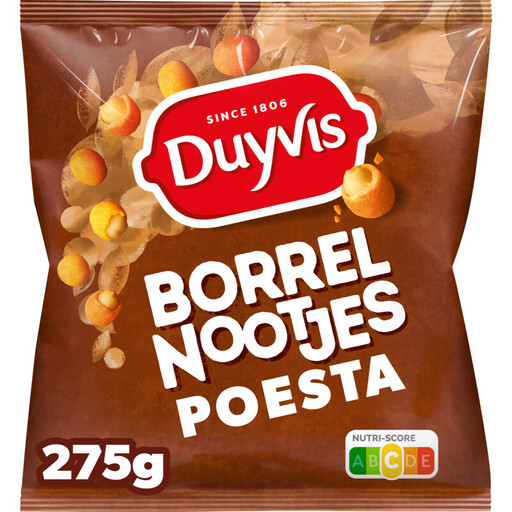
Duyvis Borrelnootjes Poeta – 275 g
The product information describes peanuts with a crispy coating. Check whether peanuts are allowed where you’ll be eating them.
Pack size: 275 g.
View at Joybuy
 No image available
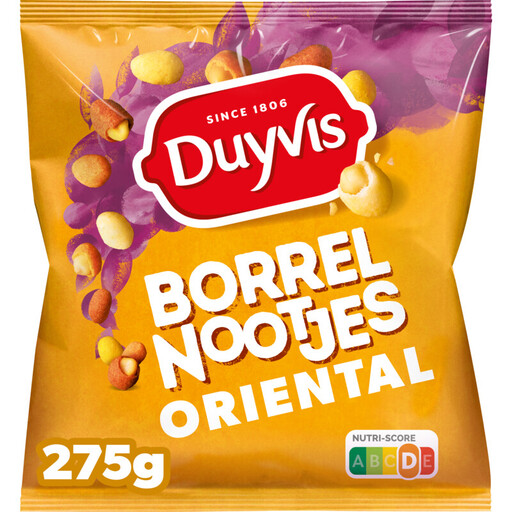
Duyvis Oriental Borrelnootjes – 275 g
The product information describes a mild curry flavour. Bear in mind that the snack contains peanuts if you’re choosing it for school.
Pack size: 275 g.
View at Joybuy
 No image available
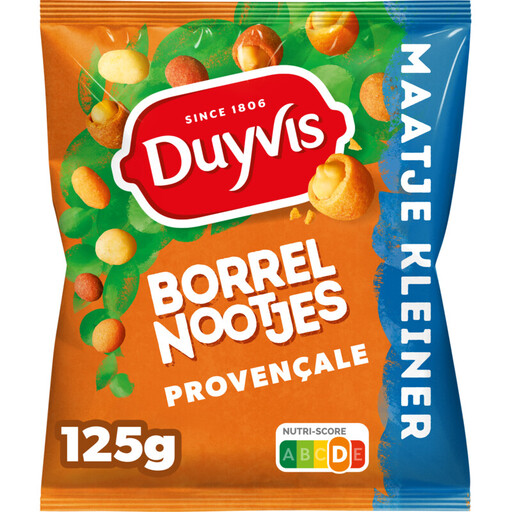
Duyvis Bran Nuts Provencale – 125 g
A Provençal variety in a 125 g pack; the product information lists peanuts.
Weigh the amount you eat separately; the pack weight isn’t a portion recommendation.
View at Joybuy
 No image available
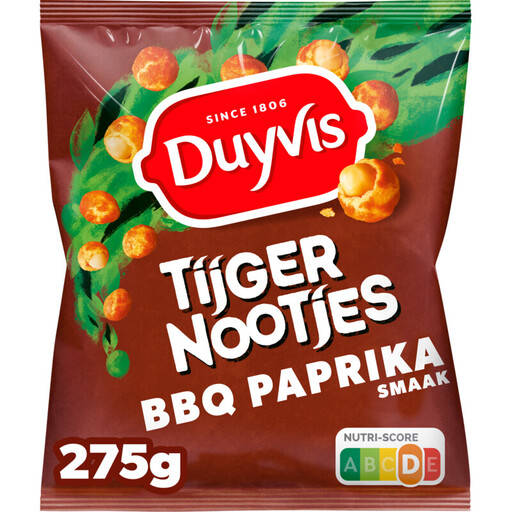
Duyvis Tigernut BBQ Paprika – 275 g
The product information describes a double coating with BBQ and paprika flavour. The product contains peanuts.
Pack size: 275 g.
View at Joybuy
 No image available
Duyvis Coated Peanuts Provençal – 275 g
A Provençal peanut variety. If calories are a deciding factor for you, check the nutritional values per 100 g.
Pack size: 275 g.
View at Joybuy
Frequently asked questions
When can a snack be called low in calories?
According to the European Commission, solid foods must contain no more than 40 kcal per 100 g to carry the ‘low calorie’ claim. Taking a smaller portion from the same pack doesn’t change the nutritional value per 100 g.
Is 25 g of coated peanuts a recommended portion for a child?
No. The 25 g figure used by the Netherlands Nutrition Centre is an amount for a general nutritional calculation, not a recommended portion for a child. For children aged 4 to 12, the Netherlands Nutrition Centre recommends snacks from the Wheel of Five.
Can I take coated peanuts to any school in the Netherlands?
It depends on the school’s policy. For example, OBS De Venen says that peanuts and nuts aren’t allowed anywhere in the school; this isn’t a nationwide ban. Ask your school what rules apply.
What should I look for in the allergen information on packaging?
Check the allergen information on the exact product packaging and treat peanuts and nuts as separate allergens. The NVWA states that legally required allergen information must appear on prepacked foods. If you’re unsure about an allergy, ask the manufacturer or shop.
Can young children eat whole coated peanuts?
The Netherlands Nutrition Centre advises against giving whole peanuts or nuts to children under 4 because of the risk of choking. Eating slowly is important for older children too; supervise them when giving them whole nuts.


