
Label-checkers looking for less fat
You want to reduce the fat content of the snack itself, so you compare its nutritional values with the exact claim. The Food Centre explains nutrition claims and what ‘low fat’ means.


Don’t choose a product based on the words ‘reduced fat’ alone: compare the fat content per 100 g and check exactly what the claim refers to. If your main aim is to limit the amount you eat as a late-night snack, decide on a portion in advance; a smaller portion doesn’t change the composition per 100 g. According to the product listings, the coated peanuts in the Joybuy selection below contain 33–35 g of fat per 100 g. This means they are not low-fat products under the Food Centre’s threshold of no more than 3 g per 100 g for solid foods.
You want to reduce the fat content of the snack itself, so you compare its nutritional values with the exact claim. The Food Centre explains nutrition claims and what ‘low fat’ means.
You want to keep eating coated peanuts, but choose a suitable amount in advance and store the rest properly. AH advises storing its Provençal coated peanuts in a sealed container after opening.
You might be looking for a cocktail, Provençal or seasoned flavour, and checking the nutritional values for each variety. Duyvis, Jumbo, ALDI Nederland and PLUS list different flavours or varieties; a flavour name alone tells you nothing about the fat content.
For solid foods, the Food Centre defines ‘low fat’ as no more than 3 g of fat per 100 g. Assess fat, energy, portion size, flavour, packaging and allergens separately.
| Shopping priority | What should you check? | Who is this most relevant to? |
|---|---|---|
| Fat content and claim | Read the exact claim and compare the fat content per 100 g. | I want less fat in the snack itself; around 31% of consumers make reducing fat their top shopping priority. |
| Energy and portion | Compare the energy per 100 g with the amount you plan to eat. | I want to limit my late-night snack without assuming a smaller bag is one portion; around 31% of consumers prioritise the amount and energy content of their own portion. |
| Flavour and coating | Choose a flavour and check the ingredients for that variety. | I want to keep a familiar flavour and crunchy coating; around 19% of consumers make keeping the flavour their top shopping priority. |
| Pack size and storage | Check the pack weight and follow the storage instructions after opening. | I want to choose an amount that suits how I use the product and store it properly after opening; around 13% of consumers prefer a pack size that suits their needs. |
| Allergens | Check the ingredients list and allergen information for the exact variety. | I need to take a relevant allergy into account, so I check the packaging first; around 6% of consumers make allergen suitability their top shopping priority. |
Fat and energy are separate values on the nutrition table. The amount you eat also affects the nutritional value of your portion.
Compare the values per 100 g, then decide how much you want to eat. Don’t use a fat claim as a reason to automatically have a larger portion.
A claim about fat says nothing about whether the ingredients are suitable if you have an allergy. The Duyvis Provençal listing reviewed names peanuts and wheat-containing starch.
If you have a relevant allergy, check the ingredients list and allergen information on the current packaging for that exact variety.
A brand offering coated peanuts in a range of varieties, including cocktail and Provençal.
An own-brand option that includes Provençal coated peanuts.
An own-brand range of coated peanuts in different flavours and pack sizes.
A supermarket option for coated peanuts; Alesto is a separate range of nuts and dried fruit.
Trader Joe’s coated peanuts are listed in varieties including oriental, Provençal and cocktail.
An own-brand option that includes coated peanuts in Ham Kaas flavour.
This selection consists of regular Duyvis coated peanuts in different flavours and pack sizes, not products proven to contain less fat. Joybuy lists 33–35 g of fat per 100 g for these varieties; for solid foods, the Food Centre defines ‘low fat’ as no more than 3 g per 100 g.
 No image available
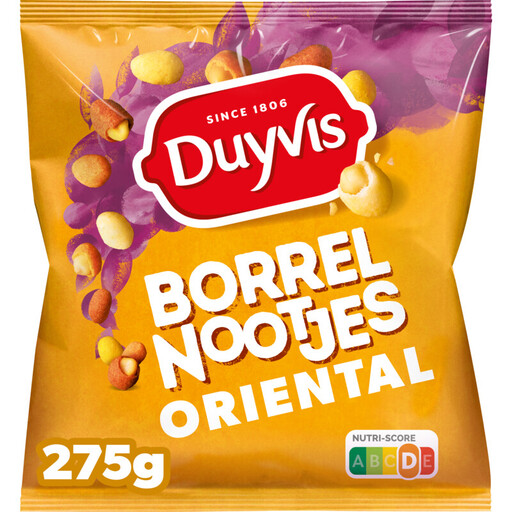
A seasoned option if you’re looking for a coated peanut with a mild curry flavour.
Joybuy lists 34 g of fat per 100 g.
 No image available
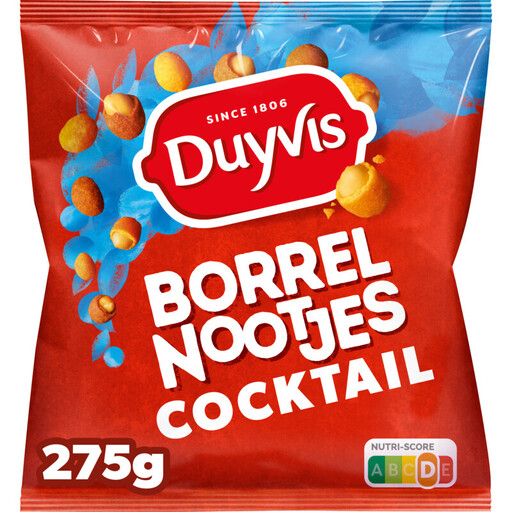
An option for measuring out an amount in advance; Joybuy describes portions of around 30 g.
Joybuy lists 34 g of fat per 100 g and 9–10 portions of 30 g per pack.
 No image available
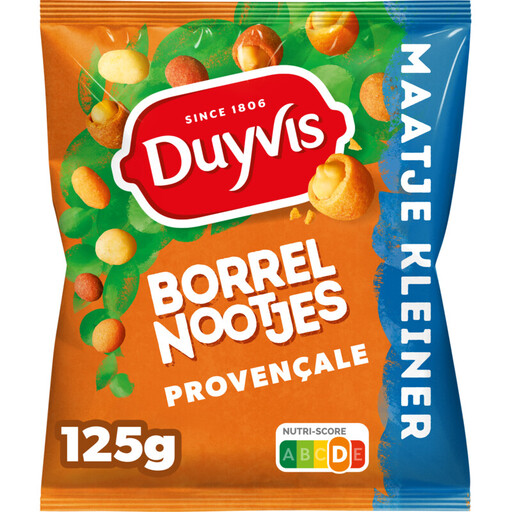
The smaller pack size could suit you if you want to use a pre-measured amount.
Joybuy lists 30 g portions, 4–5 portions per pack and 33 g of fat per 100 g.
 No image available
A Provençal flavour option; Joybuy describes a crunchy coating with onion and garlic flavour.
Joybuy lists 35 g of fat per 100 g.
 No image available
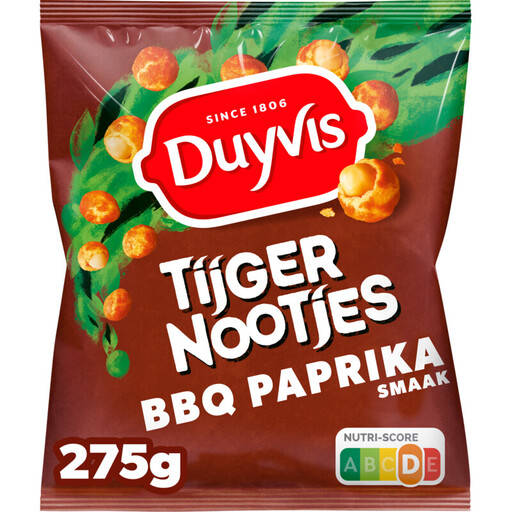
A savoury option if you like BBQ and paprika flavours; Joybuy mentions a double coating.
Joybuy lists 33 g of fat per 100 g.
No. For solid foods, the Food Centre defines ‘low fat’ as no more than 3 g of fat per 100 g. For ‘light’ or ‘reduced fat’, check which characteristic the claim refers to and compare it with the nutrition table.
Follow the instructions for the variety you buy. The AH Provençal coated peanuts should be stored in a cool, dark and dry place and, once opened, kept in a sealed container.
Check the ingredients and allergen information on the packaging for the exact variety. The NVWA states that allergens must be clearly and correctly listed on the label; a claim about fat says nothing about allergen suitability.
Nutrition and health claims for food are covered by European rules. Your Europe states that claims must not be incorrect, ambiguous or misleading; check the specific claim and the nutritional information for the variety.