What should you look for when buying?
First decide whether you want to focus on the ingredients, your portion, how much to stock up on or allergens. Then compare the information on the packaging for the exact variant.
| What to consider |
What should you check? |
Who should consider this? |
| Fat content of the variant |
Compare fat per 100 g and check which variant and comparison product a ‘less fat’ claim refers to. |
If you’re mainly looking for a lower fat content, you’ll want to compare the exact nutritional values. Around 36% of consumers say fat content is their top priority when buying. |
| Portion size |
Choose an amount in grams and use the nutritional values for the pack you’re buying. |
If you want to decide how much you eat, you can weigh out a portion rather than putting out the whole pack. Around 29% of consumers put portion control first. |
| Stocking up to share |
Check the net weight and storage instructions, and match the amount to your planned get-together. |
If you’re sharing snacks but want to limit leftovers, the pack size is useful for planning. Around 21% of consumers prioritise buying an appropriate amount. |
| Allergens |
Check the ingredients list and allergen information for the specific flavour on the current packaging. |
If you need to consider a known allergy, either your own or a housemate’s, you’ll want to know what’s in that exact variant. Around 14% of consumers make checking allergens their top priority. |
Coated peanuts at Joybuy
This Joybuy selection features Duyvis coated peanuts, so you can compare flavours, nutritional values per 100 g and pack sizes. None of the variants below is described here as low in fat.
 No image available
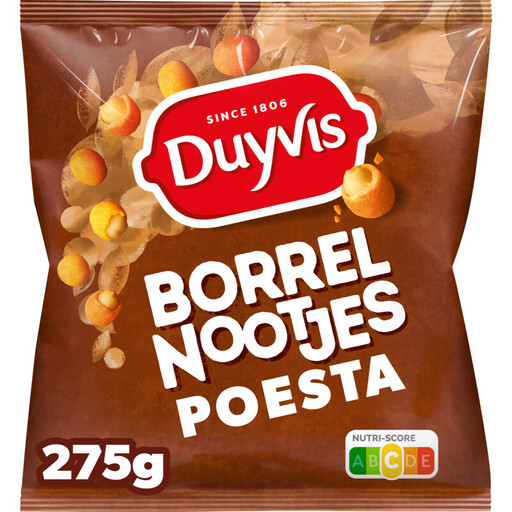
Duyvis Borrelnootjes Poeta, 275 g
The product description says these seasoned coated peanuts are ready to serve at a get-together.
Fat: 34 g per 100 g.
Contains peanuts, milk, wheat and celery; may contain traces of soya, mustard and other nuts.
View at Joybuy
 No image available
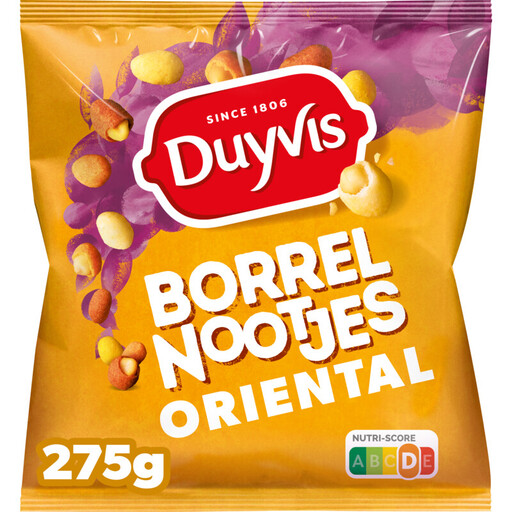
Duyvis Oriental Borrelnootjes, 275 g
The product description calls these crispy-coated peanuts with curry flavour, ideal for sharing over drinks.
Fat: 34 g per 100 g.
Contains peanuts, cereals containing gluten (wheat and barley) and soya; may contain milk, nuts and mustard.
View at Joybuy
 No image available
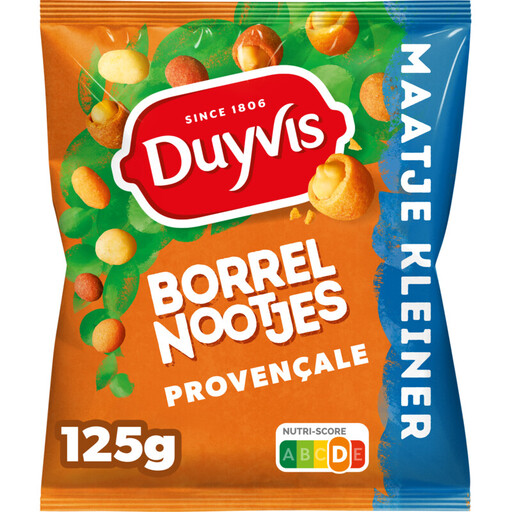
Duyvis Bran Nuts Provencale, 125 g
The product description gives a 30 g portion size and 4–5 portions per pack, which may be useful if you want to measure out portions.
Fat: 33 g per 100 g. Pack size: 125 g.
Contains peanuts and wheat; may contain milk, nuts, soya and mustard.
View at Joybuy
 No image available
Duyvis Coated Peanuts Provençal, 275 g
The product description says these coated peanuts have a Provençal flavour, making them a tasty snack.
Fat: 35 g per 100 g. Pack size: 275 g.
Contains peanuts and wheat; may contain milk, nuts, soya and mustard.
View at Joybuy
 No image available
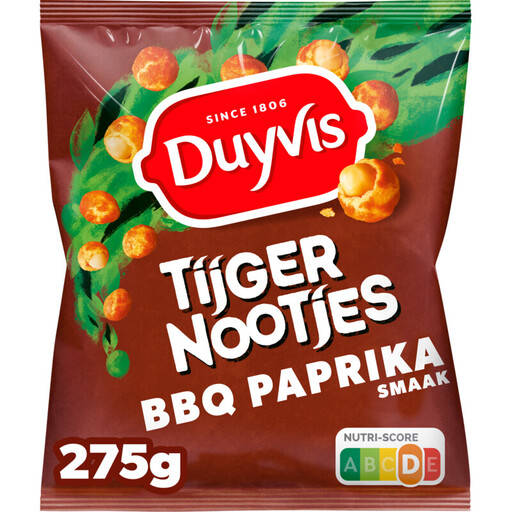
Duyvis Tigernut BBQ Paprika, 275 g
The product description says these crispy-coated peanuts have a BBQ paprika flavour and are ideal for sharing or enjoying on your own.
Fat: 33 g per 100 g. Pack size: 275 g.
Contains peanuts and wheat; may contain milk, nuts, soya and mustard.
View at Joybuy
Frequently asked questions
Is a product labelled ‘oven roasted’ automatically low in fat?
No. According to the European Commission, a solid food can only be called ‘low fat’ if it contains no more than 3 g of fat per 100 g. Check the nutrition table for the exact variant; the preparation method alone doesn’t prove it meets this limit.
Does a smaller portion of coated peanuts make the recipe lower in fat?
No, a smaller portion doesn’t change the nutritional value per 100 g. For coated peanuts in general, the Netherlands Nutrition Centre uses a 25 g portion as a guide, containing 133 kcal and 8,2 g of fat. These general values aren’t label information for an individual brand or specific flavour.
How should I store leftover coated peanuts in my student room?
Follow the storage instructions and best-before date on your own pack. Jumbo Cocktail and PLUS Mild advise storing their products in a cool, dry, dark place; this doesn’t give a set storage period once opened.
Which allergens should I check when sharing coated peanuts?
Check the allergen information on the packaging for each flavour. According to the Netherlands Food and Consumer Product Safety Authority, allergen information for prepacked products must appear on the label; peanuts and cereals containing gluten are among the allergens that must be declared.
Are unsalted nuts automatically a lower-fat alternative?
No. The Netherlands Nutrition Centre includes unsalted nuts in its Wheel of Five, but a standard 25 g portion of unsalted nuts contains 14,9 g of fat. So don’t assume they’re lower in total fat just because they’re ‘unsalted’.


