Who is this choice relevant to?

Calorie-conscious shoppers stocking up

You want to keep enjoying coated peanuts, but first compare the energy per 100 g and then consider your own portion. The Netherlands Nutrition Centre gives 133 kcal per 25 g handful as a general guideline for coated peanuts; don’t treat this as an exact figure for any particular brand or flavour.

People who use their supplies gradually

You like to buy ahead, but would rather not open more than you can use within the recommended storage period. Several smaller, sealed packs are a different way to stock up from one large bag that stays open for longer. The Netherlands Nutrition Centre gives a general guideline of 2–5 days in the kitchen cupboard for opened coated peanuts.

Hosts planning a get-together

You’re serving a larger quantity for a shared snacking occasion and choosing a pack size to suit your guests. Check the ingredients and allergens on each flavour’s packaging; the Netherlands Food and Consumer Product Safety Authority explains the mandatory allergen labelling on food labels.

What should you look for when buying?

First compare the nutritional information on a like-for-like basis, then decide on your portion and choose a pack size that suits how quickly you’ll use it.

What to consider What to check when buying Who should pay particular attention?
Energy for the same quantity Compare kcal per 100 g for the same flavour and current packaging. If I’m mainly looking for less energy in the same quantity, I compare the nutrition tables first; around 38% of consumers put energy density first.
Your own portion Weigh your portion and compare products using the same quantity in grams. If I want to decide in advance how much I’ll eat at each snack occasion, I look at the energy in that weighed portion; around 31% of consumers prioritise portion control.
Using and storing your supplies Read the storage and best-before instructions, and match the amount you open to how quickly you’ll use it. If I use my supplies gradually, I don’t want to open more than I can finish in time; around 31% of consumers give top priority to storage that suits how quickly they use a product.

Common pitfalls

  • Confusing a small portion with a lower energy value

    Energy per portion and energy per 100 g answer different questions. A smaller portion doesn’t change the product’s composition per 100 g.

    First compare kcal per 100 g, then work out the energy in the amount you weigh out.

  • Assuming that stocking up means opening one large bag

    Buying ahead is not the same as keeping a pack open for a long time. The Netherlands Nutrition Centre gives a general guideline of 2–5 days in the kitchen cupboard for opened coated peanuts; they may become less crunchy.

    Match the amount you open to how quickly you’ll use it, and follow the storage instructions on your chosen pack too.

  • Using a flavour name or Nutri-Score to compare calories

    The word “Mild” or a Nutri-Score on its own doesn’t tell you which option has less energy per 100 g.

    Check the energy information for the exact flavour and pack, and compare products on the same basis.

  • Assuming every flavour contains the same allergens

    Ingredients and allergens can vary by flavour. This matters if someone at the table has a food allergy.

    Check the full ingredients and allergen information on the pack for every option you choose, even if you’ve bought that flavour before.

Brands to compare for this choice

Duyvis

Duyvis lists Borrelnootjes Cocktail in 125 g, 275 g, 500 g and 1000 g packs. These sizes give you different options for matching the amount you open to how quickly you’ll use it.

  • The manufacturer lists several pack sizes for Cocktail.
  • A larger pack or a crunchy coating doesn’t prove that the product has a lower energy value per 100 g.

Albert Heijn

AH Borrelnoten Cocktail is a supermarket own-brand option to include when comparing coated peanuts.

  • The product page confirms the product identity.
  • Albert Heijn advises checking the packaging, as product information can change. Being a supermarket own-brand product doesn’t in itself mean it contains less energy.

Jumbo

Jumbo Borrelnoten Cocktail is a variety of peanuts in a crunchy dough coating; the product page lists a 300 g pack.

  • The product information says to store it in a cool, dry and dark place.
  • The pack says it is packed in a protective atmosphere, but that doesn’t prove an opened bag will stay crunchy for a long time.

PLUS

PLUS Borrelnoten Mild is a supermarket own-brand option in a 300 g pack.

  • The product information gives the pack size and storage advice for this variety.
  • The “Mild” description and stated Nutri-Score C don’t in themselves indicate a calorie advantage.

Lidl

Lidl lists coated peanuts in the Netherlands as part of its biscuits, nuts and crisps range.

  • The product listing makes coated peanuts relevant to include in your comparison.
  • The category name doesn’t give nutritional information or a specific pack size.

ALDI

ALDI lists coated peanuts under the Trader Joe’s product brand, including Bacon-cheese, Poesta and paprika flavours in 300 g packs.

  • The product information lists several flavours and the quantity in each pack.
  • The choice of flavours and the supermarket’s own-brand range don’t tell you which option has the lowest energy value.

Coated peanuts at Joybuy

These Duyvis coated peanuts come in 275 g packs, which the product descriptions say are suited to sharing at a get-together. Pack size doesn’t tell you how much energy the products contain per 100 g; check the current nutritional information on the packaging to compare.
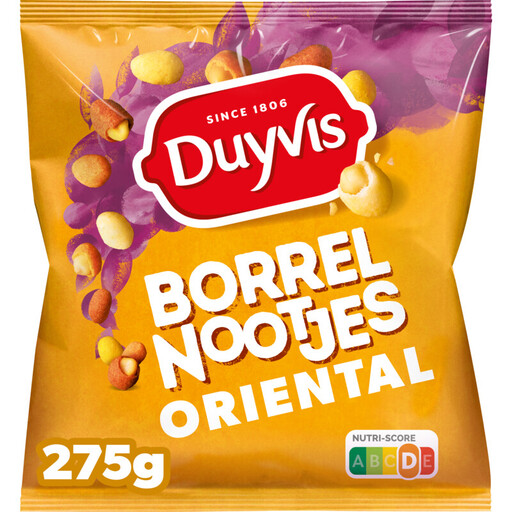
Duyvis Oriental coated peanuts, 275 g

Duyvis Oriental coated peanuts, 275 g

The product description mentions serving these at gatherings, making them suitable for sharing at a get-together.

Pack size: 275 g.

Contains peanuts, wheat, barley and soya; may contain milk, nuts and mustard. Check the current packaging for full information.

To compare the calorie content of different varieties, check the energy per 100 g on the packaging.

View at Joybuy
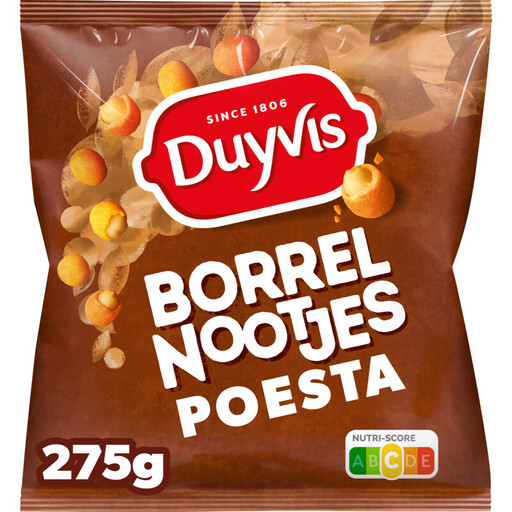
Duyvis Poeta coated peanuts, 275 g

Duyvis Poeta coated peanuts, 275 g

The product description mentions gatherings, making this pack a good fit for sharing at a get-together.

Pack size: 275 g.

Contains peanuts, milk, wheat and celery; may contain soya, mustard and other nuts. Check the current packaging for full information.

To compare the calorie content of different varieties, check the energy per 100 g on the packaging.

View at Joybuy

Frequently asked questions

Can you call regular coated peanuts low in calories if you eat a small portion?

No. For a “low energy” claim, solid foods must contain no more than 40 kcal (170 kJ) per 100 g; eating a smaller portion doesn’t change the product’s composition per 100 g. The European Commission sets out the conditions for this claim in Regulation (EC) No 1924/2006. A “reduced energy” claim requires at least 30% less energy, with the characteristic responsible for the reduction stated.

How long can you keep an opened bag of coated peanuts?

The Netherlands Nutrition Centre gives a general guideline of 2–5 days in the kitchen cupboard; coated peanuts may become less crunchy after that. Follow the storage instructions on your pack too. This general guideline isn’t a guaranteed period for every flavour or pack.

Is a large bag always the most convenient choice when stocking up?

It mainly depends on how much you’ll share and how quickly you’ll finish the bag after opening it. A larger pack can suit a shared snacking occasion, while several smaller, sealed packs may be more practical if you use your supplies gradually. Follow the storage instructions for the product you choose.

What should you check if someone in your group has a food allergy?

Check the ingredients and allergens for the exact flavour and pack before buying and serving it. The Netherlands Food and Consumer Product Safety Authority explains the mandatory allergen labelling on food labels. If someone has an allergy, don’t assume a product is suitable based on a different flavour; check the full information on the packaging.

How do you work out the energy in your own portion?

Multiply the kcal per 100 g shown on your pack by the number of grams you’ve weighed out, then divide the result by 100. The Netherlands Nutrition Centre gives 133 kcal per 25 g as a general guideline for coated peanuts; don’t treat this as an exact figure for every brand and flavour.
