Who is this choice relevant for?

Parents providing treats at school

First, you’ll want to check whether food treats are allowed under the school’s policy and allergen rules. Start with permission and suitability, not the size of the bag. The Netherlands Nutrition Centre explains that schools can set their own rules for celebrations and treats.

Households filling lots of treat bags

You want enough contents at a suitable total cost, and you’re happy to portion a larger bag yourself. Packs of 450 g and 500 g give you specific quantities to work with; they aren’t individually wrapped treats.

Parents buying smaller quantities

You want to match the number of bags you buy to a smaller group, rather than looking only at the price per kilo. A 300 g pack means buying a different quantity from a larger bag.

What should you look for when buying?

Portioning a large bag yourself

Choose this when: coated peanuts are allowed and you need plenty of them.

Bear in mind: you’ll need to weigh them out, fill separate bags and store any opened contents.

Standard 300 g bags

Choose this when: you need a smaller quantity or want to buy more precisely.

Bear in mind: the number of full bags determines how much you end up buying.

Leaving coated peanuts out of the treat bag

Choose this when: the school’s rules or the allergens present make them unsuitable.

Bear in mind: if you choose an alternative, check its ingredients and the arrangements with the school and parents too.

What to consider What should you check? Who is this important for?
Children, allergens and school policy Check the children’s ages, ingredients, allergen warnings and school rules. If I want to hand out something suitable for the children and the setting, I check safety and permission first. Around 36% of consumers prioritise suitability.
Total cost Compare the price per kilo and the cost of the number of full bags you need. If I’m shopping for a group, I want to know the total cost of the treats I need, not just the price of one kilo. Around 29% of consumers focus mainly on their total spend.
Quantity and portioning Check the net weight and whether you’re buying one large bag or several individual bags. If I’m filling treat bags myself, I want to buy enough and know how much work portioning will involve. Around 21% of consumers focus mainly on the quantity they need and portioning it themselves.
Flavour and recipe Read the ingredients for the exact variety; a flavour name doesn’t tell you which allergens it contains. Once I know which options are suitable, I want to choose a flavour and recipe that match my preferences. Around 14% of consumers prioritise flavour and ingredients from among the suitable options.

Common pitfalls

  • Assuming coated peanuts are automatically suitable as children’s treats

    Whole peanuts can pose a choking risk, and coated peanuts may contain several allergens. The school may also have rules that restrict food treats.

    First, check the recipients’ ages, the ingredients and the school’s policy. Don’t give whole coated peanuts to children under 4.

  • Confusing a value pack with a multipack

    A large bag doesn’t automatically contain individual portions. The portions listed on a label don’t mean that smaller bags for handing out are included.

    Check the packaging format and allow for the time and extra bags you’ll need to portion the contents yourself.

  • Looking only at the lowest price per kilo

    A larger pack may cost less per kilo, but you’ll pay more for each bag. The quantity you need determines how many full packs you have to buy.

    Work out how many bags you need, then compare the total cost. Factor in packaging materials and any delivery costs separately.

  • Taking a flavour name as proof that a product is suitable

    A description such as ‘mild’ doesn’t guarantee that a product is unseasoned or allergen-free. For example, PLUS Mild lists chilli pepper and cayenne pepper among its ingredients.

    Read the ingredients and allergen information for the exact variety, and keep that information available when you portion the contents.

Brands and varieties to consider

Duyvis

The 450 g Provencale pack is a larger bag with onion and garlic flavour, described as a value pack.

  • The pack gives you a specific quantity to work with if you’re portioning it yourself.
  • This variety contains peanuts and wheat, and may also contain milk, soya, mustard and nuts. Descriptions of flavour and crunch come from Duyvis itself and aren’t independent assessments.

Albert Heijn

The AH Cocktail variety comes in a standard 300 g pack.

  • Its weight gives you a starting point if you want to buy a smaller quantity.
  • The variety described contains peanuts, wheat and milk, among other ingredients. Check the label on the pack you buy.

Jumbo

Jumbo sells 300 g Cocktail packs and a 500 g value pack.

  • The two pack sizes mentioned make it possible to compare how much you need to buy in each pack.
  • The varieties contain peanuts and wheat, and their recipes aren’t exactly the same. So compare the labels on the specific products.

PLUS

The PLUS Mild pack described is a standard 300 g bag.

  • The net weight helps you work out how many bags you need.
  • The ingredients include peanuts, wheat, celery and milk-related ingredients, among others. ‘Mild’ doesn’t guarantee an allergen-free variety.

Aldi

The Dutch product page lists TRADER JOE'S coated peanuts in 300 g bags, in bacon and cheese, poesta or paprika flavours.

  • The listed flavours show which varieties are featured on the product page.
  • The brand name on the page is TRADER JOE'S. Check the allergen information for your chosen flavour on the packaging.

Lidl

Lidl has a Dutch product page for coated peanuts.

  • The product page confirms the category.
  • When you buy, check the weight, variety and ingredients of the specific product.

Joybuy products

Joybuy picks of coated peanuts that you can portion yourself or buy in a smaller quantity.
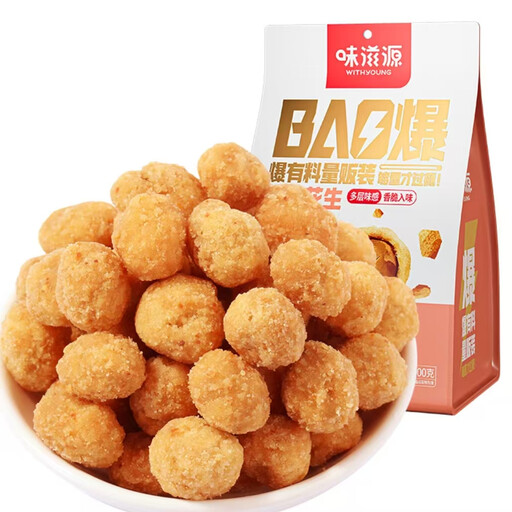
WITHYOUNG Multiflavor Peanuts 500 g

WITHYOUNG Multiflavor Peanuts 500 g

The 500 g pack may suit you if you want to portion a larger quantity yourself. The ingredients list 33% peanuts, wheat flour and chilli powder; peanuts and wheat are listed as allergens.

Joybuy
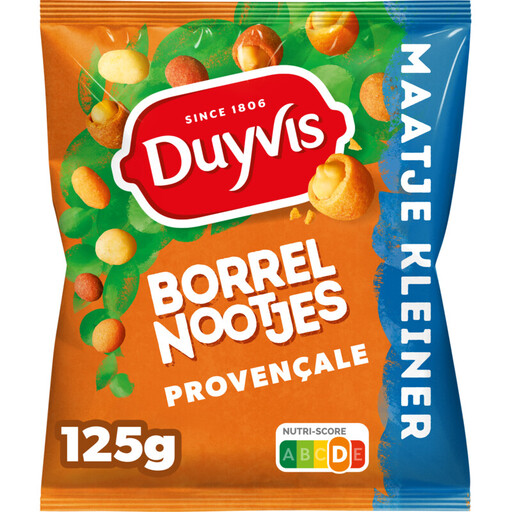
Duyvis Provencale Coated Peanuts 125 g

Duyvis Provencale Coated Peanuts 125 g

The smaller pack may be useful if you want to buy a smaller quantity. This variety contains peanuts and wheat, and may also contain milk, nuts, soya and mustard.

Joybuy

Frequently asked questions

Can you give coated peanuts to toddlers?

Don’t give whole coated peanuts to children under 4. Because of the choking risk, Amsterdam UMC suggests nut butter as an alternative to whole nuts for this age group. Allergens and the school’s rules on treats are also important.

How do you work out how many bags you need?

Multiply the number of treats by the amount you choose to put in each bag, then divide the total by the net weight of a shop-bought pack. Round the number of packs up. Portions listed on the label aren’t recommendations for children’s treats.

How should you store leftover coated peanuts?

Follow the instructions on the packaging. For Duyvis Provencale, a light-proof, airtight container is recommended after opening. AH Cocktail advises resealing the pack securely and storing it somewhere cool, dark and dry.

Are peanuts and nuts the same thing on an allergen label?

No. Peanuts and nuts are separate allergen categories. The Netherlands Food and Consumer Product Safety Authority treats them separately. So check both the ingredients and the warnings on the specific pack.

Which Dutch labelling rules are relevant?

Prepacked foods must show allergen information on the label. According to the Netherlands Food and Consumer Product Safety Authority, rules have also applied since 1 January 2026 on how and when food businesses must warn about possible allergen cross-contamination. These labelling rules don’t determine whether a product is suitable for a particular child.
