
Carbohydrate-conscious snackers
You want to take total carbohydrates and portion size into account, rather than focusing only on the amount of sugar. OLVG / Diaboss explains that carbohydrates are converted into glucose in the gut.


Choose coated peanuts based on the total carbohydrates and protein in the portion you actually eat, rather than relying on words such as ‘protein’ or looking only at the sugar content. According to the Netherlands Nutrition Centre, a standard 25 g portion of coated peanuts contains 10.9 g of carbohydrates and 3.3 g of protein. Check the label for the specific variety, and make your choice in line with your own dietary plan and sporting goals.
You want to take total carbohydrates and portion size into account, rather than focusing only on the amount of sugar. OLVG / Diaboss explains that carbohydrates are converted into glucose in the gut.
You want to know how much protein a typical snack portion provides and how it fits in with your sports nutrition. The Netherlands Nutrition Centre says that most people who do sport do not need special protein shakes or bars.
When snacking regularly, you also want to compare energy and salt, and may be open to unsalted peanuts without a coating. That’s a different choice from coated peanuts.
Choose this option if: you want to keep the crunchy party-snack flavour and can fit the portion into your dietary plan.
Bear in mind: the Netherlands Nutrition Centre’s standard reference for 25 g contains 10.9 g of carbohydrates and 3.3 g of protein; these figures do not apply to every variety.
Choose this option if: you’re happy to skip the crunchy coating and want to compare carbohydrates and protein per portion.
Bear in mind: according to the Netherlands Nutrition Centre’s standard reference, 25 g of unsalted peanuts contains 3 g of carbohydrates, 6.3 g of protein and 157 kcal; these are not coated peanuts.
| What to consider | What should you check? | Who is this important for? |
|---|---|---|
| Total carbohydrates | Compare total carbohydrates per 100 g and calculate the amount for your weighed portion. The Netherlands Nutrition Centre gives 10.9 g of carbohydrates for a standard 25 g portion of coated peanuts. | If you want to know how a portion fits into your dietary plan, total carbohydrates are the key figure; around 36% of consumers make this their top purchasing priority. |
| Protein in your portion | Check how many grams of protein you’ll actually eat and compare this with the energy and carbohydrates for the same portion weight. The Netherlands Nutrition Centre gives 3.3 g of protein for a standard 25 g portion of coated peanuts. | If you’re keeping an eye on protein for your sports nutrition, you’ll want to know how much a typical portion provides; around 29% of consumers prioritise this. |
| Energy and salt | Compare kcal and salt for the same weight, and decide in advance how much you’ll have. According to the Netherlands Nutrition Centre, a standard 25 g portion of coated peanuts contains 133 kcal and 0.41 g of salt. | If you snack regularly and want to take energy and salt into account, sticking to a set portion makes comparisons easier; around 21% of consumers put this first. |
| Label and allergens | Check the nutrition table, ingredients and allergen information on the packaging of the exact variety. The Netherlands Food and Consumer Product Safety Authority (NVWA) explains that nutrition claims must comply with European rules. | If you want to check claims and your personal allergen requirements, the packaging is what matters; around 14% of consumers make this their top purchasing priority. |
Starch also counts towards total carbohydrates. OLVG / Diaboss explains that carbohydrates are converted into glucose in the gut.
Check the total carbohydrates line and calculate the amount for the portion you actually eat.
According to the Netherlands Nutrition Centre, a 25 g handful of standard coated peanuts contains 3.3 g of protein and 133 kcal. So a figure per 100 g doesn’t tell you directly how much protein is in your portion.
Compare protein and energy for the same portion weight before including the snack in your sports nutrition.
A nutrition claim relates to a product’s composition. The NVWA states that medical claims on food are prohibited.
Use the nutrition table to help you choose, and don’t treat ‘diabetic friendly’ as a promise of treatment or a guarantee of a particular blood glucose response.
The manufacturer describes flavours including Cocktail and Provencale; Provencale is described as having an onion and garlic flavour.
Albert Heijn sells AH Borrelnoten cocktail as its own-brand variety.
Jumbo describes Borrelnoten Cocktail 300 g as peanuts with a crunchy dough coating.
Lidl has a Dutch product page for coated peanuts and presents Alesto as a range of nuts, dried fruit and party snacks.
ALDI lists TRADER JOE’S Borrelnoten in flavours such as bacon and cheese, poesta or paprika, in 300 g bags.
PLUS has an own-brand variety: Borrelnoten Shanghai 300 g.
These Joybuy products are coated peanuts. Compare the nutrition information per 100 g and calculate the amount for the portion you want to eat.
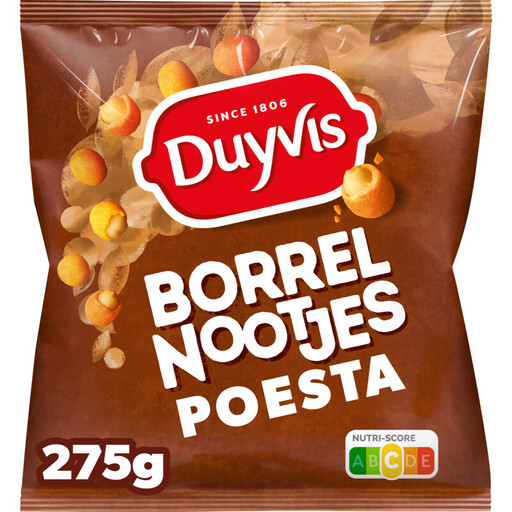 No image available
You can assess this coated variety by looking at the nutrition information per 100 g and the portion you choose.
Per 100 g: 15 g protein, 41 g carbohydrates, 539 kcal and 1.4 g salt.
Contains peanuts, milk, gluten (wheat) and celery; may contain traces of soya, mustard and other nuts.
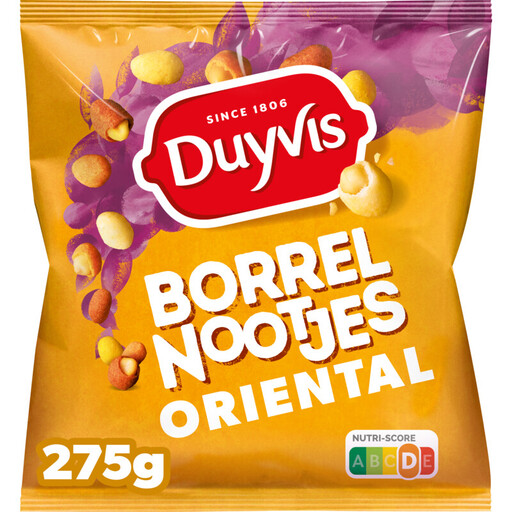 No image available
You can compare this variety by protein and total carbohydrates per 100 g, as well as by the portion you eat.
Per 100 g: 15 g protein, 41 g carbohydrates, 539 kcal and 1.4 g salt.
Contains peanuts, gluten (wheat and barley) and soya; may contain milk, nuts and mustard.
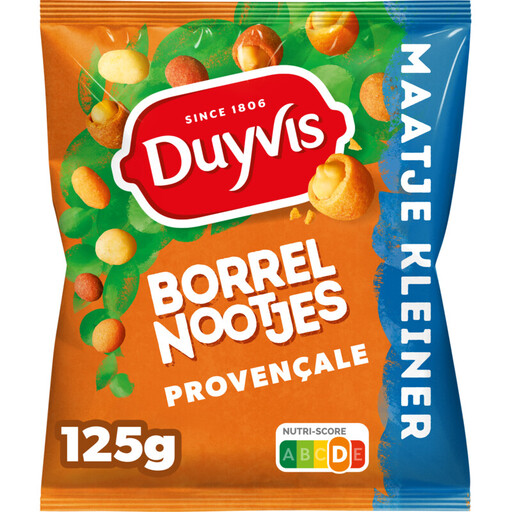 No image available
You can weigh out these coated peanuts and compare them with your preferred portion size.
Per 100 g: 13 g protein, 43 g carbohydrates, 527 kcal and 1.2 g salt.
Contains peanuts and wheat; may contain milk, other nuts, soya and mustard.
 No image available
You can assess this onion and garlic-flavoured variety using the figures per 100 g and your weighed portion.
Per 100 g: 15 g protein, 41 g carbohydrates, 542 kcal and 1.3 g salt.
Contains peanuts and wheat; may contain milk, nuts, soya and mustard.
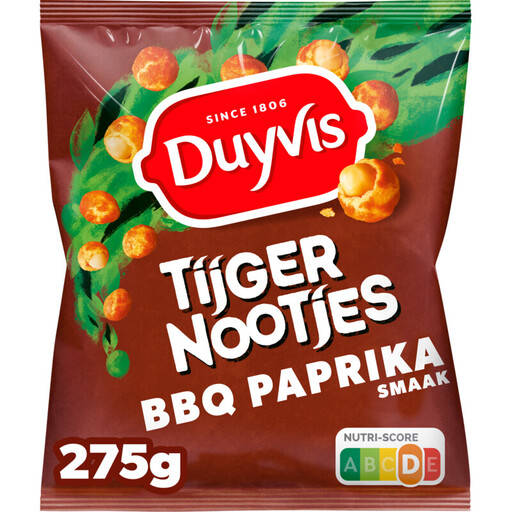 No image available
You can compare this double-coated variety using the nutrition information per 100 g and your weighed portion.
Per 100 g: 15 g protein, 42 g carbohydrates, 535 kcal and 1.5 g salt.
Contains peanuts and wheat; may contain milk, nuts, soya and mustard.
No, also check the total carbohydrates in the amount you eat. OLVG / Diaboss explains that starch is also converted into glucose.
No. According to the Netherlands Nutrition Centre, most people who do sport don’t need special protein shakes or bars. Consider the snack as part of your overall diet, and check how much protein your portion actually provides.
No. The NVWA states that medical claims on food are prohibited. Don’t treat the term as a promise of treatment; check the nutrition information and consider your own dietary plan.
Jumbo’s official product page says this variety should be stored in a cool, dry and dark place. The best-before information is on the back of the packaging.