If you want to eat less fat at a Christmas market, choose coated peanuts with a substantiated lower fat content only if you want to change the product’s composition; a smaller portion only changes how much you eat. The five Joybuy product listings below state that they contain 33–35 g of fat per 100 g, so they are not low-fat: the European Commission sets a maximum of 3 g of fat per 100 g for solid foods to carry that claim.
Who is this choice relevant to?
Shoppers looking to eat less fat
You’re looking for coated peanuts with a different composition and want to know whether a claim really relates to the fat content. Compare the nutritional values per 100 g and distinguish between low fat and reduced fat. For the low-fat claim, the European Commission sets a maximum of 3 g of fat per 100 g for solid foods.
Snackers who want to measure their portions
You want to keep eating coated peanuts, but decide in advance how much to take with you or serve. Check the weight in grams: the number of bags alone doesn’t tell you how much is in one portion. The Netherlands Nutrition Centre uses a 25 g handful as a general reference for nutritional values.
People handing out snacks at the Christmas market
You’re buying for several people and need to consider packaging, storage and allergen information. The Netherlands Food and Consumer Product Safety Authority says consumers must be able to obtain allergen information about non-prepacked foods before buying them.
What should you look for when choosing?
First compare the fat content per 100 g, then check the portion size, allergens and packaging; a smaller portion isn’t a reduced-fat product. The Netherlands Bakery Centre describes a reduction of at least 30% compared with similar products for a reduced nutrient content, but this doesn’t confirm that a particular variant meets the applicable conditions for the claim.
| What matters |
What should you check? |
Who is this relevant to? |
| Composition and fat claim |
Compare total fat in g per 100 g. For a reduced-content claim, also check the reference product and supporting evidence. |
If I want to change the composition of my snack, I want to be able to check exactly what the claim means. Around 36% of consumers prioritise a demonstrably lower fat content in the product. |
| Portion and energy |
Check the weight per bag and the energy per 100 g, then decide how many grams to serve. |
If I choose regular coated peanuts but want to limit my portion, I check the number of grams rather than just the packaging. Around 29% of consumers give portion size and energy intake top priority. |
| Allergens |
Read the ingredients and allergen information on the exact packaging. If you sell unpackaged snacks as a business, make sure customers can get this information before buying. |
If I’m handing out snacks, I want to know in advance what information the people eating them need. Around 21% of consumers prioritise allergen information. |
| Packaging and storage |
Choose between portioning the snacks yourself and individual packs. Follow the storage instructions and check the best-before date for the relevant batch. |
If I’m taking snacks with me or preparing them for a Christmas market, I want to be able to manage portions and storage easily. Around 14% of consumers give packaging, stock and storage top priority. |
Pitfalls when choosing coated peanuts
-
Treating reduced fat, low fat and a small portion as the same thing
These terms answer different questions: reduced fat is a comparison, low fat has an absolute threshold, and a smaller portion refers to how much you eat.
First compare the nutritional value per 100 g, then decide on your portion. Only use the low-fat claim if the product meets the applicable threshold.
-
Assuming a sharing bag is automatically a small portion
The Duyvis Provençale sharing pack examined contains 45 g per bag. The Netherlands Nutrition Centre uses 25 g as a general reference for a handful of coated peanuts.
Check the weight per bag and decide how much you want to offer or eat.
-
Keeping allergen information separate from the snack
The HANOS listing for Duyvis Provençale 45 g names peanuts and gluten. For unpackaged sales, allergen information must also be available before purchase.
Keep the information with the exact packaging. If you sell loose portions as a business, make arrangements for customers to view or request the allergen information.
Selling these snacks as a business takes extra preparation: the product and allergen information must be available alongside the snack you’re offering.
Relevant brands to help you compare
Duyvis
Duyvis offers a range of coated peanut flavours and pack sizes, which may be useful if you want to portion them yourself or hand them out.
- Duyvis lists Cocktail in 125 g, 275 g, 500 g and 1000 g packs.
- For the specific 45 g Provençale variant, HANOS lists 35 g of fat per 100 g; this variant doesn’t meet the low-fat threshold.
Albert Heijn
AH Provencale coated peanuts are a supermarket own-brand option to include when comparing products in the stated range.
- The Dutch product page confirms the AH Provencale variant.
- Albert Heijn warns that ingredients and nutritional values may change, so check the current packaging.
Jumbo
Jumbo lists Cocktail coated peanuts in a 300 g pack.
- The product information describes peanuts with a crunchy coating.
- The product information says to store this variant in a cool, dry and dark place; this says nothing about reduced fat content.
Lidl
Lidl lists coated peanuts in its Dutch range.
- The category listing can help you find coated peanuts in the range.
- Check the fat content using the nutritional values per 100 g for the specific variant; a category name doesn’t tell you whether it’s low fat.
Aldi
ALDI Netherlands lists TRADER JOE’S coated peanuts in bacon and cheese, poesta or paprika flavours, in 300 g bags.
- The range information lists three flavours and the pack size.
- TRADER JOE’S is the product name on the packaging; the flavour and pack size don’t indicate reduced fat content.
PLUS
PLUS lists Mild coated peanuts in a 300 g pack.
- The product page describes the variant as vegetarian and recommends storing it in a cool, dry and dark place.
- Mild and vegetarian describe properties other than fat content; check the nutritional values per 100 g for the pack you choose.
Joybuy products to portion yourself
The products below are regular coated peanuts that you can weigh out yourself; their stated fat content means they aren’t low fat.
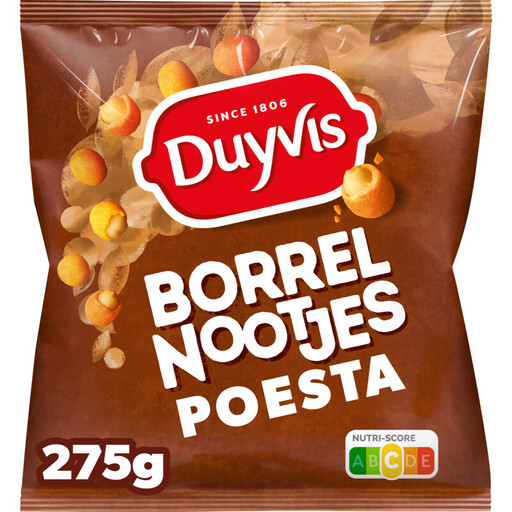 Image unavailable
Duyvis Borrelnootjes Poeta, 275 g
A regular variant you can weigh out yourself if you want to decide on the portion separately; this isn’t a low-fat option.
The product information on Joybuy states 34 g of fat per 100 g and 51% peanuts.
View at Joybuy
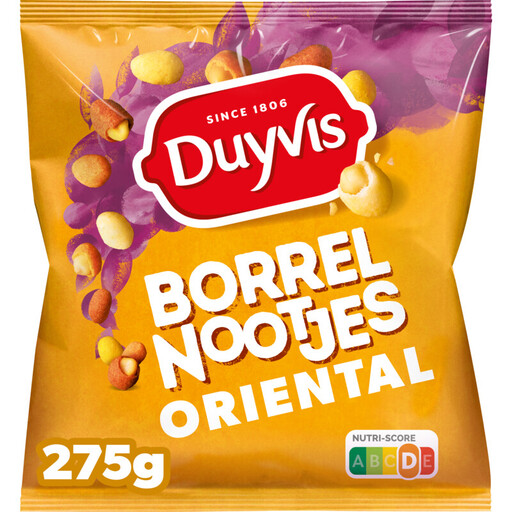 Image unavailable
Duyvis Oriental Borrelnootjes, 275 g
A regular variant you can weigh out yourself if you want to decide on the portion separately; this isn’t a low-fat option.
The product information on Joybuy states 34 g of fat per 100 g and 49% peanuts.
View at Joybuy
 Image unavailable
Duyvis Coated Peanuts Provençal, 275 g
A regular variant you can weigh out yourself if you want to decide on the portion separately; this isn’t a low-fat option.
The product information on Joybuy states 35 g of fat per 100 g and 50% peanuts.
View at Joybuy
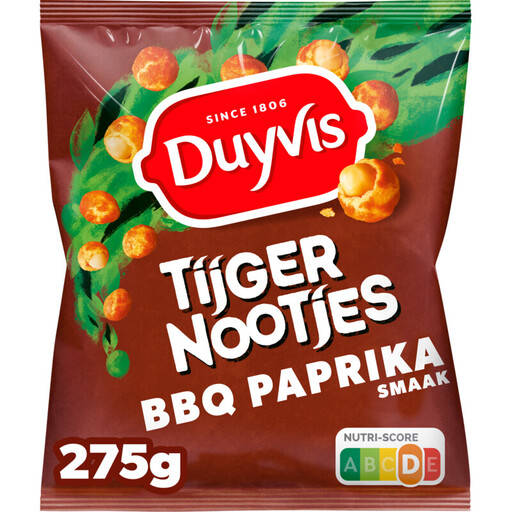 Image unavailable
Duyvis Tigernut BBQ Paprika, 275 g
A regular variant you can weigh out yourself if you want to decide on the portion separately; this isn’t a low-fat option.
The product information on Joybuy states 33 g of fat per 100 g and 40% peanuts.
View at Joybuy
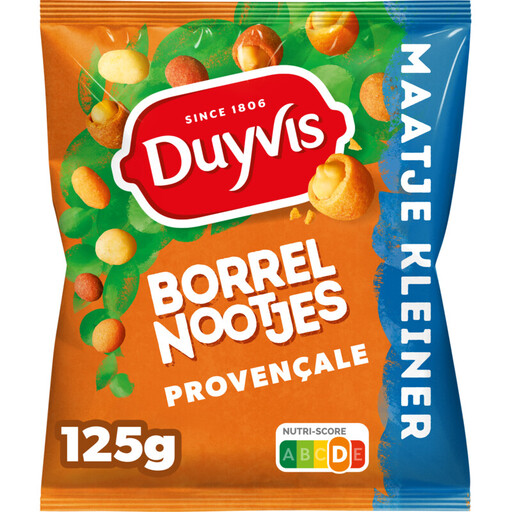 Image unavailable
Duyvis Bran Nuts Provençale, 125 g
The pack states that portions are 30 g, so you can set a limit in advance; this isn’t a low-fat option.
The product information on Joybuy states 33 g of fat per 100 g and four to five 30 g portions per pack.
View at Joybuy
Frequently asked questions
When can coated peanuts be called low fat?
For solid foods, the European Commission sets a maximum of 3 g of fat per 100 g as the condition for the low-fat claim. A smaller portion doesn’t change the fat content per 100 g.
How should I assess a reduced-fat claim?
Check whether the claim relates to fat and which similar products are used as a reference. The Netherlands Bakery Centre describes a reduced nutrient content as at least 30% less of the relevant nutrient compared with similar products; this doesn’t confirm that a particular coated peanut variant meets the applicable conditions for the claim.
Is one sharing bag automatically a small portion?
No, check the weight in grams. For the Duyvis Provençale sharing pack examined, HANOS lists 45 g per bag; the Netherlands Nutrition Centre uses a 25 g handful as a general reference for nutritional values.
What should I do about allergen information if I sell loose portions?
If you sell unpackaged products as a business, consumers must be able to obtain allergen information before buying. The Netherlands Food and Consumer Product Safety Authority says this can be provided verbally, as long as customers are clearly told they can ask for it; for prepacked products, the information is on the label.
How do I work out how many packs I need?
First decide how many people you want to serve and how many grams you’ll offer each person; then choose between portioning the snacks yourself and individual bags. Duyvis lists Cocktail in 125 g, 275 g, 500 g and 1000 g packs. For the Duyvis Provençale sharing variant examined, HANOS lists a case of 20 bags of 45 g each.


