
Savoury snackers who watch their portions
You want to enjoy coated nuts after the gym without accidentally eating a large amount. Compare the same weight in grams, rather than different serving sizes from different brands.


Coated nuts are not a low-calorie product choice in any of the four varieties examined: labels from Jumbo, PLUS and Albert Heijn list 527–541 kcal per 100 g, while the European Commission sets a maximum of 40 kcal (170 kJ) per 100 g for a ‘low energy’ claim on solid foods. If you want to eat them after the gym, weigh out a portion: for the same 25 g serving, the difference between these varieties is up to 3.5 kcal. If protein is important to you after exercise, also consider what the rest of your meal or snack contributes.
You want to enjoy coated nuts after the gym without accidentally eating a large amount. Compare the same weight in grams, rather than different serving sizes from different brands.
You want to know how much protein you’re actually eating and how the snack fits into your overall post-workout meal or snack.
You choose based on taste and packaging, and also want to check the ingredients, allergens and storage advice for the specific variety.
Labels from Jumbo, PLUS and Albert Heijn list 527–541 kcal per 100 g for four specific varieties; for a 25 g portion, the difference between the lowest and highest value is 3.5 kcal. So start by comparing equal quantities, then see which flavour, ingredients and packaging suit you.
| What to consider | What should you check? | Who is this most important to? |
|---|---|---|
| Calories per portion | Compare kcal per 100 g, then weigh the amount you want to eat. | If you mainly fancy something savoury after exercise and want to limit the energy in your snack, weighing out a portion can help you keep track of how much you’re eating. Around 39% of consumers put limiting calories at the top of their shopping priorities. |
| Protein in your meal or snack | Work out how much protein is in your own portion, and consider the rest of what you’re eating too. | If protein matters to you after exercise, consider what both your portion and the rest of your meal or snack provide. Around 31% of consumers give protein the highest priority in that meal or snack. |
| Ingredients and allergens | Read the ingredients list and any warnings about possible traces on the packaging of the exact variety. | If an ingredient or allergen determines which bag you can choose, check the information for each flavour. Around 15% of consumers put ingredient suitability first. |
| Portioning and packaging | Check the bag weight, the stated number of portions and the storage advice once opened. | If you want to take a practical amount with you or store it after training, the packaging can affect how you portion the snack. Around 15% of consumers put ease of portioning first. |
A smaller amount provides less energy than a larger portion, but it doesn’t change the nutritional value per 100 g.
Compare the value per 100 g and describe a weighed amount as a portion, not as a property of the product. For a ‘low energy’ claim on solid foods, the European Commission sets a maximum of 40 kcal (170 kJ) per 100 g.
A nutritional value for 25 g and one for 30 g refer to different amounts. A lower value per portion could simply be because there’s less product.
First compare varieties per 100 g, then work out the values for the same weight in grams.
A value per 100 g isn’t the amount of protein in a smaller portion. According to Albert Heijn, Duyvis Cocktail contains 15 g of protein per 100 g; 25 g provides 3.75 g.
Consider the protein in your actual portion alongside what else you eat. The World Cancer Research Fund mentions both protein and carbohydrates in the context of eating after exercise.
Ingredients and allergens can vary between varieties. Duyvis Cocktail at Albert Heijn contains peanuts, wheat and milk, among other ingredients; PLUS Borrelnoten Mild also lists celery.
Check the full product name and the current ingredients and allergen information on the packaging. The Netherlands Food and Consumer Product Safety Authority explains that allergens must be clearly listed on the label.
A brand with coated nuts in a range of flavours; the Dutch Albert Heijn page features Cocktail and Provencale, among others, in 275 g packs.
The own-brand range includes Borrelnoten cocktail in a 250 g bag.
Jumbo Borrelnoten Cocktail is a specific own-brand variety in a 300 g pack.
PLUS Borrelnoten Mild is a specific variety in a 300 g bag.
Lidl describes coated nuts in a range of 250 g varieties.
ALDI lists TRADER JOE'S Borrelnoten cocktail as a specific variety in a 300 g pack.
The products below are Duyvis coated nuts and seasoned peanut snacks for a savoury snack break. Compare the nutritional values, ingredients and flavour of each variety; a smaller portion doesn’t make a product low in calories per 100 g.
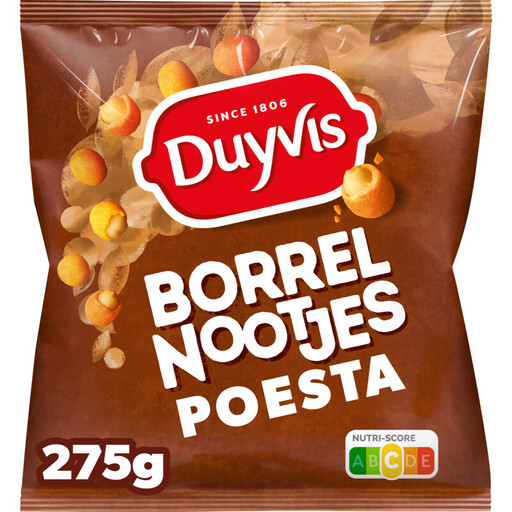 Image unavailable
A good choice if you fancy a crunchy, savoury snack; weigh out your portion if you want to keep track of how much you eat.
Joybuy product information lists 539 kcal and 15 g of protein per 100 g.
Contains peanuts, milk, wheat and celery; may contain traces of soya, mustard and other nuts.
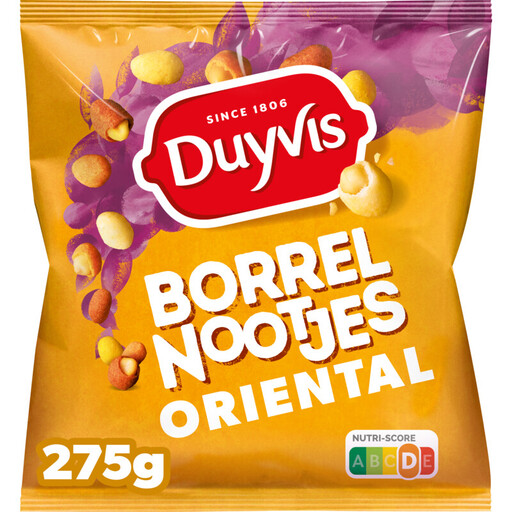 Image unavailable
A seasoned coated-nut variety for anyone looking for a savoury snack; keep the amount you eat in mind when portioning it out.
Joybuy product information lists 539 kcal and 15 g of protein per 100 g.
Contains peanuts, wheat, barley and soya; may contain traces of milk, nuts and mustard.
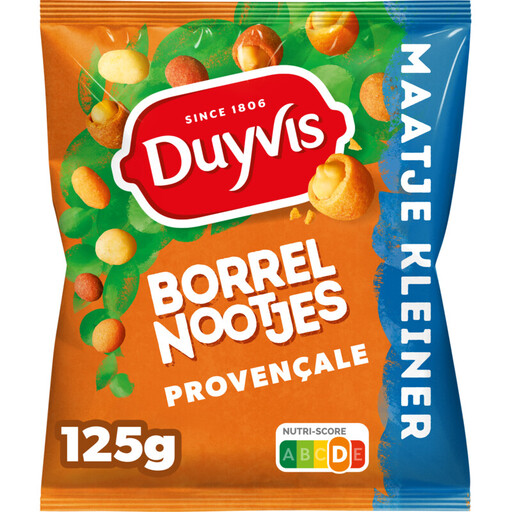 Image unavailable
A smaller pack for anyone looking for a seasoned, savoury snack; the bag size isn’t the same as a portion.
Joybuy product information lists 527 kcal and 13 g of protein per 100 g.
Contains peanuts and wheat.
 Image unavailable
A good match for your taste for crunchy snacks with Provençal onion and garlic flavour.
Joybuy product information lists 542 kcal and 15 g of protein per 100 g.
Contains peanuts and wheat; may contain traces of milk, nuts, soya and mustard.
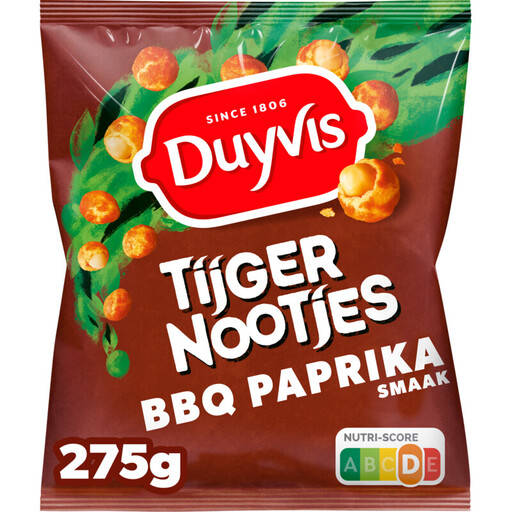 Image unavailable
A crunchy variety with BBQ paprika flavour for anyone looking for a savoury snack.
Joybuy product information lists 535 kcal and 15 g of protein per 100 g.
Contains peanuts and wheat; may contain traces of milk, nuts, soya and mustard.
No. According to labels from Jumbo, PLUS and Albert Heijn, the four varieties examined contain 527–541 kcal per 100 g. For a ‘low energy’ claim on solid foods, the European Commission sets a maximum of 40 kcal (170 kJ) per 100 g; a smaller portion doesn’t change the value per 100 g.
No, treat it as the stated product portion, not as an amount tailored to your workout. Albert Heijn Cocktail lists 25 g and Duyvis Cocktail at Albert Heijn lists 30 g; compare varieties using the same weight in grams.
Not necessarily: consider the protein in your actual portion and what else you eat. The World Cancer Research Fund gives low-fat quark with banana as an example of something to eat after exercise, and discusses both protein and carbohydrates in this context.
It varies by variety. Duyvis Cocktail at Albert Heijn contains peanuts, wheat and milk; PLUS Borrelnoten Mild also lists celery. Check the ingredients and warnings on the packaging of the variety you choose. The Netherlands Food and Consumer Product Safety Authority states that allergens must be clearly listed on the label.
Follow the storage advice for the variety you choose. For Duyvis Cocktail at Albert Heijn, the advice is to store it in a cool, dry place and, once opened, preferably put it in a container that keeps out light and air.