According to product information from Jumbo, PLUS and Albert Heijn, the four variants checked contain 527–541 kcal per 100 g, so they are not a low-calorie choice. Coated cocktail nuts are best treated as an occasional, measured extra, provided allergies, age and school rules allow them. For everyday lunches, the Netherlands Nutrition Centre recommends options such as vegetables, fruit and wholegrain products for children aged 4 to 12.
Who is this choice relevant for?
Parents weighing up an occasional treat
You may want to pack coated cocktail nuts now and then, while keeping an eye on energy per equal quantity, salt and a pre-measured portion. The variants checked differ in their stated energy and salt values. For children aged 4 to 12, the Netherlands Nutrition Centre also lists unsalted nuts as a snack option, provided age, allergies and school rules allow them.
Parents putting together everyday lunches
You’re looking for a lunch that offers more than a snack with a relatively lower energy value. The Netherlands Nutrition Centre recommends options such as vegetables, fruit and wholemeal bread for children aged 4 to 12.
Parents taking allergies or school rules into account
You need to check which allergens are relevant to your child and what rules apply at school. Check peanuts and tree nuts separately, along with the other ingredients and warnings on the packaging.
What should you look for when choosing?
Product information from Jumbo, PLUS and Albert Heijn gives values of 527–541 kcal and 1.4–1.68 g of salt per 100 g for the four variants checked. Compare like for like, and consider the ingredients and the snack’s role in the lunch, too.
| What to consider |
What should you check? |
Who is this important for? |
| Energy and portion size |
Compare kcal per 100 g, then weigh out the same quantity. A calculation using 25 g is only an example for comparison, not portion-size advice for children. |
If I pack coated cocktail nuts, I want to know how much energy the measured quantity provides, not just which variant has a lower value per 100 g. Around 33% of consumers put energy and portion size first. |
| Allergens and school rules |
Read the ingredients and allergen information on the exact packaging, and follow the relevant school rules. The NVWA states that allergen information for prepacked products must appear on the label. |
If there’s an allergy or a school rule about avoiding peanuts or nuts, I check the label and school rules first, not the calories. Around 27% of consumers prioritise requirements relating to allergens, age or school rules. |
| Everyday lunches |
Consider the whole lunch. For children aged 4 to 12, the Netherlands Nutrition Centre recommends options such as vegetables, fruit and wholemeal bread. |
For an everyday lunch, I want to make sure the snack doesn’t displace the other parts of the meal. Around 27% of consumers prioritise the nutritional quality of everyday lunches. |
| Measuring and storage |
The packs checked contain 275 or 300 g, so they’re not a single school-lunch portion. Follow the storage instructions on the packaging and seal it properly after use. |
When I’m preparing lunch, I want to be able to portion out the amount beforehand and store the rest properly. Around 13% of consumers prioritise ease of packing and storage. |
Common pitfalls
-
Assuming a lower label value means low-calorie
The variants checked range from 527 to 541 kcal per 100 g. According to the European Commission, the claim ‘low energy’ may only be used for solid foods containing no more than 40 kcal per 100 g.
First compare values per 100 g, then calculate using the same measured quantity. Don’t describe any of these variants as low-calorie.
-
Assuming that ‘nuts’ means they’re suitable for an everyday lunch
Coated cocktail nuts have a seasoned coating. For children aged 4 to 12, the Netherlands Nutrition Centre also lists vegetables, fruit, wholemeal bread and unsalted nuts as snack options. Coated cocktail nuts are not the same product as unsalted nuts.
Distinguish between an occasional treat and the everyday make-up of a lunch.
-
Checking only for peanuts
Other allergens vary between variants. A milder flavour or smaller portion doesn’t change the ingredients.
Check the full ingredients and allergen information on the packaging of the product you’re actually buying.
-
Comparing portions of different sizes directly
Product information gives a 25 g portion for some variants and 30 g for another. This means a per-portion comparison may not be on a like-for-like basis.
Compare the same quantity in grams, and don’t automatically treat a stated product portion as advice for a child.
Brands to consider
Duyvis
The 275 g Cocktail variant is a point of reference for coated cocktail nuts with a crunchy coating.
- Albert Heijn gives values of 541 kcal and 1.4 g of salt per 100 g for this variant.
- The product information lists peanuts, wheat and milk. This variant is not low-calorie.
Albert Heijn
The AH own-brand Cocktail variant is available in a 300 g bag.
- Albert Heijn gives values of 532 kcal and 1.68 g of salt per 100 g, with a stated portion size of 25 g.
- The stated portion is product information, not individual advice for a child. The variant lists peanuts, wheat and milk.
Jumbo
The Jumbo own-brand Cocktail variant was checked in a 300 g pack.
- Jumbo gives values of 527 kcal and 1.63 g of salt per 100 g. This is the lowest stated energy value among the four variants checked.
- This comparison applies only to these four variants and doesn’t prove that this is the lowest value on the market. The variant lists peanuts and wheat.
PLUS
The PLUS own-brand Mild variant offers a different flavour in the coated cocktail nuts category.
- PLUS gives values of 528 kcal and 1.438 g of salt per 100 g for the 300 g bag.
- ‘Mild’ describes the flavour and doesn’t, by itself, indicate the energy value. The ingredients include peanuts, wheat, milk and celery.
Lidl
Lidl Netherlands lists coated cocktail nuts in its Alesto range.
- The range page says coated cocktail nuts are available in store.
- Check the nutritional values and allergens on the packaging of the specific variant you’re considering.
ALDI
ALDI’s product page lists Trader Joe’s coated cocktail nuts in a 300 g bag.
- The flavours listed are oriental, provençale and cocktail.
- A flavour name doesn’t tell you the calorie or allergen content. Check the packaging of the exact variant.
Joybuy products
These products are alternatives to seasoned coated cocktail nuts: unsalted peanuts, cashew nuts and walnuts, as well as roasted chestnuts. They’re different types of snack, so always check that the ingredients and any school rules are suitable.
 No image available
g'woon unsalted peanuts, 250 g
An unsalted alternative if you’re looking for something other than seasoned coated cocktail nuts. Contains peanuts; check whether they’re suitable for your child’s allergies and school rules.
View at Joybuy
 No image available
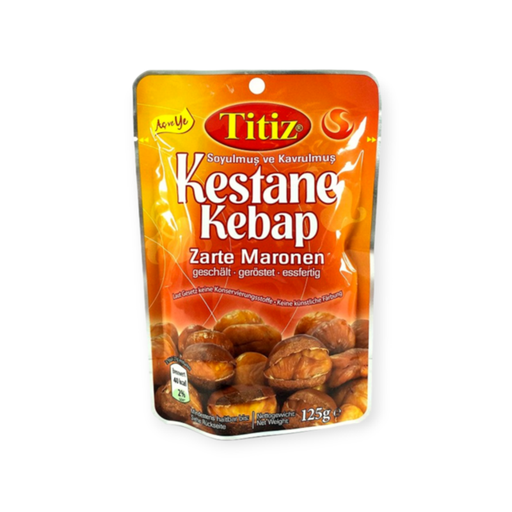
Titiz roasted chestnuts, 125 g
A roasted snack as an alternative to coated cocktail nuts; chestnuts are a different product category. Take any relevant allergies and specific school rules into account.
View at Joybuy
 No image available
g'woon roasted unsalted cashew nuts, 200 g
An unsalted nut snack instead of seasoned coated cocktail nuts. Contains cashew nuts and other tree nuts; check the ingredients against the allergies and school rules that apply to your child.
View at Joybuy
 No image available
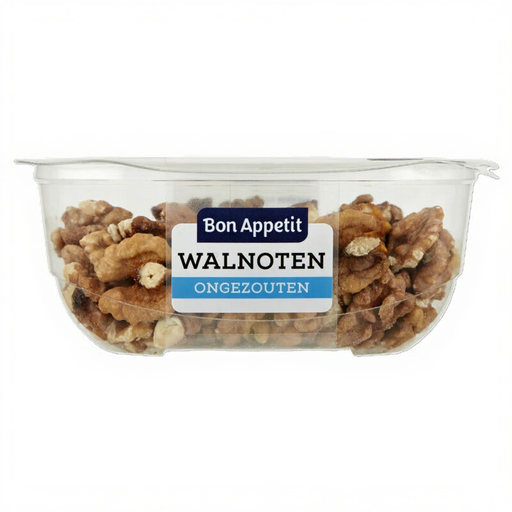
Bon Appétit unsalted walnuts, 110 g
An unsalted alternative to coated cocktail nuts, but the walnuts are in their shells and need preparing. Take walnut allergies and any relevant school rules into account.
View at Joybuy
Frequently asked questions
Are these coated cocktail nuts low-calorie?
No. According to Jumbo, PLUS and Albert Heijn, the four variants checked contain 527–541 kcal per 100 g. For solid foods, the European Commission sets a maximum of 40 kcal per 100 g for the claim ‘low energy’.
Does ‘light’ always mean fewer calories?
Not necessarily: a nutrition claim may relate to a different nutrient. For the claim ‘energy-reduced’, the European Commission requires at least 30% less energy and information about the feature that causes the reduction. So check exactly what the claim refers to.
What portion of coated cocktail nuts is suitable for my child?
A 25 or 30 g portion stated on a product page is product information, not individual advice for a child. Consider the snack as part of the whole lunch and use a measured quantity to compare variants fairly; don’t put a growing child on a weight-loss diet yourself.
Are whole nuts suitable for children under 4?
The Netherlands Nutrition Centre advises against giving whole nuts or peanuts to children under 4 because of the risk of choking. Also take allergies and any rules at school or childcare into account.
Which allergens should I check on the packaging?
Check peanuts and tree nuts separately, and read the other ingredients and allergen warnings that are relevant to your child. The NVWA states that allergen information for prepacked products must appear on the label; the coating may vary between variants.


