
Portion-conscious snackers
You want to enjoy coated peanuts during a holiday or drinks occasion and know in advance how much energy your weighed portion contains. Compare the nutritional values per 100 g, then use the weight of your own portion.


Don’t judge a snack by the calories in a small portion alone: first compare the nutritional values per 100 g, then work out the amount for the portion you’ll eat. Albert Heijn and Jumbo list 532 and 527 kcal per 100 g respectively for their Cocktail coated peanuts. Both are above the European Commission’s limit of 40 kcal per 100 g for a ‘low energy’ claim. If you want to limit the energy in a snack, weigh your portion and check the flavour, ingredients and allergens for the exact variant.
You want to enjoy coated peanuts during a holiday or drinks occasion and know in advance how much energy your weighed portion contains. Compare the nutritional values per 100 g, then use the weight of your own portion.
You’re looking for coated peanuts with a seasoned peanut coating and choose based on flavour. A flavour name or small pack doesn’t, in itself, tell you how many calories the product contains.
You’re sharing snacks and want to know which allergens and warnings are listed on the packaging. If someone has a relevant allergy, the ingredients and allergens for the exact variant matter more than choosing a brand in general.
First decide how much energy you want your portion to provide, then choose a flavour. Finally, check that the ingredients and packaging suit your snacking occasion.
| What to consider | What should you check? | Who is this important for? |
|---|---|---|
| Calories per portion | First compare the kcal per 100 g for the exact variant. Weigh your portion and calculate kcal per 100 g × portion weight in g ÷ 100. | If you mainly want to know how much energy is in your own weighed snack portion, this is the top priority for around 42% of consumers. |
| Flavour and crunchy coating | Choose your preferred flavour and check the nutritional information for that variant separately; a flavour name is not a nutrition claim. | If you mainly want to enjoy the flavour and crunchy texture when sharing snacks, this is the top priority for around 25% of consumers. |
| Ingredients and allergens | Read the ingredients and ‘contains’ and ‘may contain’ statements, and compare nutritional values on the same basis. | If you need to take an allergy into account or require a particular composition, this is the top priority for around 17% of consumers. |
| Packaging and storage | Choose a net weight that suits sharing or several snack occasions, and follow the storage instructions on the packaging. | If you’re looking for a pack that suits sharing or storing for several occasions, this is the main consideration for around 16% of consumers. |
The ‘low energy’ claim refers to the nutritional value per 100 g, not the amount you put in a bowl. For solid foods, the European Commission sets a limit of 40 kcal (170 kJ) per 100 g for this claim.
Don’t confuse a regular product served in a smaller portion with a product that meets the European requirements for the claim.
According to the RIVM, Nutri-Score gives an overall assessment of a product’s composition; a vegan label describes a different product characteristic. Neither replaces the calorie information per 100 g.
For a calorie-conscious choice, read the nutritional information and then calculate the value for your own portion.
According to their product information, the 300 g AH and Jumbo Cocktail packs are divided into twelve 25 g portions. So the whole pack is not the same as one portion.
Decide in advance how many grams you want to eat, and follow the storage advice when you put the rest away.
The own-brand variants reviewed have different allergen statements. AH Cocktail also lists milk and lactose, while Jumbo Cocktail lists peanuts and wheat/gluten and warns that other nuts may be present.
Each time you buy, check the ingredients list and allergen warnings on the packaging of that exact variant.
Duyvis describes, among other products, Provencale coated peanuts with onion and garlic flavour, and Oriental coated peanuts with curry flavour.
AH Cocktail coated peanuts are an own-brand option in a 300 g pack.
Jumbo sells 300 g packs of Cocktail coated peanuts, with nutritional values listed per 100 g and per 25 g.
Lidl lists coated peanuts in its Alesto product range.
The ALDI product page lists Trader Joe’s coated peanuts in bacon and cheese, poesta and paprika flavours, in 300 g bags.
The PLUS own-brand range includes Mild and Provencale coated peanuts in 300 g bags.
These Joybuy products are regular coated peanuts in a range of flavours. For a calorie-conscious choice, compare the kcal per 100 g on the packaging and calculate the amount for your weighed portion; the flavour and bag weight won’t answer that question.
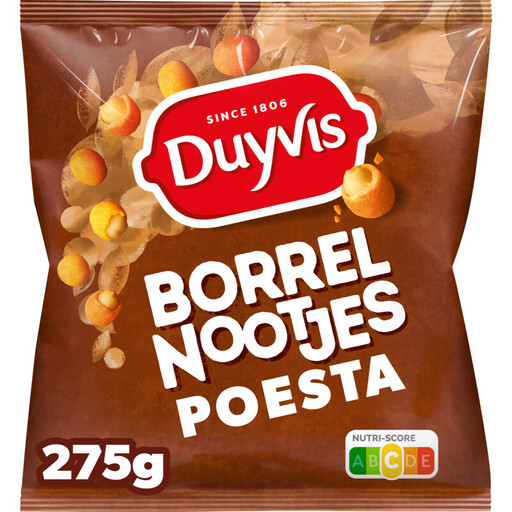 No image available
A good fit for sharing if you’re looking for seasoned peanuts with a crunchy coating.
The product description mentions a savoury seasoning. For a calorie-conscious choice, check the kcal per 100 g and weigh your portion.
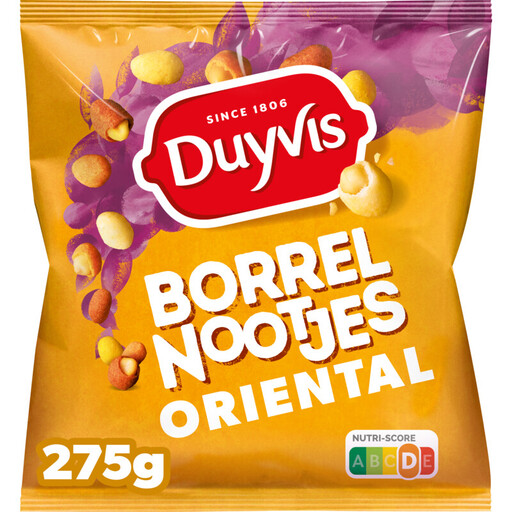 No image available
Worth a look if you’re after coated peanuts with a curry flavour.
The flavour description mentions a crunchy coating and curry. Use the nutritional information for this variant to compare calories per 100 g.
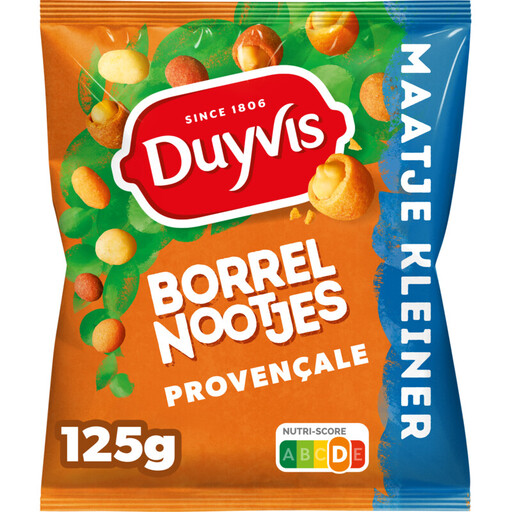 No image available
This pack is a good fit for a snack occasion when you’re looking for a smaller net weight.
The product description mentions a crunchy coating with onion and garlic flavour. A smaller bag doesn’t tell you how many calories you’ll get per 100 g; compare that value on the packaging.
 No image available
One to consider if you’re looking for coated peanuts with onion and garlic flavour.
The product description mentions a crunchy coating with this flavour combination. To help choose your portion, compare the kcal per 100 g for this exact variant.
For solid foods, the European Commission sets a limit of 40 kcal (170 kJ) per 100 g for a ‘low energy’ claim. The product information for AH Cocktail and Jumbo Cocktail lists 532 and 527 kcal per 100 g respectively. A smaller portion doesn’t change the requirements for this product claim.
Multiply the kcal per 100 g by the weight of your portion in grams, then divide the result by 100. According to the product information, a 25 g portion contains approximately 133 kcal for AH Cocktail and 132 kcal for Jumbo Cocktail. For another variant, use the values on its packaging.
The product information lists 532 kcal per 100 g for AH Cocktail and 527 kcal per 100 g for Jumbo Cocktail. Based on the values per 100 g, that’s a difference of 1.25 kcal in a weighed 25 g portion; neither variant is low in calories.
Read the ingredients and allergen statements on the packaging of the exact variant. The NVWA requires allergens to be clearly stated. Jumbo Cocktail lists peanuts and wheat/gluten; AH Cocktail also lists milk and lactose. Check for any warnings about possible allergens as well.
Follow the storage and resealing instructions on the packaging. AH advises storing its Cocktail coated peanuts in a cool, dark and dry place and closing the pack securely after use; Jumbo advises storing them in a cool, dry and dark place.