If you have a peanut allergy, traditional coated peanuts made with a peanut base are not suitable. For other allergies, it depends on the exact variant, its ingredients and the warnings on the packaging. The Netherlands Food and Consumer Product Safety Authority (NVWA) states that prepacked products must display allergen information on the label; the Food Allergy Foundation treats peanuts and tree nuts as separate allergens. If an allergen is not listed in the ingredients, that is no general guarantee that the product is suitable for everyone with a food allergy.
Who is this guide for?
People avoiding peanuts or tree nuts
Start with the allergen you need to avoid: peanuts and tree nuts are different allergens. The traditional coated peanuts described here have a peanut base. Also check the warnings separately for any tree nuts that are relevant to you.
People avoiding allergens in the coating
If you can eat peanuts but need to avoid, for example, milk, wheat or celery, check the full ingredients list for the exact flavour variant. Ingredients can vary between variants.
People who check labels every time they buy
If you’re buying a product again, it’s a good idea to check the flavour, ingredients and warnings on the pack you receive. Albert Heijn says that ingredients and allergy information can change.
What should you look for when buying?
First check whether the base and ingredients are suitable for your needs. Then look at precautionary warnings and the current packaging.
| What to check |
What should you check? |
Who is this important for? |
| Base and tree nuts |
Check the ingredients for peanuts and look separately for warnings about tree nuts. |
If peanuts aren’t suitable for me, I start with the base and assess tree nuts separately; around 40% of consumers prioritise excluding these key allergens. |
| Coating and flavourings |
Check compound ingredients too, and look at the exact variant for milk, wheat or celery. |
I may be able to eat peanuts but need to avoid, for example, milk, wheat or celery; around 30% of consumers focus mainly on allergens in the coating and flavourings. |
| Precautionary warnings |
Read warnings such as ‘May contain X’ separately from the ingredients list. The NVWA describes these as information about the possible unintended presence of an allergen. |
Once I’ve checked the ingredients, I also want to know which warnings are relevant to my allergy; around 20% of consumers prioritise checking these. |
| Current packaging |
Compare the flavour and contents with the pack you receive, and check the ingredients and warnings again. |
If I’m buying a product again, I want to be sure it’s the same variant; around 10% of consumers focus mainly on checking the latest product information. |
Common mistakes
-
Taking ‘free from’ to mean a general guarantee that a product is allergen-free
A statement about one ingredient doesn’t automatically tell you anything about other allergens. ‘No artificial colours’ also says nothing about whether a product contains peanuts, wheat or milk.
Identify the specific allergen you need to avoid, then check both the ingredients and the relevant warnings.
-
Checking only for peanuts and overlooking the coating
Flour, starch and flavourings can also contain ingredients you need to avoid. A mild or cocktail variant won’t necessarily have a fixed recipe.
Read the full ingredients list and check each flavour separately.
-
Buying a familiar pack again without checking the label
An old product listing or a different pack may not match what you receive. Albert Heijn says that ingredients and allergy information can change.
Every time you buy, check the product name, flavour, contents, ingredients and warnings on the pack.
Brands to compare by variant
Duyvis
Duyvis describes Cocktail as peanuts with a crunchy coating. Compare the ingredients for each flavour variant.
- Dutch retailer information for Cocktail and Poesta lists allergens by variant.
- Cocktail lists peanuts, wheat and milk; Poesta also lists celery. The description ‘no artificial colours’ does not mean it is free from allergens.
Albert Heijn
AH Cocktail Coated Peanuts 300 g is an own-brand option whose ingredients and warnings you can compare with other products.
- The product information lists ingredients, allergens and storage advice.
- This variant lists milk, peanuts and wheat, and may contain various tree nuts; being an own-brand product doesn’t automatically make it suitable for someone with an allergy.
Jumbo
Jumbo Cocktail Coated Peanuts 300 g can be assessed using its ingredients list if you avoid milk and can eat peanuts and wheat.
- The product information lists peanuts and wheat and names eight possible tree nuts.
- The fact that milk isn’t listed in the ingredients list available online is not a certified claim that the product is milk-free, nor a guarantee for the whole range.
PLUS
PLUS Mild Coated Peanuts 300 g is a mild-flavoured variant whose ingredients and warnings you can check.
- The product information lists allergens for the exact variant.
- The ingredients list includes peanuts, wheat, celery and milk; there is also a warning about tree nuts. ‘Vegetarian’ doesn’t mean milk-free.
ALDI
ALDI lists Trader Joe’s coated peanuts in Oriental, Provençale and Cocktail flavours, in 300 g packs.
- The range information gives the flavours listed and pack size.
- Check the allergens on the pack for the exact variant; the range listing alone doesn’t tell you whether it is suitable.
Lidl
Lidl has a Dutch product listing for coated peanuts as a supermarket option to check pack by pack.
- The product listing confirms that coated peanuts are available in the category.
- Don’t take this general listing as a claim that the product is allergen-free or as information about a specific variant.
Joybuy products
This selection includes traditional coated peanuts and a chestnut snack as an alternative. Check the current ingredients and warnings for each product against your own needs.
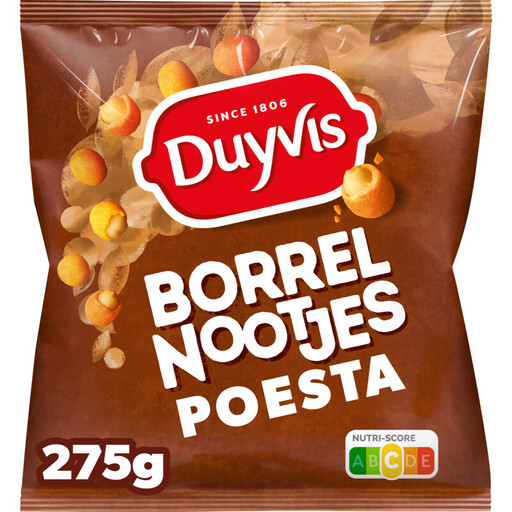 Image unavailable
Duyvis Poesta Coated Peanuts, 275 g
Only consider this variant if peanuts, milk, wheat and celery are suitable for you.
The product information lists possible traces of soya, mustard and nuts.
Joybuy
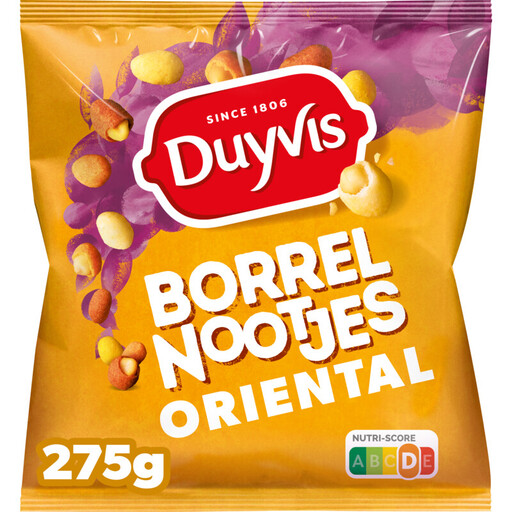 Image unavailable
Duyvis Oriental Coated Peanuts, 275 g
Only consider this variant if peanuts, wheat, barley and soya are suitable for you.
The product information lists possible traces of milk, nuts and mustard.
Joybuy
 Image unavailable
Duyvis Coated Peanuts Provençal, 275 g
Only consider this variant if peanuts and wheat are suitable for you.
The product information lists possible traces of milk, nuts, soya and mustard.
Joybuy
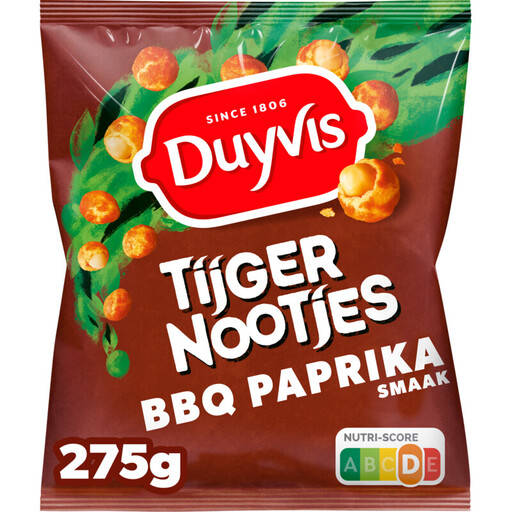 Image unavailable
Duyvis Tigernut BBQ Paprika, 275 g
The product information lists peanuts and wheat; don’t choose this variant if you need to avoid either ingredient.
Possible traces of milk, nuts, soya and mustard are also listed.
Joybuy
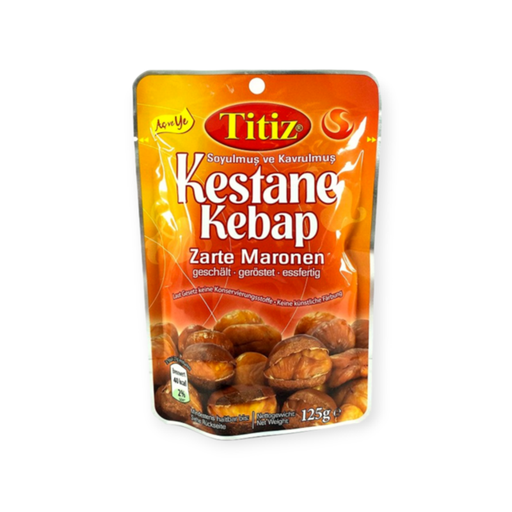 Image unavailable
Titiz Roasted Chestnuts, 125 g
This is a chestnut snack rather than traditional coated peanuts. Check the ingredients and warnings on the pack you receive against your specific allergy.
Joybuy
Frequently asked questions
Does having a tree nut allergy automatically mean you need to avoid peanuts too?
No. Peanuts and tree nuts are different allergens. The Food Allergy Foundation describes peanuts as legumes; however, check separately whether the pack carries a warning for any tree nuts you avoid.
Are traditional coated peanuts suitable if you have a peanut allergy?
The traditional variants described here have a peanut base, so they aren’t suitable if you have a peanut allergy. If you’re looking for an alternative, check the ingredients and warnings for that exact product; a different type of snack isn’t automatically suitable.
Does a product count as milk-free if milk isn’t listed in the ingredients?
No. The fact that milk isn’t listed in the ingredients information available for one Jumbo variant is not a certified claim that it is milk-free, or a guarantee for other variants. Check the current packaging and the information relevant to your needs.
What do warnings such as ‘May contain X’ mean?
According to the NVWA, these warnings indicate possible unintended presence and are different from an ingredient that has been deliberately added. The absence of a warning is no general guarantee that a product contains absolutely no traces of that allergen.
Should you read the label again when buying a product you’ve had before?
Yes. Check the exact flavour, ingredients and warnings on the pack you receive again. Albert Heijn says that ingredients and allergy information can change.
Is lactose-free the same as suitable for someone with a cow’s milk allergy?
No. Lactose intolerance relates to milk sugar, whereas cow’s milk allergy involves milk proteins. So don’t take a ‘lactose-free’ label as proof that milk proteins are absent.


