
Direct Coastguard listener
If you want to hear the spoken Dutch broadcast directly, you’ll need to choose between marine VHF and MF reception. The Coastguard lists both options for its weather forecast.


First decide which broadcast you want to hear. To listen directly to the Dutch Coastguard, you need a receiver that can tune into the relevant marine VHF channels or MF frequencies; DAB+ or FM alone isn’t enough. The Coastguard lists VHF channels 23 and 83, and MF frequencies 1890 kHz and 3673 kHz. For the British Shipping Forecast, you can listen to BBC Radio 4 via BBC.com or the BBC app, and you could use a Bluetooth radio to play it. You’ll need an internet connection and a device to play the broadcast. Also check that reception or connectivity is reliable and speech is clear enough where you plan to listen.
If you want to hear the spoken Dutch broadcast directly, you’ll need to choose between marine VHF and MF reception. The Coastguard lists both options for its weather forecast.
If you want to listen to BBC Radio 4 in your kitchen, you can use a phone or another internet-connected playback device with a portable Bluetooth radio. BBC Help lists BBC.com and the BBC app as ways to listen outside the UK.
If you want to move the radio easily between the worktop and dining table, first check how the broadcast you want is available. Then test reception or connectivity and speech clarity in those spots.
Start with the broadcast you want to hear: direct reception, online listening and a published weather forecast all call for different solutions.
Choose this if: you want to receive the Dutch Coastguard’s spoken broadcast directly.
Bear in mind: a standard DAB+/FM radio won’t provide this reception. Check the exact model and test reception and speech clarity in your kitchen.
Choose this if: you want to try tuning in to the Coastguard broadcast on the listed medium-frequency bands.
Bear in mind: being able to tune to a frequency doesn’t guarantee clear reception indoors. Check the exact model and test it where you plan to listen.
Choose this if: you want to listen to the British broadcast on an internet-connected phone or another playback device, and possibly send the audio to a radio via Bluetooth.
Bear in mind: you’ll still need an internet connection and a paired playback device. BBC Help says BBC Sounds has been unavailable to listeners outside the UK since 21 July 2025.
Choose this if: you mainly need the information in a weather forecast and don’t want to receive a spoken radio broadcast.
Bear in mind: reading a published forecast is different from receiving the spoken Coastguard broadcast on the radio.
| What to consider | What should you check? | Who should pay particular attention? |
|---|---|---|
| VHF reception | The Coastguard lists channels 23 and 83. Check whether the exact model receives these channels and test speech clarity where you plan to listen. | If I want to hear the Coastguard directly via VHF, the right channels and reception in my kitchen need to be in place; around 33% of consumers give VHF reception top priority. |
| MF reception | The Coastguard lists 1890 kHz and 3673 kHz. Check whether the exact model can tune to both frequencies and test reception indoors. | If I want to try the direct MF broadcast, the listed frequencies and clear reception at home are essential; around 25% of consumers put MF reception first. |
| BBC Radio 4 and Bluetooth | Check how to access BBC listening on your playback device, your internet connection and the Bluetooth pairing with the radio. | If I want to hear the British Shipping Forecast via BBC Radio 4 and don’t mind listening online, this option suits me; around 25% of consumers prioritise this way of listening online. |
| Moving and using the radio | Check the power supply, controls and speech clarity in the places where you want to use the radio in your kitchen. | If I want to move my radio around while cooking or eating, ease of use and a suitable listening spot matter; around 17% of consumers give everyday portability top priority. |
The Coastguard lists marine VHF channels and MF frequencies; a DAB+/FM label doesn’t mean a radio can receive them.
First choose how you want to listen, then check whether the exact radio can receive the necessary channels or frequencies.
A specification tells you which frequencies a device can tune to, not whether you’ll receive a clear broadcast where you plan to listen.
Check the model and test reception and speech clarity where you intend to use the radio.
BBC Help says BBC Sounds has been unavailable to listeners outside the UK since 21 July 2025.
Before buying, check whether BBC Radio 4 is available via BBC.com or the BBC app on your playback device, and test the connection.
The RDI sets requirements for marine transmitting equipment; this information doesn’t automatically apply to a device that only receives broadcasts.
Before using it, check whether the exact model can transmit and which RDI rules apply to the device and its intended use.
Marine transmitting equipment may be subject to registration or licensing requirements and related obligations.
The IC-R6 is a wideband receiver worth looking into if you want to try direct marine reception.
The PL-330 is a portable world-band receiver to consider if you want to try receiving the listed Coastguard frequencies via MF.
The Revival Petite 2 is a compact DAB+/FM radio with Bluetooth, suited to listening to BBC Radio 4 online via a paired playback device.
The ATS-909X2+ is a multi-band radio worth looking into if you want to explore MF reception further.
These portable options offer FM or AM/FM radio functions, or Bluetooth playback. If you want to hear the Coastguard directly, check whether the exact model can receive the necessary marine channels or MF frequencies.
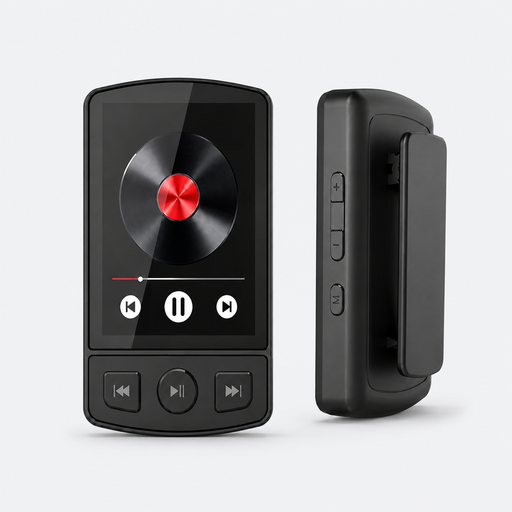 No image available
A portable option if you want to listen to FM radio as you move around the house.
The product name lists Bluetooth 5.2, a built-in speaker, a clip, FM radio and support for TF cards up to 128 GB. A pedometer and voice recording are also listed.
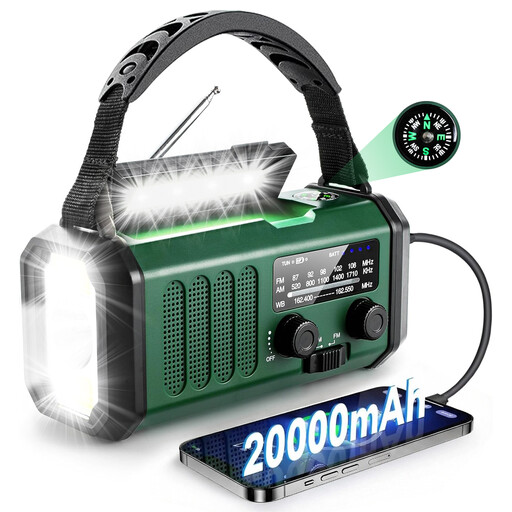 No image available
A portable AM/FM option if you also want to compare the emergency features listed in the product name.
The product name lists 20000mAh, solar power, a hand crank, NOAA reception, a 14W LED light, a reading lamp, an SOS alarm and a compass. For direct Coastguard reception, check whether the exact model can tune to the MF frequencies you need.
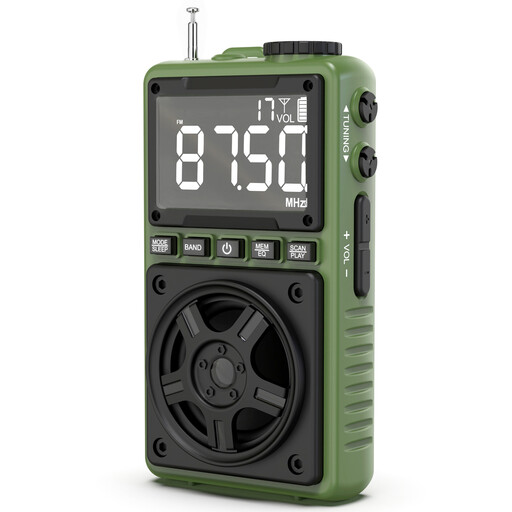 No image available
An option if you want to play audio from a paired device and move the radio around when needed.
The product name lists a rechargeable battery, USB-C charging and playback from a TF card.
Not with DAB+/FM alone. The Coastguard lists VHF channels 23 and 83, and MF frequencies 1890 kHz and 3673 kHz. Check whether the exact model can receive the option you want to use.
BBC Help lists BBC.com and the BBC app for listening to Radio 4 live outside the UK. BBC Sounds has been unavailable there since 21 July 2025; the BBC also says selected programmes are available to catch up on. Check that your playback device has a working connection.
No. Bluetooth alone won’t receive the BBC broadcast. You’ll need an internet-connected phone or another playback device to play BBC Radio 4; Bluetooth can then send the audio to a paired radio.
Test reception or connectivity and speech clarity where you want to listen. Also check that the power supply and controls are suitable for the place where you’ll use the radio.
The RDI requires marine transmitting equipment to be registered before use, and says certain equipment needs a licence instead of registration. This doesn’t automatically apply to a device that only receives broadcasts. Check the rules for the exact transceiver and its intended use.