What should you consider when choosing?
First decide which reflection you want to capture and how you want to assess the exposure. Then work out how much choice of lens and protection you need while you’re out and about.
Mirrorless camera with interchangeable lens
A good fit if: you want to choose the framing with a suitable lens and adjust the exposure for bright sand and water.
Bear in mind: the body, lens and any filter are separate choices; protection for the body doesn’t automatically apply to the lens.
Rugged compact camera
A good fit if: having fewer separate parts and a fixed lens matters more to you than being able to change lenses.
Bear in mind: according to the manufacturer, the OM SYSTEM TG-7 has a fixed lens and a 12MP sensor, so it doesn’t offer the same choice of lenses as a mirrorless camera.
Canon Europe describes exposure compensation as a way to adjust settings for unusually bright or dark scenes. Nikon UK says a circular polarising filter can reduce reflections on water. If that reflection is your subject, view the scene without a filter too.
| Point to consider |
What to look for when buying |
Who is this important for? |
| Reflections or glare |
Check whether you can attach a suitable circular polarising filter to your chosen lens, and assess the shot without a filter too. |
If I want to preserve a reflection in wet sand or water, I want to decide for myself when to use a filter. Around 25% of consumers say controlling reflections is their top buying priority. |
| Exposure for sand and water |
Check how you can adjust the exposure and assess the result on the screen or through the viewfinder; controls vary by model. |
In bright sand and water, I want to be able to assess the bright areas and adjust the exposure if needed. Around 25% of consumers name this as their top priority. |
| Protection from sand and moisture |
Compare the stated protection for the body and lens separately; don’t confuse weather resistance with waterproofing. |
If I’m taking photos where sand or moisture could reach my equipment, protection matters more to me than having the widest choice of lenses. Around 20% of consumers name this as their main buying concern. |
| Portability on walks |
Compare the weight and size of the body with the lens you’ll actually take with you, not just the body weight. |
On a dune walk, I want a camera and lens that are comfortable to carry. Around 15% of consumers put portability first. |
| What’s included in the complete kit |
Check the exact kit contents, lens mount and filter size before comparing kits. |
I want to know in advance whether the lens and filter I need are compatible with my chosen kit or need to be bought separately. Around 15% of consumers say the complete kit is their main buying concern. |
Cameras on Joybuy
This selection includes action cameras for outdoor activities and Sony ZV-E10 versions. Check the lens, any housing and moisture warnings for each model before choosing a kit for a coastal walk.
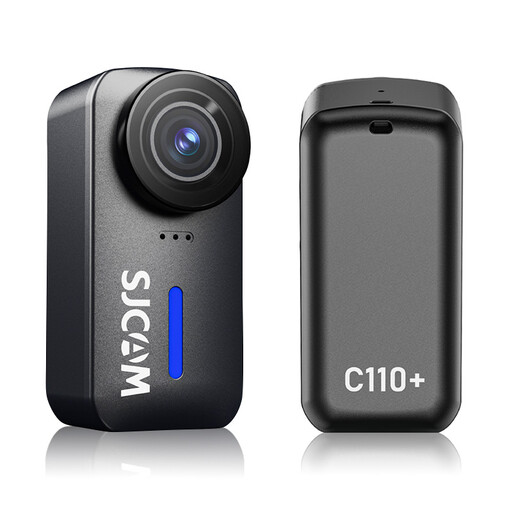 Image unavailable
SJCAM C110+ 4K action camera
If you’re comparing compact cameras for outdoor activities, the product name specifies an ultra-wide-angle 170° lens.
The product name lists gyro stabilisation, photos up to 20 MP and waterproofing to 30 m with the housing. Check whether the housing is included with your chosen kit.
Joybuy
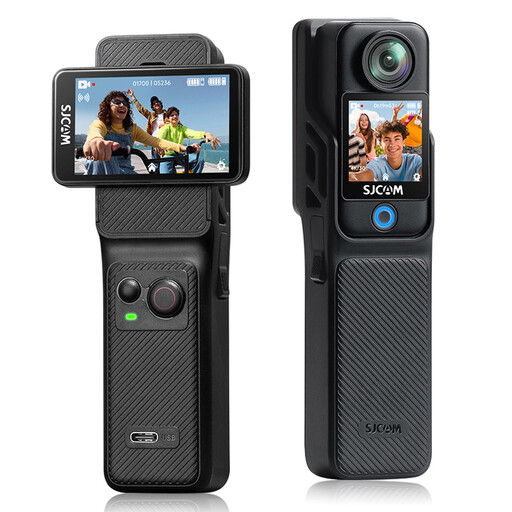 Image unavailable
SJCAM C400 4K action camera
If you’re looking at compact cameras for outdoor activities, the product name lists an ultra-wide-angle lens and 6-axis image stabilisation.
The product name specifies a 154° field of view and photos up to 16 MP. Before using it on the coast, check what protection and housing are included with your chosen version.
Joybuy
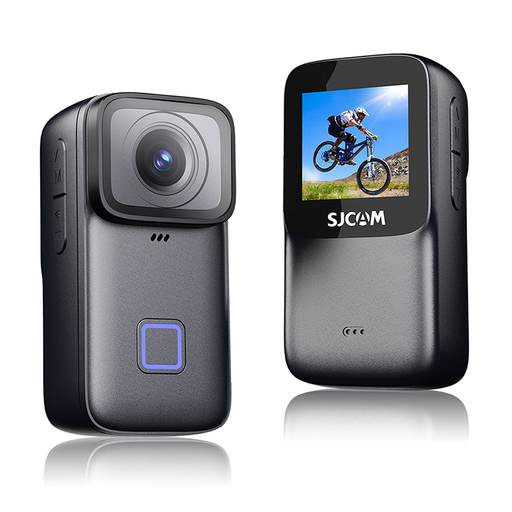 Image unavailable
SJCAM C200 Pro 4K action camera
If you’re looking for a compact camera for wide outdoor shots, the product name specifies a 135° lens.
The product name lists photos up to 20 MP, 6-axis stabilisation and waterproofing to 5 m without a housing and to 40 m with a housing. Check which housing is included with the kit.
Joybuy
 Image unavailable
Sony ZV-E10 with 16–50mm lens, black
If you’re comparing mirrorless cameras supplied with a 16–50mm lens and a filter thread, you can compare this kit with other lens kits.
The product information lists a 24.2 MP APS-C sensor and a 40.5 mm filter size. The safety information warns against exposing the camera to moisture, so bear this in mind when using it on the coast.
Joybuy
 Image unavailable
Sony ZV-E10 body, without lens
This version is worth comparing if you want to choose a suitable Sony E-mount lens yourself.
The product name says that no lens is included. The product information warns against exposing the camera to moisture, so bear this in mind when using it on the coast.
Joybuy
Frequently asked questions
Should you always use a polarising filter when there are strong reflections?
No. A polarising filter can reduce reflections on water, but it can also weaken the reflection you want to photograph. So check the shot without a filter too, and choose one that fits your specific lens.
Is a weather-resistant camera body enough to protect against sand and seawater?
No, you should check the lens too and protect the complete kit. Weather-resistant doesn’t automatically mean waterproof; sand and salty moisture can damage equipment. The OM-5 Mark II’s IP53 rating applies to the body, and you should check whether it applies to each lens.
What happens if a camera develops a fault too soon under the guarantee?
According to ACM ConsuWijzer, when a product doesn’t meet what you could reasonably expect with normal use, the seller is responsible. Dutch statutory guarantee doesn’t have a general fixed term of two years; assess the fault and how the product was used under the applicable terms.
Can you leave the path to take a photo in the dunes?
That depends on the area and the access rules in force. Staatsbosbeheer asks visitors to stay on the paths in the Schoorlse Duinen. On Texel, it directs visitors to the signs at the entrance, and paths may be closed during the breeding season. Check the rules set by the managing authority for the exact location you’re visiting.
What should you consider if recognisable people appear in your dune photo?
The Dutch Data Protection Authority distinguishes between photos that remain private and those shared more widely or used commercially. Privacy rules may apply when people are recognisable, so don’t assume the same conditions apply to a private photo and a public post.


