
Meeting chair who speaks themselves
You lead the online discussion from a laptop and want your voice to come through clearly, with a mute function you can operate straight away. Logitech lists on-cable controls as one of the features of the H390.


A personal USB headset is a good fit when the meeting chair is the main person who needs to speak online. If club members need to join in from their own seats, shared-room audio is a different option to consider. When choosing a headset, check that the mute controls are easy to reach, confirm the USB connection and decide between mono and stereo. Test the setup from the seats people will use and with the meeting-room lighting.
You lead the online discussion from a laptop and want your voice to come through clearly, with a mute function you can operate straight away. Logitech lists on-cable controls as one of the features of the H390.
You want club members sitting elsewhere to be able to join in online. First decide whether the meeting needs shared-room audio; Microsoft describes this as a separate choice for hybrid meeting rooms.
You want to keep track of both online participants and people in the room. A mono headset can leave one ear free; HP Poly, for example, distinguishes between mono and stereo models in the Blackwire 5200 series.
A good fit when: you mainly lead the conversation with remote participants and do the speaking yourself.
Trade-off: a microphone designed for the wearer is not a proven solution for picking up voices from around the whole table. Logitech documents on-cable controls for certain versions; check the specific model you choose.
A good fit when: several people need to speak from their own seats and hear the online participants together.
Trade-off: microphone placement and echo still matter. Zoom lists microphone distance and reverberation as factors to consider; test the setup from the seats people are expected to use.
| What to consider | What should you check? | Who is this important to? |
|---|---|---|
| Making sure your own voice comes through | Check that you can position the microphone boom near your mouth, then make a test call from your usual seat. | If I’m leading the meeting, I want to know that my voice comes through clearly from where I’m sitting. Around 33% of consumers say making their own voice heard is their top priority. |
| Voices from around the table | During a test, ask people to speak from different seats; compare with shared-room audio if necessary. | If several club members need to join in from their seats, I don’t want to assume that a personal headset will pick up the whole table. Around 27% of consumers say making sure all speakers around the table can be heard is their top priority. |
| Mute controls in dim lighting | Practise using the button or controls on the microphone boom, and check the mute status in your meeting app too. | If I’m chairing the meeting in a dark room, I want to be able to mute myself without having to search for the controls. Around 20% of consumers say clear mute controls are their top priority. |
| Connection and wearing style | Check the USB port, the connection on the specific model, and whether you want to wear a mono or stereo headset. | If I need to follow both my laptop and the room, I want a connection that fits and a wearing style that suits the meeting. Around 20% of consumers say connection and wearing style are their top priority. |
A headset is designed for the wearer and is not proven to pick up voices from every seat.
First decide who needs to be heard online and test each seat from which someone is expected to speak. If several club members need to join in from their own seats, compare a shared microphone and speaker setup.
A manufacturer may list an indicator, but that doesn’t tell you whether you’ll be able to see it from your seat and in the room’s lighting.
Try the physical controls and check the status in the meeting app too, using the lighting conditions you’ll have during the meeting.
The connection and mono or stereo wearing style can vary between models.
Check the full model name and your laptop’s connection. Also check which adapter comes with the version you’ve chosen.
Offers wired USB headsets with on-cable controls, including the H390 and Zone Wired.
The Blackwire 5200 series includes wired USB headsets, with both mono and stereo versions.
The UH46 is a wired USB headset range with mono and dual versions.
The Evolve2 50 is available in mono and stereo versions; the documented USB-C/A UC version has no Bluetooth.
The wired IMPACT 400 range is worth comparing if mute controls and a mute indicator are important to you.
These are wired headsets for a meeting chair who speaks online using a headset. Check that the connection and controls on the model you choose suit your laptop and meeting setup.
 No image available
A good fit for a meeting chair who speaks online using a wired headset.
The product name specifies USB and a wired headset.
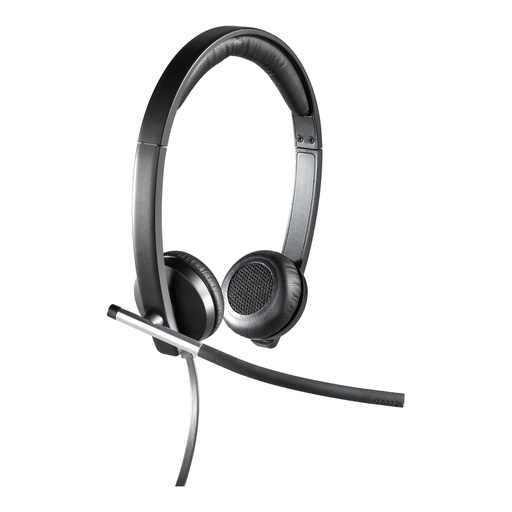 No image available
A good fit for a meeting chair who speaks online using a wired headset.
The product name specifies a stereo version with a wired connection.
 No image available
A good fit for a meeting chair who speaks online using a wired headset.
The product name specifies USB, a wired design and a black finish.
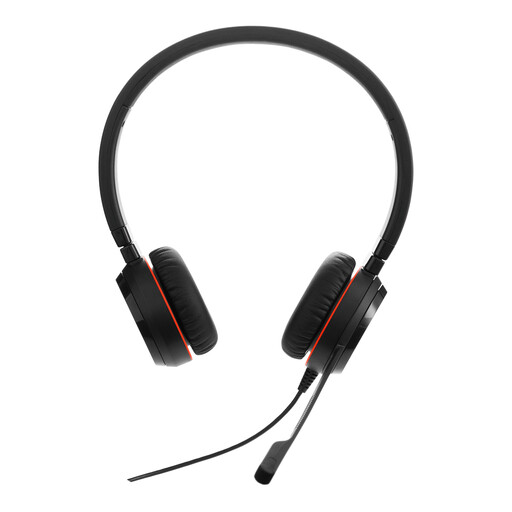 No image available
A good fit for a meeting chair who speaks online using a wired headset.
The product name specifies the MS and stereo version.
 No image available
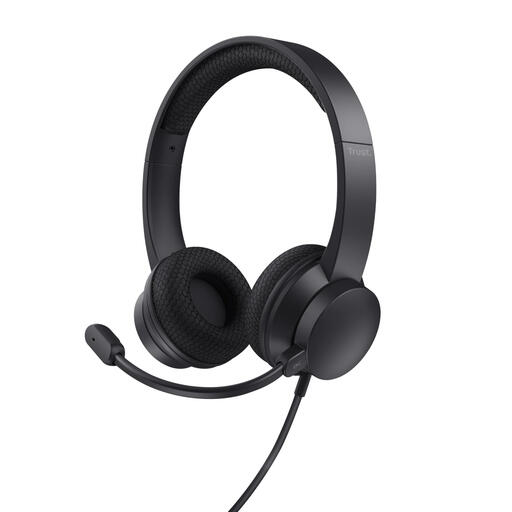
A good fit for a meeting chair who speaks online using a wired headset.
The product name specifies USB Type-A and a black finish.
Don’t assume so: a personal headset is designed for the wearer. If people need to speak from their own seats, compare a shared-room audio setup and test it from those seats.
Don’t have several computers in the same room playing meeting audio at the same time. Zoom lists this as a possible cause of echo; disconnect computer audio on the other devices. Muting the microphones alone may not be enough.
Check that the connection works with your laptop, select the right microphone and speaker in the meeting app, and make a test call from your usual seat. Also test the mute controls and status in the meeting-room lighting.
Equipment covered by EU electromagnetic compatibility rules must meet the applicable conformity requirements and carry the required CE mark before being placed on the market. Check whether the rules apply to the specific model; a CE logo alone does not prove that an individual product is safe.