
Vandaag of morgen in huis

Kwaliteit gegarandeerd

Welkomstaanbiedingen ontgrendelen: GRATIS bezorging | Tot 80% korting | Gratis 30 dagen JoyPlus-proefperiode
Download de app
An overflowing wardrobe or a temporary living space? A clothes rack on wheels seems like the perfect, flexible solution. Yet, many people end up with a wobbly rack that sags after just a few months or has wheels that get stuck. Before you invest in extra storage space, it's important to know the common pitfalls.
Many budget-friendly models collapse under the weight of a few coats. The marketing makes big promises, but the reality is often different. The most common problems are:
A good rolling clothes rack doesn't have to be expensive, but you do need to know what to look for.
To avoid a bad buy, focus on a few concrete specifications. These determine the lifespan and ease of use of your clothes rack.
The sturdiness of a rack starts with its material. Most racks are made of metal, but the quality varies enormously. A metal clothes rack made of chrome-plated or powder-coated steel offers better protection against rust and is generally more robust than models with a simple coat of paint. Pay special attention to the thickness of the rods and the quality of the connections. Are they sturdy screws or fragile plastic clamps? A solid base, often with an extra rod at the bottom that serves as a shoe rack, contributes to stability.
The maximum load capacity is a crucial specification. Be realistic: a lightweight clothes rack with a load capacity of 10 kg is intended for blouses, T-shirts, and light trousers, not for an entire winter wardrobe. For heavier garments, you need a rack that can support at least 15-20 kg. Also, check if it is a height-adjustable clothes rack. This is useful for long dresses or coats and makes the rack more versatile for use in different rooms, such as the bedroom or laundry room.
The functionality of a clothes rack with wheels stands or falls with the quality of the wheels themselves. Look for swivel castors that can rotate 360 degrees for smooth movement. A brake or locking mechanism on at least two of the four wheels is an important feature. This prevents the rack from unexpectedly rolling away, especially on a smooth floor.
Not everyone needs the same type of rack. Below are some options, tailored to specific situations and needs.
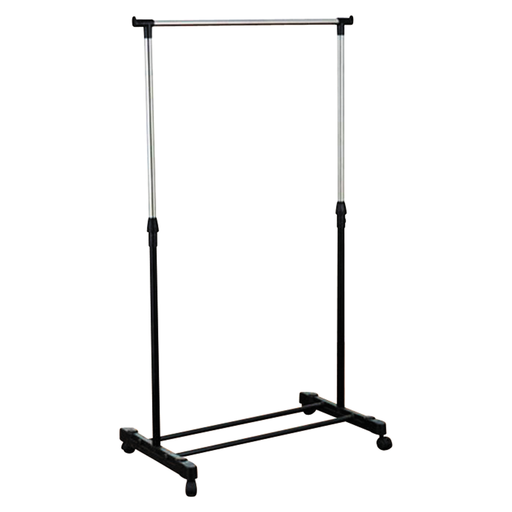
Why This Fits Their Persona: This is a practical and budget-friendly choice for those needing a flexible, temporary solution. Ideal for a student dorm where space is limited and you want to hang up seasonal clothing.
The product information is transparent about the maximum load capacity of 10 kg. This avoids the pitfall of overloading. It's clearly designed for lightweight clothing, not heavy coats.
Height-adjustable (100-150 cm) and very lightweight (1.5 kg), making it easy to move. The bottom rack provides extra space for shoes or storage boxes.
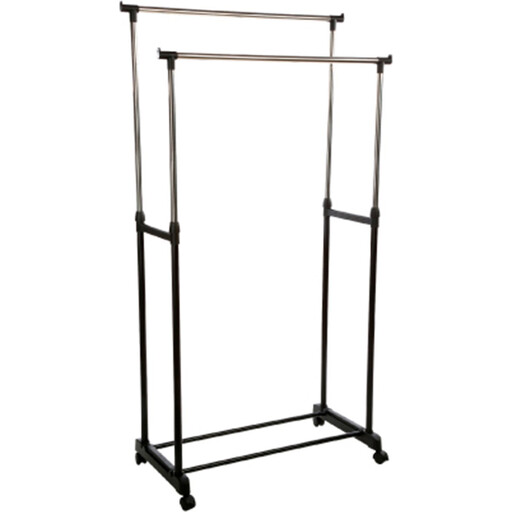
Why This Fits Their Persona: This black clothes rack offers more capacity and is a great addition to the laundry room, attic, or as an open wardrobe for guests. The double rod provides a significant amount of extra hanging space.
This model tackles the stability problem with lockable swivel wheels, preventing the rack from moving unintentionally. The steel and stainless steel construction is designed for a higher load capacity (up to 15 kg according to the warnings).
The height-extendable rods (up to 170 cm) and the presence of two hanging rods double the effective storage space compared to a single-rod model.
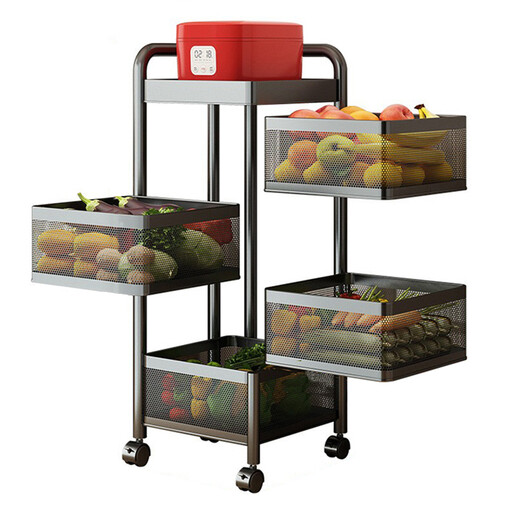
Why This Fits Their Persona: For those who, in addition to hanging space, are looking for a compact, mobile solution for folded clothes, accessories, bags, or shoes. This trolley fits perfectly next to a clothes rack and keeps small items organised and within easy reach.
This is not a hanging rack, so it avoids the typical pitfalls of instability from a hanging load. The construction is designed to support weight in baskets, which naturally creates a more stable centre of gravity.
The rotating baskets offer 360-degree access to your items without you having to dig around. The wheels make it a flexible storage unit that you can move wherever you need it.
We have compiled a complete, up-to-date list of products that meet these selection criteria and comply with current safety regulations.
This varies greatly by model. Simple, lightweight racks often have a maximum load capacity of 10 to 15 kg. This is sufficient for about 10-15 shirts and a few pairs of trousers. Heavier models made of thicker steel can handle 20 kg or more. Always check the manufacturer's product specifications and do not exceed this weight to prevent sagging or tipping.
Stability is a common issue. The main tips are: distribute the weight evenly across the rod, hang the heaviest items in the middle and closer to the uprights, and ensure the rack is on a flat surface. If your rack has wheels with a brake, always engage them once the rack is in place.
Generally, this is not recommended. A few heavy winter coats can quickly weigh 5 to 10 kg. A lightweight clothes rack with a limit of 10-15 kg is not designed for this and can become unstable or get damaged. For a collection of heavy coats, a sturdier, often non-rolling, clothes rack or a model with an explicitly high load capacity is a better choice.
