
People who need a quick laundry turnaround
You wash sports shirts regularly and want to know whether extra heat is practical, without ignoring your shirts’ care instructions.


A heated clothes airer is a good choice if you regularly need your sports shirts again quickly, the care label allows the type of heat used and you have enough room to unfold it. It uses electricity, so a compact unheated airer may be enough if you have time to let your clothes dry. Good ventilation is still important when drying clothes indoors, even with a heated airer.
You wash sports shirts regularly and want to know whether extra heat is practical, without ignoring your shirts’ care instructions.
You’re looking for an airer that’s practical when unfolded and can be stored away compactly afterwards, or one that makes use of a suitable hanging or wall-mounted spot.
You have to dry clothes indoors and want to combine a drying spot with good ventilation. Heating does not remove moisture from the home.
A good choice if: you regularly need your shirts again quickly, have space for the airer when it’s unfolded and the care instructions allow contact with heat.
Trade-off: the airer uses electricity, and its stated specifications do not guarantee a particular drying time.
A good choice if: you mainly have one small, permanent drying spot. DOMO says the DO7117DR can be used freestanding or wall-mounted.
Trade-off: a smaller airer may offer less space to hang several shirts apart, and wall mounting requires a suitable spot.
A good choice if: your shirts have enough time to air-dry and you want to keep the floor clear or don’t need a heated airer.
Trade-off: the airer provides no extra heat. If you dry clothes indoors, you still need to ventilate the damp air.
| What to consider | What to look for when buying | Who this matters most to |
|---|---|---|
| Drying sports shirts in time | Check the care label and the airer’s instructions; see whether you can hang shirts separately. | If I need a shirt again quickly, I want to weigh up the heat against the care label; around 28% of consumers prioritise being able to reuse their clothes quickly. |
| Space and storage | Measure the available space with the airer both unfolded and folded, and allow room to move around it. | When floor space is limited, I want to know whether the airer will fit and where I can store it; around 22% of consumers give a small footprint top priority. |
| Suitability for sportswear | Read the label on your own shirt and the instructions for the exact airer model; don’t rely on a general claim about heat. | If I want to take good care of my sports shirts, I want to know how to hang them on the airer; around 22% of consumers prioritise fabric care. |
| Removing moisture | Check where the airer can be placed according to its instructions and how you can ventilate the room. | When drying clothes indoors, I want to choose a spot where I can ventilate; around 17% of consumers give humidity control top priority. |
| Electricity use | Compare the stated power ratings of the exact models and calculate costs using your own usage hours and electricity tariff. | If I don’t always need extra heat, I want to take electricity use into account when choosing; around 11% of consumers prioritise electricity consumption. |
With a folding airer, the space it takes up when in use determines whether it will fit in an upper-floor flat while leaving the walkway clear.
Measure the space with the airer unfolded, allowing room to walk around and hang clothes.
Even when laundry dries indoors on a heated airer, the moisture ends up in the air inside your home.
Choose a spot where you can dry clothes in line with the instructions and ventilate your home at the same time.
Care instructions vary from shirt to shirt. A claim about a clothes airer does not prove that direct contact with heat is suitable for every garment.
Check the label on your own shirt, and avoid direct contact with heated parts if the care instructions don’t allow it.
Adler’s AD 7821 is a folding electric rail airer.
The DO7117DR is a compact heated airer that can be used freestanding or wall-mounted.
The multi-tiered 3-Tier model is a heated airer for anyone looking for extra hanging space.
The unheated Den Haag 9 is a hanging airer for a suitable door or ledge.
This selection at Joybuy includes heated and unheated clothes airers for sports shirts in an upper-floor flat. Choose according to the space you have, the heat you want and the care label.
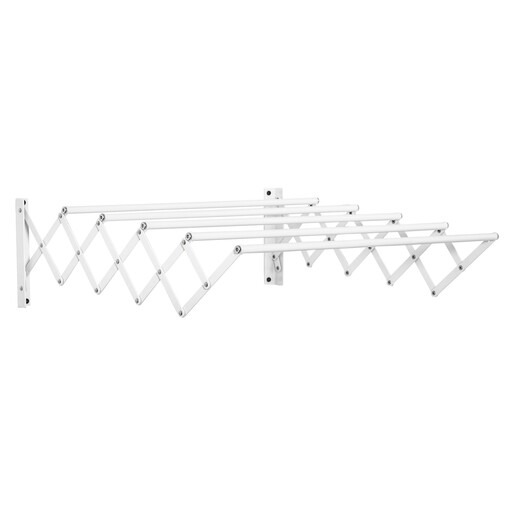 No image available
A wall-mounted model may be a good choice if you want to keep the floor clear and have a suitable place to fit it.
The product information lists five rails, a total load capacity of 10 kg and dimensions of 63,5 × 60 × 20 cm.
 No image available
This heated model may suit you if you want extra warmth and have room for the airer when unfolded.
The title lists a power rating of 230 W and dimensions of 144 × 53 × 91 cm; the description states 45–55 °C. Use it indoors as described, on a stable, level surface with good ventilation and at least 31 cm of clearance from walls. Check the relevant conformity information for the specific listing: product specifications alone do not show that the item on offer meets the Dutch CE requirement.
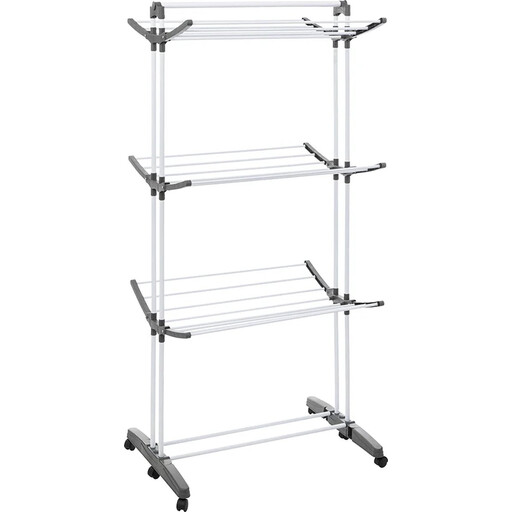 No image available
A freestanding, unheated airer may suit you if you have enough drying time and room for a floor-standing model.
The title lists 24 m of drying space; the product information gives dimensions of 125 × 62 × 172 cm and describes a folding design. Self-assembly is required.
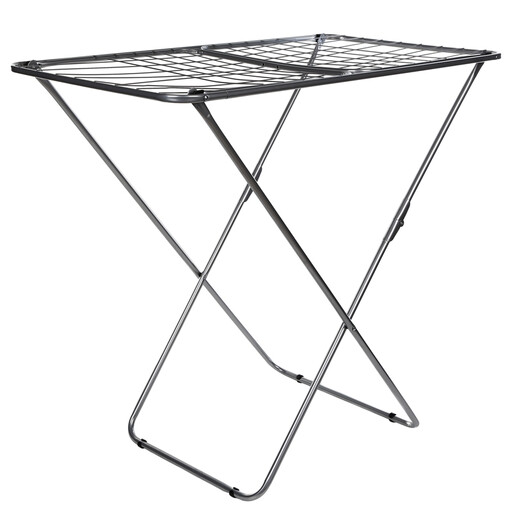 No image available
This unheated airer may suit you if you have enough drying time and want a drying solution you can put away when not in use.
The title lists 18 m of drying space; the product description features a space-saving, folding design for indoor and outdoor use.
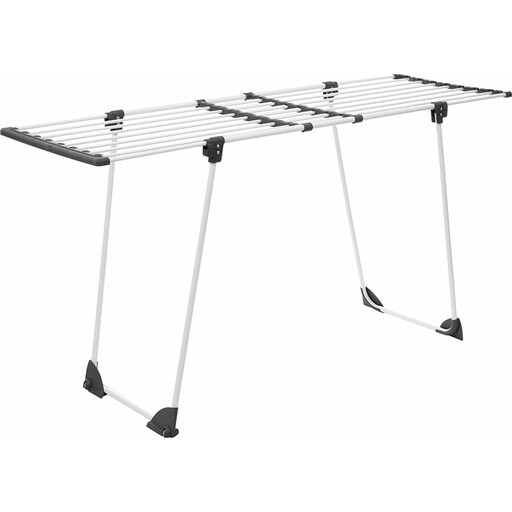 No image available
A freestanding, unheated airer may suit you if you have enough drying time and want to fold it away after use.
The title lists 17 m of drying space; the product information gives dimensions of 180 × 56 × 88 cm and describes a folding design. Place it on a flat, stable surface and spread wet laundry evenly.
No, you can’t assume this is suitable for every shirt. Check the label on your shirt and the airer’s instructions; air-drying doesn’t automatically mean direct contact with heat is suitable.
Yes. Heating does not remove moisture from drying laundry from your home. Milieu Centraal recommends paying attention to ventilation and moisture when drying clothes indoors.
Multiply the power rating of the exact model in kW by the number of hours it uses electricity and your own rate per kWh. The stated power rating doesn’t tell you how long your shirts will take to dry.
It depends on the exact model and the specified placement. DOMO lists IPX4 and freestanding or wall-mounted use for the DO7117DR; you should also follow the instructions for the appliance and the specific location.
The Netherlands Food and Consumer Product Safety Authority states that CE marking is mandatory for electrical products. Check the product and conformity information for the specific Dutch listing; a product description alone does not demonstrate that the item on offer conforms.