
Renter with limited floor space
You’re looking for a portable airer that fits while you’re drying clothes and folds away afterwards.


First, choose an airer that lets you hang cotton shirts without crowding them and fits in your home when fully open. Hanger hooks are handy if you prefer to dry shirts on hangers. Heat is an extra feature to weigh up against electricity use, and it does not replace ventilation. For an electrically heated clothes airer sold in the Netherlands as an electrical product, the Netherlands Food and Consumer Product Safety Authority says the applicable CE marking is compulsory. Check this for the exact model.
You’re looking for a portable airer that fits while you’re drying clothes and folds away afterwards.
You want to hang shirts up individually and are comparing hanger hooks with heated rails.
You’re considering heat as a supplement to air-drying and taking electricity use and the removal of moist air into account.
First decide whether you want to hang your shirts on coat hangers or lay them across rails. Then choose an airer that fits your available drying space when fully open. Heating is a separate consideration.
| What to consider | What should you check? | Who is this most important for? |
|---|---|---|
| Space and storage | Measure the space and access route with the airer fully open; also compare its folded dimensions. | If I want to keep the walkway clear in a compact home, I look beyond the storage dimensions. Space is the main buying concern for around 31% of consumers. |
| Hanging shirts | Check whether the airer has coat-hanger hooks and how many shirts you can hang individually. | I want to dry cotton shirts on coat hangers rather than fold them over a rail. Hanging is the main buying concern for around 25% of consumers. |
| Targeted heat | Check the stated wattage and whether there’s a timer; calculate running costs using your own energy consumption and tariff. | If I dry clothes indoors more often and am considering heat, I weigh it against electricity use. Targeted heat is the main buying concern for around 25% of consumers. |
| Moisture and electricity use | Consider how you’ll ventilate the drying space and calculate costs using the actual consumption in kWh and your own tariff. | I want to remove moist air and estimate ongoing electricity costs. This is the main concern for around 19% of consumers. |
The manufacturer gives the InnovaGoods Warmmat dimensions as approximately 148 × 112 × 54 cm; according to Leifheit, the Leifheit Pegasus 150 Solid Slim measures 87 × 157 × 55 cm. For both models, compare all the dimensions when fully open with your available drying space. The stated wattage of a heated airer is not a measured drying time or energy consumption.
An airer with open wings can take up more floor and walkway space in use than its storage dimensions suggest.
Measure the full drying area and access route, then compare them with the fully open dimensions of the exact variant.
Even with a heated airer, moisture from your washing enters the indoor air. Heat doesn’t replace ventilation.
Check how you’ll ventilate the drying space beforehand. For mechanical ventilation, Milieu Centraal recommends using a higher setting when washing is drying indoors. Calculate any electricity costs using the actual consumption and your own tariff.
The Joybuy listing for an electric airer gives dimensions of 144 × 53 × 91 cm, while InnovaGoods lists the Warmmat at approximately 148 × 112 × 54 cm. Similar product descriptions don’t prove that they’re the same model.
Before buying, compare the brand, full model name and key specifications. For an electric model, also check the applicable CE marking.
The InnovaGoods Warmmat is a foldable heated airer with rails, for anyone considering targeted heat.
The unheated HangOn is an option if you want to hang shirts on coat hangers rather than lay them over heated rails.
The unheated Pegasus 150 Solid Slim is worth comparing if the width of your drying space or walkway is important.
This selection includes foldable indoor clothes airers, including a heated model, as well as freestanding and wall-mounted models for drying clothes.
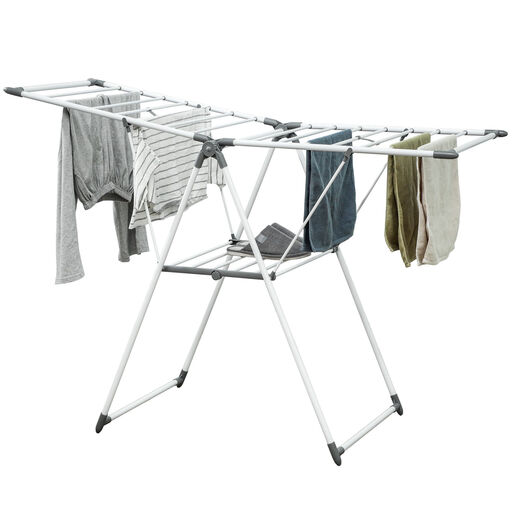 Image unavailable
The adjustable levels and foldable design give you a drying setup that you can put away after use.
Dimensions in use: 156.5 × 61.5 × 97 cm. Folded depth: 8 cm.
 Image unavailable
This foldable model is designed for anyone looking to use an electrically heated clothes airer indoors.
Stated power: 230 W. Dimensions: 144 × 53 × 91 cm. The product description calls for sufficient ventilation and a distance of at least 31 cm from walls. Before buying, check that this exact electrical model carries the applicable CE marking.
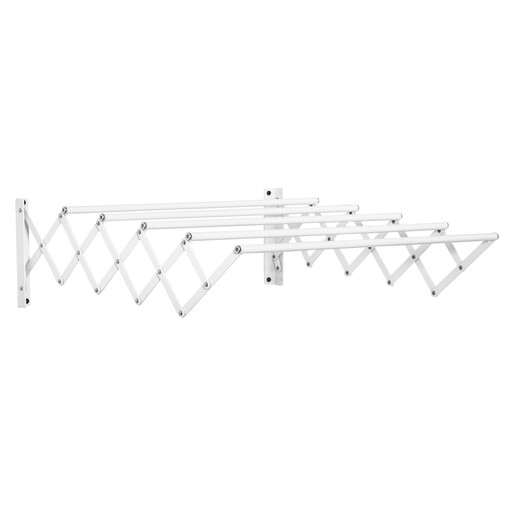 Image unavailable
A wall-mounted model can free up floor space when folded away; it needs to be fixed to a wall before use.
Dimensions: 63.5 × 60 × 20 cm. The product description gives a maximum load of 10 kg.
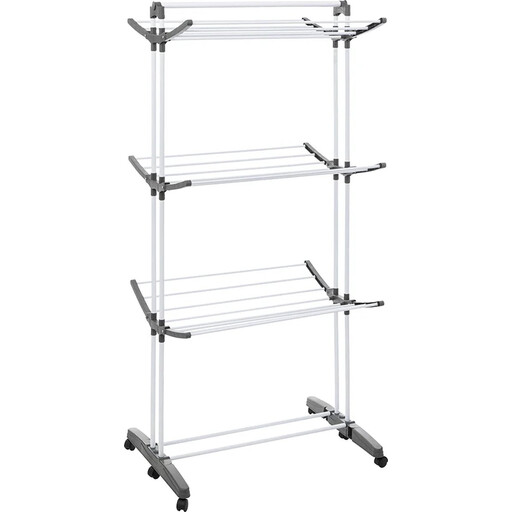 Image unavailable
This foldable freestanding airer is designed for indoor use; its wheels make it easy to move.
Drying line: 24 m. Dimensions: 125 × 62 × 172 cm.
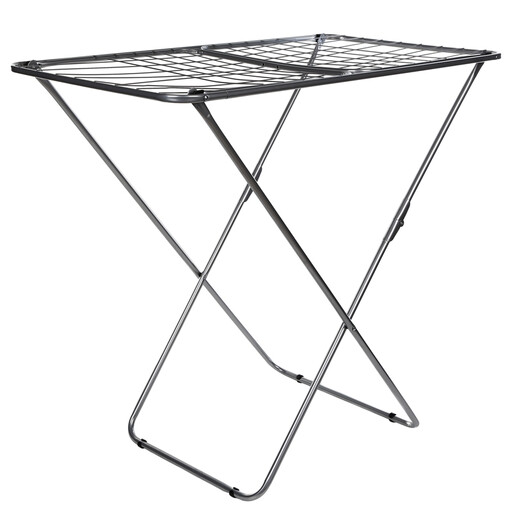 Image unavailable
The product description says it can be used indoors and outdoors and set up without tools.
Drying line: 18 m.
Yes. Washing that dries indoors adds moisture to the air. Make sure moist air can escape; for mechanical ventilation, Milieu Centraal recommends using a higher setting when you’re drying washing indoors.
Multiply the actual consumption in kWh by your own price per kWh. Only if an airer with a stated power rating of 230 W runs continuously at that power for four hours is the calculation 0.230 kW × 4 hours = 0.92 kWh; this doesn’t establish the actual consumption or drying time.
Follow the instructions for the exact model regarding the surface, clearance and electrical connection. Instructions about ventilation, distance from walls, switching off and allowing the airer to cool before cleaning apply only to the model they were written for.
An electric clothes airer covered by the applicable rules for electrical products must carry a CE marking. The Netherlands Food and Consumer Product Safety Authority explains this requirement; before buying, check that the exact model carries the marking. The marking is the manufacturer’s declaration of compliance.
Report the fault to the seller. According to the Dutch Government, you’re entitled to a product that works properly, but the Netherlands doesn’t have a fixed statutory guarantee period. Any manufacturer’s warranty is separate from this right.