Who is this choice for?

Picking out chords in a noisy office

You want to keep following the parts in a recording while conversations and other office noise distract you. So pay attention to the fit and test how much speech you can still hear. Audio-Technica explains the differences in sound leakage between open-back and closed-back headphones.

Assessing differences in the sound of a recording

You compare notes and instruments in the same recording and want to judge the sound itself, separately from claims about noise cancellation. Audio-Technica and AKG’s descriptions of a flat or neutral sound profile are manufacturer claims, not independent tests of chord recognition.

Longer listening sessions at your desk

You wear your headphones for longer periods or move between workspaces. Fit, cable and connection all matter; the Consumers’ Association (Consumentenbond) includes comfort and features among the aspects covered in its headphone tests.

What should you consider when choosing?

Closed-back, wired studio headphones

Choose these when: focused listening to the recording and less sound leakage to colleagues are your priorities.

Trade-off: how much noise they block depends on the design and seal. Also check that the cable is compatible with your audio source.

Over-ear headphones with active noise cancellation

Choose these when: background noise bothers you more than the benefits of wired studio headphones appeal to you.

Trade-off: assess noise cancellation and sound quality separately, and check which listening modes, connections and audio cables, if any, you can use.

Open-back studio headphones

Choose these when: consider them if you mainly listen in a quiet room of your own and prefer a more spacious sound.

Trade-off: open-back models let more sound in and leak more sound to the people around you than closed-back models, making them less suitable for a shared office.

What to consider What should you check? Who is this important to?
Distractions and sound leakage How the earcups fit, how well they block speech and how much sound someone sitting next to you can hear. If conversations are a factor, I want to listen without constantly turning up the volume. Around 36% of consumers prioritise noise reduction and fewer distractions.
Sound of the recording Compare the same familiar recording at an even, moderate volume; listen for bass, mid-range and instruments. If I want to distinguish notes and instruments, I want to judge the sound using my own recording rather than relying on claims about the sound profile. Around 29% of consumers give sound quality their highest priority.
Comfort Try the headphones on for a while, including with glasses if you wear them; check how much room there is around your ears. For repeated or extended listening, I want a fit that stays comfortable. Around 21% of consumers put comfort first.
Connection and maintenance Check your device’s audio output, whether you need an adapter and the cable length. When I listen at my desk, I want to know whether the connection is practical and which parts can be replaced. Around 14% of consumers prioritise connection and maintenance.

Common buying mistakes

  • Assuming closed-back design or ANC means complete silence

    A general noise-reduction claim won’t tell you how much speech you’ll still hear. The seal and the noises in your office also affect your experience.

    Compare models using a representative recording and pay separate attention to voices, fit and sound leakage to colleagues.

  • Turning up the volume to hear notes over office noise

    The World Health Organization points out that both sound level and listening time affect the risk to your hearing.

    Listen at a moderate volume. First improve the seal or compare suitable noise cancellation instead of continually turning the sound up.

  • Assuming a different impedance version is the same model

    The beyerdynamic DT 770 PRO is available in 32-, 80- and 250-ohm versions; beyerdynamic says each version is suited to different audio sources.

    Check the full model name and impedance, and compare them with your device’s audio output.

  • Assuming the manufacturer’s warranty is your only right

    A manufacturer’s warranty and your statutory rights if a product is faulty are not the same thing. The Dutch government states that the Netherlands has no fixed statutory warranty period.

    Check what any additional warranty covers, and contact the retailer if your product is faulty.

Brands worth considering

AKG

AKG describes the K371 as a closed-back, foldable studio headphone with a neutral sound profile.

  • AKG lists replaceable ear pads and three detachable cables for the K371.
  • Descriptions of sound and isolation come from the manufacturer. Judge for yourself how the fit and sound perform in your office.

Audio-Technica

The wired, closed-back ATH-M40x and ATH-M50x are two studio-focused models with different sound descriptions from the manufacturer.

  • Audio-Technica describes the M40x as having a flat sound profile and lists detachable cables for both models.
  • The manufacturer describes the M50x as having its own sound signature and deep bass; don’t assume this means it has as flat a sound profile as the M40x.

beyerdynamic

The closed-back DT 770 PRO is available with different impedances, which beyerdynamic says are suited to different audio sources.

  • For the DT 770 PRO 80 ohm, beyerdynamic lists replaceable ear pads and a wired connection.
  • Don’t assume advice for the 32- or 250-ohm version also applies to the 80-ohm version without checking.

Sennheiser

Sennheiser describes the wired HD 280 PRO as a closed-back headphone for uses including monitoring, with a foldable design.

  • Sennheiser lists replaceable ear pads for the HD 280 PRO.
  • The manufacturer claims noise reduction of up to 32 dB; this doesn’t guarantee the same level of noise reduction for voices in an office. Check the fit and version.

Sony

The MDR-7506 is a professional headphone, while the WH-1000XM6 represents a separate wireless ANC option.

  • The manufacturer describes the MDR-7506 as foldable.
  • Claims about ANC on the WH-1000XM6 don’t prove that this model is better for recognising chords than a wired studio headphone.

Compare Joybuy products

These Joybuy products are options to compare for over-ear listening at the office. For each model, check the listening mode and connection you want, and assess the sound based on how you’ll use it.
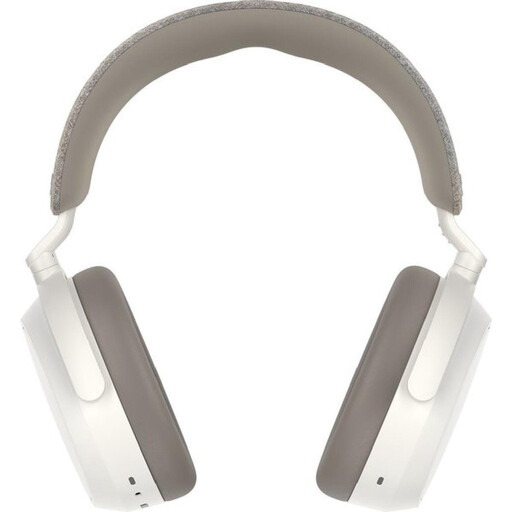
Sennheiser MOMENTUM 4 Wireless, white

Sennheiser MOMENTUM 4 Wireless (White)

An over-ear option to compare if you listen in an office with background noise; assess ANC and sound separately using your own recording.

The product name lists noise cancelling, 60-hour battery life, fast charging and 4 microphones. Colour: White.

View at Joybuy
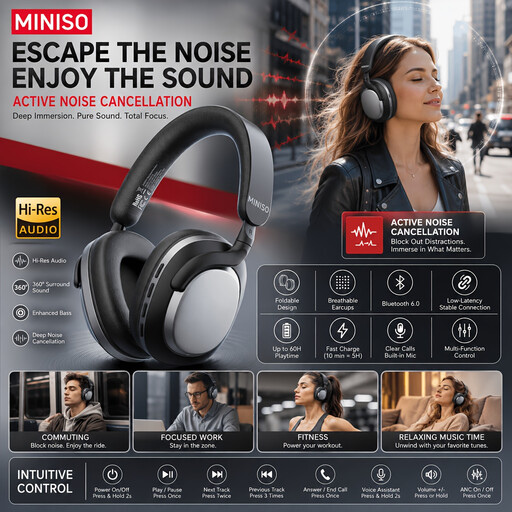
MINISO MG210, black

MINISO MG210 Wireless Noise-Cancelling Over-Ear Headphones (Black)

An over-ear model to compare if you’re looking to reduce distractions while listening; check the fit and how well voices are blocked out in your office.

The product name lists noise cancelling and 24-hour battery life. Colour: Black.

View at Joybuy
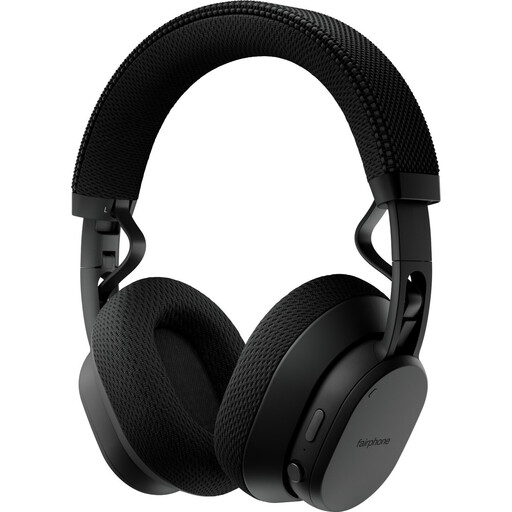
Fairphone Fairbuds XL 2025, black

Fairphone Fairbuds XL 2025 Black

An option to compare with other over-ear models for listening at your desk. Check the features and listening mode you want for the exact version.

View at Joybuy

Bose QuietComfort Ultra Bluetooth Headphones, black

Bose QuietComfort Ultra Bluetooth Headphones (Black)

An over-ear option to compare if you want fewer distractions at the office; assess the sound and noise reduction using your own listening material.

The product name lists Bluetooth. Colour: Black.

View at Joybuy
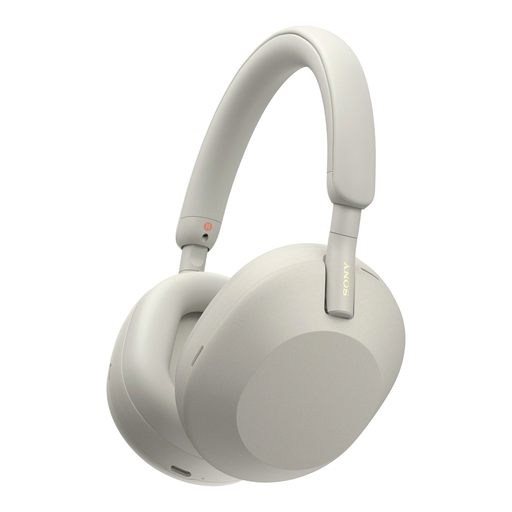
Sony WH-1000XM5, silver

Sony WH-1000XM5 Wireless Headphones (Silver)

An over-ear model to compare if you’re looking for fewer distractions. Listen to your own recording and consider how the sound works for assessing chords.

The product name lists wireless connectivity and noise cancelling. Colour: Silver.

View at Joybuy

Frequently asked questions

Do I need noise cancelling to pick out chords?

No, not necessarily. First, see whether a well-fitting pair of closed-back headphones gives you enough quiet to listen to your recording in your office environment. ANC is an option if background noise continues to distract you; assess sound quality and noise reduction separately.

How do I connect wired studio headphones?

First check which audio output your work device has. According to beyerdynamic, the DT 770 PRO 80 ohm has a 3.5 mm plug and a 6.35 mm adapter; Audio-Technica says the ATH-M40x has detachable cables. Also check the cable length and listening volume with your audio source; don’t judge compatibility by the plug shape alone.

How do I look after headphones I use frequently at the office?

Check the care information for the exact version. AKG lists replaceable ear pads and detachable cables for the K371; beyerdynamic lists replaceable ear pads for the DT 770 PRO 80 ohm.

What are my rights if I buy headphones online in the Netherlands?

For a distance purchase from a business as a consumer, you generally have 14 days to change your mind; check the relevant terms and exceptions. You’re also entitled to a product that works as it should. The Dutch government says there is no fixed statutory warranty period in the Netherlands; if a product is faulty, contact the retailer.

Can I use ordinary studio headphones as hearing protection?

Don’t assume that a closed-back design or ANC counts as hearing protection. Arboportaal states that employees must wear hearing protectors when daily exposure exceeds 85 dB(A). Whether that limit is reached in your workplace, and what protection is suitable, requires an assessment of your exposure; you can’t determine this from the headphone category alone.
