Choose closed-back headphones that provide enough isolation for where you listen, then use a familiar piece of music to check whether you can distinguish the notes without turning up the volume. A wired model suits a simple setup with a compatible connection. If noise from other people in your home is still distracting, a model with active noise cancellation (ANC) may be worth trying. Neither design can identify chords automatically or perfectly.
Who is this relevant to?
Listeners dealing with background noise
If you can hear conversations or other noises at home, look for effective isolation rather than assuming you need to turn up the volume. The Consumers' Association of the Netherlands includes sound quality in its headphone testing, while the World Health Organization recommends well-fitting headphones, with noise cancellation if appropriate, in noisy situations.
Musicians picking apart notes
If you listen to short passages repeatedly, it helps to choose a sound that you can assess clearly for your particular purpose. Promises of automatic chord recognition are no substitute. Audio-Technica describes the ATH-M50x as closed-back headphones with sound-isolating earcups.
Listeners with long sessions
If you study several passages in a row, consider the fit and connection, and, for wireless models, the listening time in the mode you plan to use. The Consumers' Association of the Netherlands lists wearing comfort and battery life as factors in its headphone assessments.
What should you look for?
Closed-back, wired, without ANC
A good fit if: you have a compatible headphone output and want to replay passages easily.
Bear in mind: passive isolation varies by model and fit. There’s no active noise cancellation if sounds around the home continue to get through.
Closed-back with ANC
A good fit if: noise is your main listening distraction and you want to try ANC as well as physical isolation.
Bear in mind: ANC performance varies by model and listening environment. Wireless models also require you to consider battery life and settings.
Open-back headphones
A good fit if: your listening space is quiet and an open listening experience matters more to you than isolation.
Bear in mind: an open-back design lets in more background noise and can leak sound to other people in your home.
| What to consider |
What to look for when buying |
Who should prioritise this? |
| Reducing noise at home |
Assess fit and passive isolation separately from ANC; where possible, test with the sounds you hear at home. |
If other people in your home or other noises mask quiet parts of the music, you’ll want to listen without turning up the volume. Around 36% of consumers put noise reduction first. |
| Distinguishing notes |
Listen to a familiar passage and assess the sound separately from noise reduction; a quoted frequency range does not prove better chord recognition. |
If you want to pick out individual parts and notes in a recording, focus on how the music itself sounds. Around 29% of consumers give distinguishing tones top priority. |
| Comfort when listening repeatedly |
Consider the pressure from the headband and ear cushions, the space around your ears, and how the headphones fit with glasses if you wear them. |
If you keep rewinding passages, comfort can make a difference during longer listening sessions. Around 21% of consumers put comfort first. |
| Connection and ease of use |
Check the plug and output, any adapter you may need and, for wireless models, battery life in the listening mode you use. |
If you want to connect the headphones to a particular device, a compatible connection is essential. Around 14% of consumers put connection and ease of use first. |
Common buying mistakes
-
Assuming a wide frequency range means better chord recognition
A quoted frequency range alone doesn’t tell you how music will sound or how easy it will be to distinguish notes in a full recording.
Assess sound quality and noise reduction separately, for example by listening to a familiar piece of music.
-
Assuming ANC will block out all noise at home
Noise reduction varies by model and the sounds around you; the physical seal around your ears also makes a difference.
Check the fit and assess passive isolation and ANC in your own situation, without turning up the volume to compensate.
-
Comparing battery life without taking the ANC setting into account
JBL quotes up to 65 hours for the Live 770NC with Bluetooth on and ANC off, so that figure doesn’t apply when listening with ANC switched on.
Compare battery life figures only when the listening settings match, and check the conditions for the exact model.
-
Choosing wired headphones without checking the version and connection
Plugs and impedance can vary between headphone versions, so a model won’t necessarily work with every output.
Check the full model name and plug against your device, and make sure its output can drive the version you’ve chosen.
Brands to compare
Sony
The WH-1000XM5 is a closed-back over-ear model with ANC, an ambient sound mode and a detachable audio cable. It may be worth considering if you want to compare different listening modes and connection options.
- Sony lists cable use and passive operation for this model.
- Specifications for frequency range or noise reduction alone don’t show how easily you’ll recognise chords.
Audio-Technica
The ATH-M50x is a closed-back wired studio headphone with detachable cables, for anyone who wants to listen directly through a compatible output.
- Audio-Technica describes the earcups as sound-isolating and lists several cables supplied with the headphones.
- The manufacturer’s information isn’t an independent comparison with ANC models in a noisy home.
JBL
The Live 770NC combines an over-ear design with ANC and an ambient mode. Wireless use and switching between listening modes may be worth considering.
- JBL quotes up to 65 hours with Bluetooth on and ANC off.
- That battery life doesn’t apply when listening with ANC on. JBL’s claim about distraction-free listening is a brand claim.
beyerdynamic
The closed-back, wired 80-ohm DT 770 PRO is a studio option for anyone looking for a suitable output and a design that seals around the ears.
- beyerdynamic lists replaceable ear pads and a 3.5mm plug with a 6.35mm adapter.
- Check the 80-ohm version and whether your own output is suitable; these details don’t automatically apply to other versions.
Sennheiser
The closed-back, wired HD 620S is worth comparing if you’re looking for a model with a 3.5mm cable and a supplied 6.3mm adapter.
- Sennheiser lists an impedance of 150 ohms.
- Describing the sound as spacious is the manufacturer’s opinion, not a measured benefit for chord recognition. Check that your output can drive this version.
Joybuy products
This Joybuy selection includes wireless and wired headphones and earbuds, with a range of fits and features. Check whether each model suits your listening space and device.
 No image available
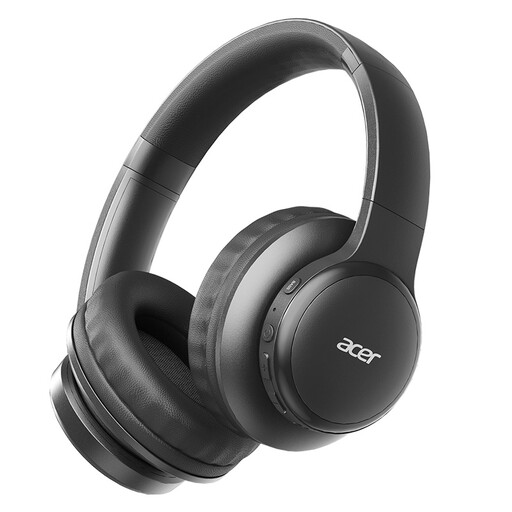
Acer OHR559 Wireless Headphones
A wireless option to compare if you’re not looking for a wired setup; check whether the fit blocks out enough noise at home.
Bluetooth 5.3; Type-C charging port.
View at Joybuy
 No image available
Samsung Galaxy Buds4 Pro True Wireless, zwart
The in-ear fit is worth considering if you’re thinking about earbuds; when listening to music, pay attention to the sound and how the fit feels to you.
In-ear; active noise cancellation.
View at Joybuy
 No image available
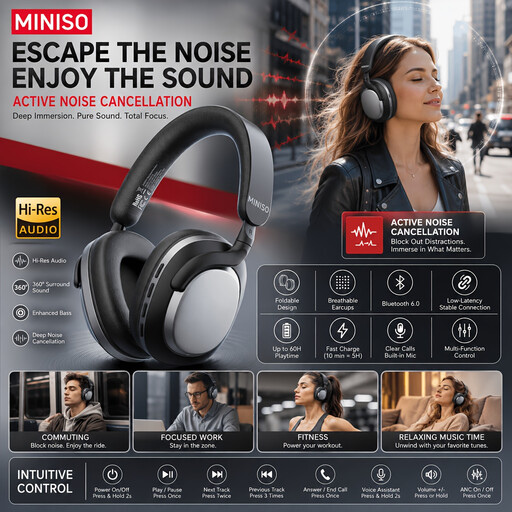
MINISO MG210 Wireless Noise-Cancelling Over-Ear Headphones
An over-ear model to compare if you want to consider active noise cancellation; also assess the seal and sound in your listening environment.
Over-ear; active noise cancellation; quoted battery life: 24 hours.
View at Joybuy
 No image available
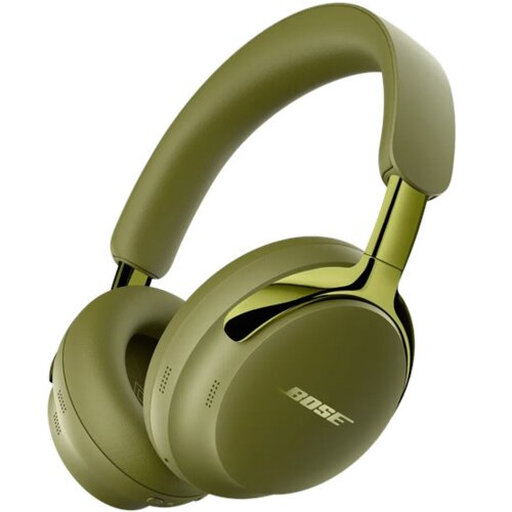
Bose QuietComfort Ultra Headphones (2nd Gen), Olive Green
Headphones to compare with closed-back wired models; check the fit and see for yourself how well you can follow the music in your surroundings.
View at Joybuy
 No image available
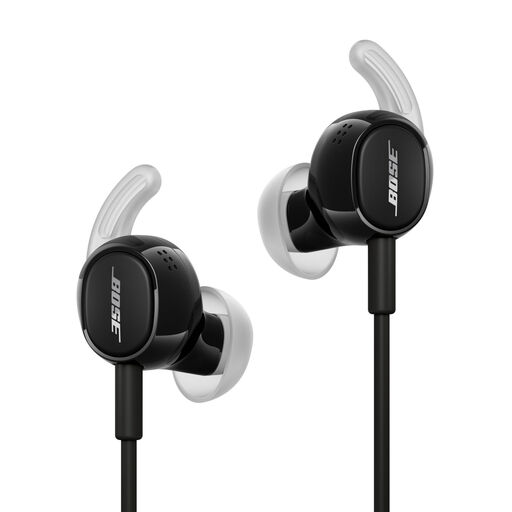
Bose Noise Cancelling Wired Earbuds, Black
Wired earbuds to compare if you’re looking for a cable connection; check that they fit comfortably and are compatible with your device.
Wired; noise cancellation.
View at Joybuy
Frequently asked questions
Do I need noise cancelling to recognise chords?
No, not necessarily. Start with a good fit and a sound you can assess clearly; ANC may also help if background noise remains distracting. Performance depends on the model and your listening environment, and the headphones won’t recognise chords for you.
How do I connect wired studio headphones?
Check that the plug matches your device’s output and confirm the exact version. Audio-Technica lists detachable cables and a 6.3mm adapter for the ATH-M50x; beyerdynamic lists a 3.5mm plug with a 6.35mm adapter for the 80-ohm version of the DT 770 PRO.
How can I keep my listening volume at a safe level when it’s noisy at home?
Don’t automatically turn up the volume to drown out noise at home. The World Health Organization recommends well-fitting headphones, with noise cancellation if appropriate, to reduce the need to listen at a higher volume. Both sound level and listening time matter.
What can I do if the fit isn’t right after buying online?
For online consumer purchases in the Netherlands, you’re generally entitled to a statutory 14-day cooling-off period from delivery; check which exceptions and returns conditions apply. According to ACM ConsuWijzer, the statutory guarantee for a faulty product is separate from any additional manufacturer’s or seller’s guarantee.


