
Listeners in a noisy home
If you want to compare orchestral passages while household noise is going on around you, a closed-back design with a snug fit is generally a better choice than an open-back model.


If you can't escape background noise at home, a well-fitting pair of closed-back studio headphones is the most sensible place to start. They generally block out more sound than an open-back model, but they can't guarantee silence. If you can listen in peace, consider comparing an open-back pair for its spacious presentation; open earcups let background noise in. RTINGS.com explains the difference between open- and closed-back designs. Compare familiar orchestral excerpts at a sensible volume, paying attention to fit, seal and connectivity.
If you want to compare orchestral passages while household noise is going on around you, a closed-back design with a snug fit is generally a better choice than an open-back model.
If you can set aside some quiet listening time and mainly want to assess the stereo image and instrument placement, an open-back model may also be worth considering. Open earcups let background noise in.
If you're comparing several recordings one after another, it's worth considering the fit, cable and whether parts such as the ear cushions can be replaced.
| What to consider | What to look for when buying | Who is this important for? |
|---|---|---|
| Reducing background noise | Check that the earcups and cushions fit around your ears; the fit affects the seal. | If I want to hear quiet passages without constantly turning up the volume, I mainly look for a good seal. Around 36% of consumers say reducing background noise is their top priority. |
| Sound and spatial detail | Listen to the same excerpts and compare the instrument balance, stereo positioning and quieter details. | If I want to assess the differences between orchestral recordings, I pay attention to balance and instrument placement. Around 29% of consumers put this comparison first. |
| Comfort during repeated listening | Check the pressure on your head, including when wearing glasses, and see whether suitable replacement cushions are available. | During back-to-back listening sessions, I want a fit that stays comfortable without compromising the seal. Around 21% of consumers put long-lasting comfort first. |
| Connectivity and maintenance | Check the full model specification, impedance, plug and cable against the connections on your playback device. | If I want to connect the headphones to my existing equipment and maintain their parts easily, I check these details in advance. Around 14% of consumers say connectivity and maintenance are their main considerations. |
Open earcups let background noise in and can also let sound escape. This makes them less suitable if household noise regularly interrupts your comparisons.
Choose this listening option only if you can genuinely find quiet moments; otherwise, compare closed-back models first.
Sennheiser states that the HD 280 PRO offers attenuation of up to 32 dB. This upper limit doesn't guarantee the same level of attenuation with every fit or type of household noise.
Check how the cushions fit around your ears and, where possible, compare measurements for the exact model.
beyerdynamic offers 32, 80 and 250 ohm versions for different sources. The right choice also depends on your playback device.
Before buying, check the full model specification, the connection and your device's output. An unsuitable combination may mean you need a different playback source or connecting equipment.
A product label or stated frequency range alone doesn't tell you how the instrument balance, sense of space and comfort will work with your recordings and fit.
Compare familiar orchestral passages at a sensible volume, and assess isolation, sound and fit separately.
Closed-back DT 770 PRO and DT 700 PRO X models alongside the open-back DT 900 PRO X.
The closed-back HD 280 PRO for those who want to reduce outside noise, and the open-back HD 490 PRO for quieter listening spaces.
The ATH-M40x is a closed-back, wired monitor headphone worth comparing.
The K371 is a closed-back, foldable option for those who also consider portability and fit.
The MDR-7506 is a wired professional headphone to compare with other closed-back models.
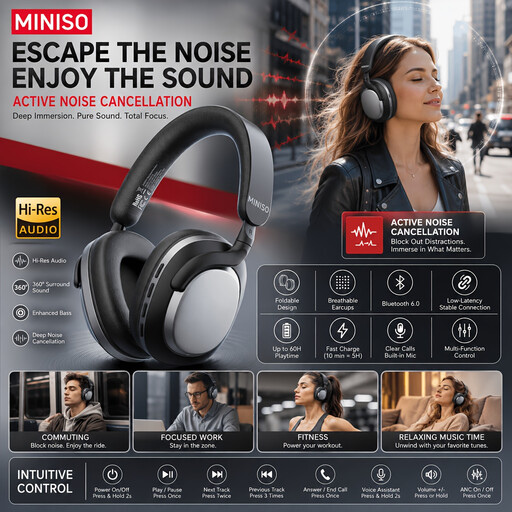
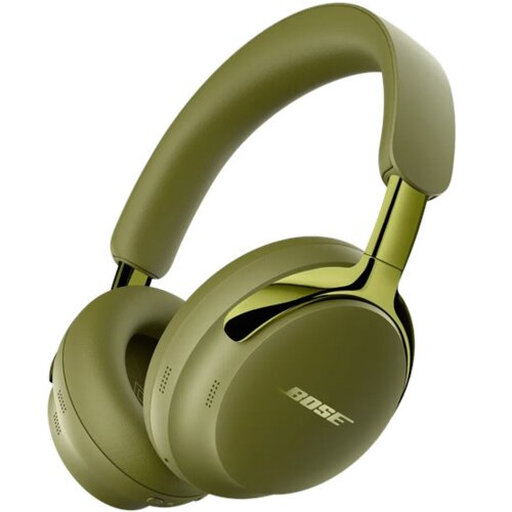
These Joybuy picks are headphones listed with active noise cancellation for listening in a noisy environment. They aren't a substitute for comparing studio headphones for sound and spatial presentation.
 No image available
Worth a look if you're after an over-ear model listed with active noise cancellation for a noisy listening space.
The product name states that it's wireless and offers 24 hours of battery life.
 No image available
The product description mentions active noise cancellation and wired or wireless listening; check that the connection options suit your playback device.
The description states that a charger isn't included and specifies which charger is suitable; check this before ordering.
 No image available
The product description mentions active noise cancellation for listening with background noise.
An audio cable for wired listening is also listed; check that it connects to your source.
 No image available
The product description lists active noise cancellation for both wired and wireless use; judge the sound for yourself with your orchestral excerpts.
Bluetooth and a wired connection are mentioned.
Use the same headphones, playback source and listening settings for both recordings. Choose familiar passages with quiet and loud sections; then compare different headphones using the same excerpts at a sensible volume.
Not necessarily: first check the full model specification and connection for your headphones, as well as your device's output. For example, beyerdynamic makes 32, 80 and 250 ohm versions of the DT 770 PRO for different sources; the impedance figure alone doesn't determine whether your setup will work well.
Check that the cushions fit properly around your ears and aren't worn. Manufacturers list replaceable ear cushions for models including the Sennheiser HD 280 PRO and beyerdynamic DT 770 PRO; make sure you choose parts for the exact version.
For a distance purchase from a business, you generally have 14 days to change your mind, according to the Dutch government (Rijksoverheid); check the terms and any exceptions that apply to your order. You also have a statutory guarantee: if a product is faulty, the retailer, not the manufacturer, is your point of contact.
It's better to keep the volume at a sensible level than to keep turning it up to drown out background noise. Thuisarts warns that listening to loud music often or for long periods can damage your hearing; if possible, choose a better-fitting model or a quieter time to listen.