
Vandaag of morgen in huis

Kwaliteit gegarandeerd

Welkomstaanbiedingen ontgrendelen: GRATIS bezorging | Tot 80% korting | Gratis 30 dagen JoyPlus-proefperiode
Download de app
A cloth for the worktop, a sponge for the washing-up and something tough for baked-on pans: cleaning cloths and scourers may seem like simple products. However, choosing the wrong one can leave streaks on glass, scratches on a hob or sponges that fall apart after just a few uses.
The main pitfalls are usually not found in attention-grabbing marketing claims, but in details such as the material, dimensions and the surface the product is designed for.
A scourer that is suitable for a pan may be too harsh for a glass hob, polished worktop or non-stick coating. Always check the warnings on the packaging. For example, g’woon states that its Scrub Sponges are not suitable for scratch-sensitive surfaces or non-stick coatings.
For delicate materials, choose a soft cloth, a glass-cleaning cloth or clearly labelled non-scratch sponges instead. If you are unsure, test the product on a small, inconspicuous area first.
A pack containing lots of cleaning cloths or sponges may look like good value, but quality and size can vary considerably. Compare:
A set of 10 tea towels can be useful for a household. A small catering business may get more value from a bulk pack, such as a set of 48 fryer sponges.
Terms such as ‘magic sponge’, ‘streak-free’ or ‘without cleaning products’ describe a particular use case, but do not guarantee the same result on every surface. According to the product description, a melamine sponge works as a fine micro-abrasive foam structure. This means that careful use is still important, particularly on glossy, painted or delicate surfaces.
Read the instructions and check that the product is intended for the job you are carrying out.
Microfibre cloths generally consist of fine synthetic fibres that can pick up dust, dirt and grease. A smooth, soft cloth is practical for glass, screens, stainless steel and car interiors. A cloth with a more woven texture may be better suited to general household cleaning.
With scourers, the abrasive layer determines how intensively you can clean. Stainless-steel scourers are intended for stubborn residue on suitable metal surfaces, while cellulose or plastic sponges may be gentler.
A 30 × 30 cm cloth is easy to hold and suitable for everyday use. For windows, cars and larger surfaces, 35 × 40 cm may be more practical. With sponges, also consider the thickness and shape. An 8.5 × 11 × 2.5 cm sponge feels different in the hand from a small pan scourer measuring around 6 × 6 cm.
A handle can be useful for deep pans or a sink. It keeps your hands further away from water and dirt, but also makes the product larger to store.
Reusable cleaning cloths should be rinsed thoroughly and dried properly after use. Check the maximum washing temperature and avoid products that could damage the fibres. The product description for the Microfibre Cloths 30 × 30 cm states that they are machine-washable at up to 60 °C and advises against using fabric softener. According to the product specifications, the 5five set can be washed at 40 °C and must not be washed with bleach or fabric softener.
Allow sponges to dry completely and replace them when they become damaged, discoloured or start to smell unpleasant. This is particularly important in kitchens and small catering areas.
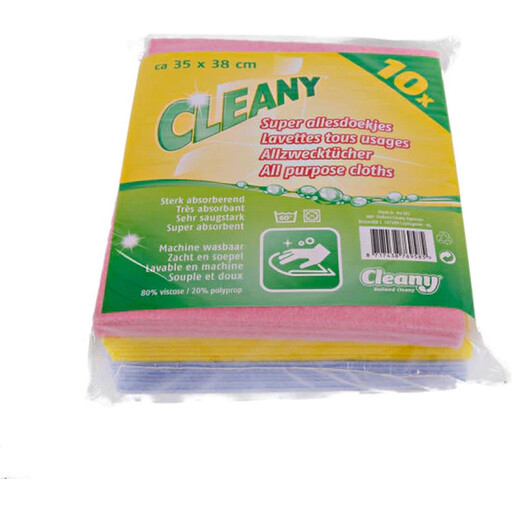
Why it suits this profile: A practical set for wiping, washing up and wet cleaning in several rooms.
The size and packaging clearly state the quantity, so you do not have to rely solely on a large image of the pack.
10 items, machine-washable according to the product description, soft and absorbent for general use.
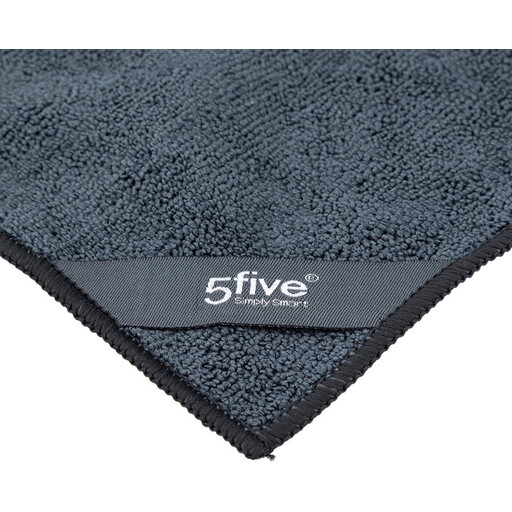
Why it suits this profile: The three colours make it easy to allocate cloths by room or task, such as the kitchen, bathroom and glass.
The product information lists specific dimensions, materials and washing instructions rather than relying solely on general performance claims.
Polyester and polyamide, 40 × 30 cm, suitable for smooth surfaces such as glass and stainless steel.
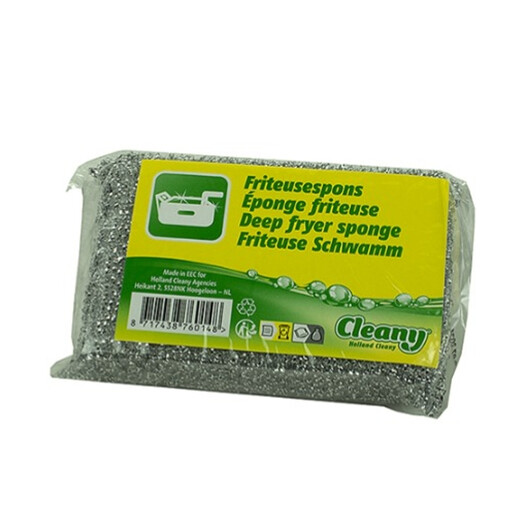
Why it suits this profile: The bulk pack is designed for frequent cleaning of frying equipment and may suit a small catering business.
The packaging states that there are 48 items and identifies the product specifically as a fryer sponge, making its intended use clearer.
48 items per pack and dimensions of 8.5 × 11 × 2.5 cm.
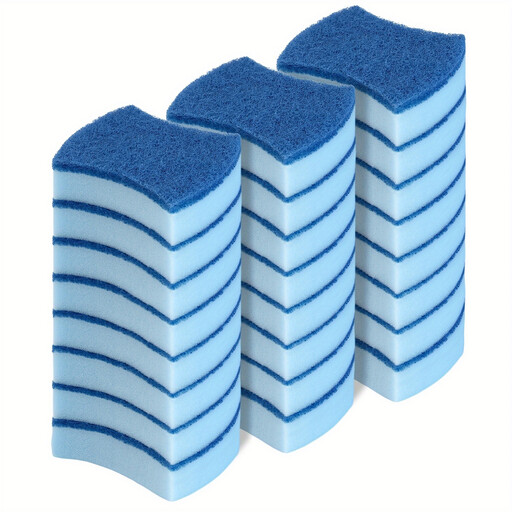
Why it suits this profile: The dual texture is designed for wiping and scrubbing, with uses including glass, non-stick pans and polished worktops.
The product description explicitly mentions the non-scratch layer and advises rinsing the sponge after use and allowing it to dry completely.
24 items, cellulose sponge and non-scratch scourer layer, measuring 10.5 × 8.3 × 3 cm.
We have put together a complete, up-to-date list of products that fully meet these strict selection criteria and the applicable European safety regulations.
A fixed colour-coding system prevents you from using the same cloth in different areas. For example, you could:
For windows and car glass, a dedicated glass-cleaning cloth or perforated chamois cloth is a practical choice. According to the product description, the Cleany cloth measuring 35 × 40 cm is intended for windows, cars, glass and smooth surfaces.
This depends on the material, how often the cloth is used and how it is washed. A cloth will last longer if you rinse it after use, wash it according to the care label and avoid fabric softener when this is advised. Replace a cloth when it starts to fray, no longer absorbs properly or continues to hold visible dirt.
Not every scourer is suitable for this purpose. Only use a product labelled as suitable for scratch-sensitive surfaces or non-stick coatings. Avoid stainless-steel scourers and aggressive scouring pads on these pans. If you are unsure, test the product on a small, inconspicuous area first.
This depends on the purchase price, washing costs and lifespan. Reusable cleaning cloths can offer good value when washed and reused frequently. Disposable cloths are convenient for one-off tasks, but require a new pack each time. Compare the cost per use rather than just the price on the shelf.
